
Livestock Scales






Recently viewed
Livestock Scales for Cattle, Hogs, Sheep, Goats and Farm Animals
A livestock scale turns animal weight into useful information for a farm or ranch. Reliable measurements help producers monitor growth, follow feeding plans, prepare market animals, and make better-informed management decisions. Whether weighing a 4-H show pig or adding weighing equipment beneath a cattle-working chute, choose a scale designed for the animals, the facility, and the work it needs to perform.
Barn World carries portable animal scales for smaller livestock, chute weigh-bar systems, heavy-duty cattle weighing packages, digital indicators, and compatible replacement parts. These are different types of equipment. A 500-pound platform for goats or hogs is not interchangeable with a cattle chute system, and a weight indicator by itself is not a complete scale. Compare platform or bar dimensions, capacity, animal access, included components, and installation requirements before ordering.
Why Accurate Animal Weights Are Useful
Weight records can show changes that are difficult to judge by looking at an animal. Periodic weighing helps livestock producers compare growth among animals of similar age, track progress toward marketing goals, and assess whether feeding or pasture management is producing the expected results. For show livestock, repeated measurements can help plan feeding and conditioning well before an event's weight requirements are checked.
Individual weights also contribute to animal health records. Certain veterinary products are dosed according to body weight, so relying on an outdated estimate can lead to incorrect calculations. Always follow the product label and a veterinarian's directions; a scale reading supports the decision but does not replace professional advice.
Use the same animal identification each time and note the date and weighing conditions. Feed intake, water consumption, time of day, transport, and handling can temporarily change the displayed weight. Consistency matters when comparing measurements over several weeks or months. A single unexpected reading is a reason to check the animal, the scale, and the circumstances before drawing conclusions.
Compare Common Types of Livestock Weighing Equipment
Choose the basic arrangement first, then select the size and features. The examples below describe specific equipment listed by Barn World rather than claiming that every livestock scale in the collection has the same capacity.
| Scale type | Listed capacity | Intended application |
|---|---|---|
| Portable animal scale, 14-inch platform | 500 lb | Narrow platform for appropriately sized smaller livestock |
| Portable animal scale, 20-inch platform | 500 lb | Wider platform for suitably sized hogs, sheep, goats and other animals |
| Chute weigh-bar system | 5,000 lb total, selected system | Weighing with a compatible cattle chute or weighing platform |
| Heavy-duty cattle scale package | 11,000 lb, selected package | Cattle handling with heavy-duty load bars and a compatible data indicator |
Capacity is the maximum load allowed by the particular weighing system. A chute or crate may contribute weight to the supported structure, even when its empty weight is removed from the displayed animal reading with the tare function. Confirm the equipment's rated limits and installation details rather than treating the capacity figure as the allowable weight of any animal that can fit inside the enclosure.
Portable Livestock Scales for Small Animals and Show Projects
Portable platforms can be practical for weighing show pigs, lambs, goats, calves, and other appropriately sized animals. They can be moved between pens or work areas and may use a gated enclosure to keep the animal on the platform while a measurement is taken. The animal should have secure footing and enough room to stand naturally without leaning against nearby structures.
Barn World's narrow portable model has a listed 14-inch weighing platform and an 18-inch overall width. The wider model provides a 20-inch platform within a 24-inch overall width. Both are listed with a 500-pound capacity, but the width and shape of the animal may be a more immediate limitation than weight. A broad market hog, for instance, may need the wider platform well before it reaches the scale's maximum load.
Compare the overall length and height, gate arrangement, wheel kit, display option, and available space for maneuvering the scale. An animal that is longer or wider than the usable weighing area should not be forced into the enclosure. Verify the current model's gate and display options rather than assuming the same accessories are included with both platform widths.
A portable scale should be used on a firm, stable, suitably level surface and set up according to its instructions. Move the unit with no animals inside, secure its working position, and check the display before beginning. Portability is most useful when the scale can be moved without compromising stability or animal handling safety.
Weigh Bars Under Cattle Chutes and Alleys
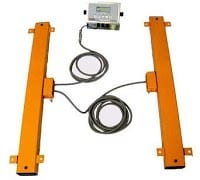
Weigh bars, or load bars, let an existing compatible chute or weighing platform become part of a livestock scale system. The bars support the weighed structure, and a connected indicator converts sensor output into a weight reading. This arrangement can reduce the need to move cattle into a separate weighing enclosure when weighing is incorporated into a normal cattle-working session.
One Barn World chute weigh-bar system is listed with a total capacity of 5,000 pounds, using a pair of bars and an appropriate indicator. A separate heavy-duty package uses 11,000-pound load bars. These are distinct products with different intended loads and components; confirm the specific bar length, connectors, indicator, and mounting requirements before selecting a system.
When fitting bars beneath a squeeze chute, the entire supported assembly must transfer its load through the weighing system as intended. A chute leg resting on the ground, a rigid gate bearing against a fence, or an attached structure taking part of the load can cause an incorrect reading. Keep wiring and connections protected from hooves, pinching, moisture, rodents, and cleaning equipment.
Follow the installation instructions for supporting and securing the chute. A heavy animal entering a working facility can exert significant sideways and forward force, so preventing unwanted movement and maintaining handler safety are essential. Select load bars and supporting equipment as a complete system, not merely on the basis of the maximum weight displayed on an indicator.
Digital Scale Indicators and Livestock Data Management
The indicator is the part of a digital scale that displays the weight and may provide features such as zero, tare, hold, or animal-motion filtering. Simple indicators are useful when the operator only needs a current reading. Advanced livestock data managers can store identification information and weight history, helping producers follow individual animals over time.
For example, Barn World lists a Gallagher TW-1 cattle-scale indicator and data manager with a 7-inch touchscreen, along with a complete cattle scale package that combines compatible load bars and indicator equipment. Other digital displays and replacement meters are available for different scales. The current feature set and supported connections must be checked on the particular product page.
Before replacing an indicator, identify the exact manufacturer, existing load bars, connector style, and electrical requirements. Not all five-pin cables, sensor systems, batteries, or display units are compatible. A cable that looks similar may have a different wiring or connector arrangement, so confirm part numbers rather than ordering from appearance alone.
If a producer plans to save animal weights for several years, consider how the indicator records identities, dates, groups, and exports. A record is only useful if it can be matched to the correct animal. Consistent use of ear tag numbers or compatible electronic identification can make performance tracking more dependable.
Choose Enough Capacity Without Ignoring Accuracy
Start with the heaviest animal expected and the full supported load. For a portable animal platform, the scale must accommodate both the animal's weight and its physical size. For weigh bars under a chute, the chute, equipment, and animal contribute to the mechanical load placed on the sensors. The indicator may subtract the empty structure's weight from the displayed result, but taring does not increase the hardware's maximum rated capacity.
Resolution and accuracy are different characteristics. A digital display may show weight in small increments, yet its overall accuracy depends on sensor quality, calibration, stability, installation, and how the animal moves. Do not assume more decimal places mean a better measurement. Review the model's published tolerances and the conditions under which they apply.
A higher-capacity scale may be appropriate for working cattle, while a smaller-capacity system may offer a more practical platform and display for project animals. The best choice is the equipment that fits the animal and facility, remains within its rated load, and provides sufficiently consistent readings for the management decisions being made.
How to Get More Consistent Livestock Weights
Before weighing, confirm that the scale is set up as the manufacturer directs, on suitable footing and without anything unintentionally touching the weighing structure. Check for obvious damage, loose cables, a low battery, or debris trapped beneath the platform. Allow the equipment to start and stabilize as required, then confirm the zero reading.
When an empty crate or chute is part of the supported load, use the correct tare procedure. Lead the animal into the enclosure calmly and close gates without allowing them to rest on other structures. Wait for a stable reading or use the manufacturer's livestock-motion function where provided. Record the weight along with the animal's identification and the date.
If a reading appears unreasonable, recheck the setup and repeat the measurement safely. A weighing platform rubbing on a fence, uneven support, animal contact with an external object, or damaged wiring can distort the reading. Repeated weighing under comparable conditions is more useful than forcing the animal to stand absolutely motionless for an extended period.
Keep handling efficient. Minimize unnecessary noise and crowding, provide sure-footed access, and use gates and restraint appropriate for the species. A scale can make measurement convenient, but no device guarantees stress-free animal handling. Good facility design and calm stockmanship remain important.
Using Livestock Weights to Track Growth
For growing livestock, a series of weights is usually more informative than a single measurement. Average daily gain can be estimated by subtracting an earlier weight from a later weight and dividing by the number of days between measurements. Compare animals of appropriate age and type, and account for differences in feed intake, fill, weather, and management.
For example, an animal that gains 75 pounds over 30 days has an average measured gain of 2.5 pounds per day during that interval. That figure describes the change shown by the measurements, not necessarily the exact amount of muscle or fat gained. Weighing at reasonably similar times and using consistent procedures makes comparisons more meaningful.
Weight data can support feed purchasing, marketing plans, and decisions about groups that are falling behind. Interpretation still requires context: age, breed, frame size, health, body condition, and the producer's objectives all matter. Discuss unusual growth changes or possible health concerns with qualified livestock professionals.
Animal Handling and Operator Safety
Appropriate restraint is essential when weighing livestock. Large cattle can strike, push, or suddenly move the weighing equipment or nearby gates. Choose facilities that fit the animals, keep handlers out of pinch points, and make sure gates latch securely. Don't ask people to hold a shifting platform or brace a heavy chute while an animal is on the scale.
Provide a nonslip entrance and exit, and inspect ramps and platform surfaces for accumulated manure, mud, or ice. Keep the work area clear of unnecessary obstacles. Animals with horns, large bodies, or unusual behavior may need a different enclosure or handling procedure than smaller, familiar animals. Never exceed the scale's rated capacity or intended species use.
For electrical equipment, protect connectors and power supplies from water and livestock contact. Use only the approved chargers, batteries, adapters, and cables. Route wires so they are not stretched across alleyways or exposed to machinery, and follow the manufacturer's cleaning and storage instructions.
Calibration, Maintenance, and Troubleshooting
Even a well-built scale requires periodic checks. Verify that the system returns to zero when empty and produces consistent readings under controlled conditions. Follow the maker's calibration and test procedures using suitable reference weights and trained service providers when necessary. A scale that has been moved, repaired, subjected to a heavy impact, or installed beneath a different chute may need additional verification.
Inspect the physical platform, load bars, mounting points, and cable connections for wear or damage. Remove packed manure and debris without directing water or tools into components that are not designed for that cleaning method. Check cables for cuts and connectors for corrosion, and replace damaged parts with approved compatible components.
If the indicator fails to stabilize, check that the scale is not touching nearby structures and that the supported load is arranged correctly. If the display is blank or intermittently loses power, review the appropriate battery and electrical connections. Persistent erratic readings may require sensor, wiring, or indicator service. Do not assume an accessory will solve the problem until its compatibility is confirmed.
On-Farm Weighing Versus Legal-for-Trade Scales
Livestock weighing for herd management is not necessarily the same as weighing animals as the basis of a regulated commercial sale. Requirements for transactions based on weight can involve specific scale approvals, inspection, testing, licensing, and documentation, depending on the jurisdiction and business activity.
Do not assume a portable or chute scale is certified for commercial transactions merely because it displays a precise weight. If the results will determine payments for livestock sold by weight, check applicable state weights-and-measures requirements and any federal or market rules before purchasing equipment. Ask the manufacturer or appropriate regulator whether the particular model and installation satisfy the intended use.
Planning a Livestock Scale Order from Barn World
Before requesting a quote, identify the animal species, expected weight range, largest body dimensions, and the preferred weighing setup. For portable scales, confirm usable platform dimensions, gates, wheels, indicator options, and storage location. For cattle chute systems, identify the chute manufacturer's model, approximate weight, available support points, and intended indicator or recording features.
Check whether the listing includes a complete scale or only an indicator, load bars, cables, or another replacement component. For an existing system, provide the manufacturer's model and connector details so replacements can be matched. Include the delivery ZIP code and any unusual unloading or delivery needs. Barn World can then provide a more useful equipment and freight quote for the intended configuration.
Frequently Asked Questions About Livestock Scales
What is the difference between a livestock platform scale and chute weigh bars?
A platform scale provides a weighing surface and, in some models, an enclosure for the animal. Weigh bars support a compatible chute or platform and measure the load transferred through it. Both need the correct indicator or measuring system, but they are installed and used differently.
Can I weigh a hog, sheep, or goat on the same portable scale?
Possibly, if the model is intended for those animals and the platform fits each one safely. Check the animal's body dimensions, weight, gate clearance, and footing. A 500-pound rating alone does not confirm that a large hog will fit comfortably on a narrow platform.
How do I choose between the 14-inch and 20-inch portable platforms?
Measure the animals likely to use the scale, particularly their body width and length. The wider platform can provide more room for appropriately sized hogs and other livestock, while the narrow model may suit smaller animals and tighter working spaces. Both listed models have 500-pound capacities.
What capacity do I need for a cattle chute scale?
Choose a system that can safely support the total load from the chute, animal, and any equipment placed on the load bars. Verify the manufacturer’s rated capacity and installation requirements; the empty chute's weight still counts mechanically even when the display is tared.
What does the tare function do?
Tare subtracts the weight of an empty container, crate, or other supported equipment from the displayed result so the operator can measure the animal's net weight. It does not increase the rated capacity of the scale.
Can livestock scales record weights for individual animals?
Some digital indicators and data managers can store identified weights and related information. Basic meters may only show the current reading. Review the selected model's recording features and supported identification or export methods.
Why does my livestock scale give changing readings?
Movement by the animal, contact between the weighed platform and an external structure, unsuitable footing, unstable installation, damaged cables, or calibration problems can all affect readings. Follow the manufacturer's troubleshooting process and check the installation before assuming the animal's actual weight has changed.
Are livestock scales accurate enough for selling cattle by the pound?
Not necessarily. Equipment used for regulated transactions may need legal-for-trade approval, testing, or inspection. Verify the specific model and local weights-and-measures requirements before using a management scale to determine commercial payment.
How often should I calibrate or test my livestock scale?
Follow the manufacturer's schedule and any requirements for the intended use. Check performance after installation, moving, damage, unusual readings, or major repairs. Commercial scales may have additional testing and certification rules.
What should I provide when requesting a livestock scale freight quote?
Provide the scale model or type, animal size and weight range, desired options, quantity, delivery ZIP code, and whether the equipment must work with an existing chute or indicator. For replacement cables or electronics, include the exact manufacturer and model information.