
Galvanized Stock Tanks
Recently viewed
Galvanized steel stock tanks are traditional, durable watering troughs for cattle, horses, sheep, and other livestock. Their rigid walls, reinforced rims, and available drains make them useful in pastures, feedlots, and working pens. Choosing the right tank involves more than selecting a gallon capacity: the shape, steel gauge, drinking height, available water supply, and practical shipping quantity all affect its suitability.
Barn World offers round galvanized stock tanks and round-end galvanized stock tanks in 20- and 22-gauge configurations. Both use galvanized steel with model-specific reinforced rims and water-tight bottom construction. Individual tank specifications vary, so use the product listings below to check dimensions, capacities, included drains, and which sizes can be nested together for freight shipping.
Important shipping note: These large tanks generally ship in nested groups. The current round and round-end product listings say that individual tank shipments are unavailable, and round-end tanks typically require an order of three or more for economical freight. Request a quote with the full quantity and ZIP code before planning a purchase.
Round or Round-End Galvanized Stock Tank?
The two shapes serve different locations and animal-management arrangements. A round tank has a circular footprint and can offer access around its perimeter. A round-end tank has straight sides with curved ends, making it useful where a longer, narrower watering area fits the layout better. Neither shape should be considered suitable for every location solely on the basis of capacity.
| Feature | Round tanks | Round-end tanks |
|---|---|---|
| Footprint | Circular, suited to access from multiple directions | Elongated, with straight sides and rounded ends |
| Listed capacity range | Approximately 101–1,358 gallons, depending on model | Approximately 74–400 gallons, depending on model |
| Likely placement | Pastures, open lots and central watering locations | Smaller pens, some fence-line and elongated watering areas |
| Buyer should verify | Diameter, depth, gauge, usable rim and freight nesting | Width, length, depth, brace arrangements and freight quantity |
Capacities are based on the current collection and product range descriptions. Verify the exact capacity and outside dimensions shown for the selected model. Nominal dimensions may not capture every rim projection or bracing feature, and not every size will be available in every steel gauge.
Round Galvanized Water Tanks for Open Pastures
Round tanks may be useful where livestock need to approach water from several directions. A centrally placed trough can allow animals to use more of its rim, provided there is adequate clearance around it. A tank positioned tightly against a fence or corner may provide much less actual drinking access than its circumference suggests.
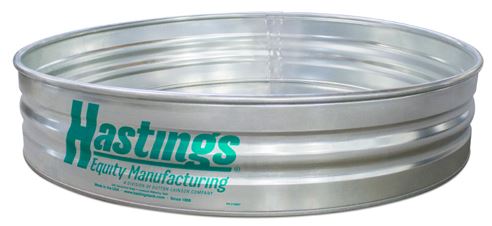
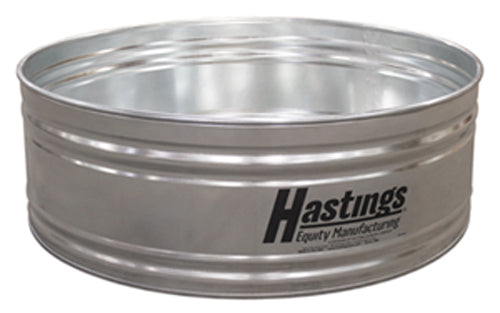
The current round galvanized tank listing describes G90 galvanized steel in 20- and 22-gauge options, reinforced by a rolled steel pipe at the upper edge. It also describes a threaded drain plug and a reinforced bottom seal. These construction details make round galvanized tanks a familiar choice for routine farm and ranch watering, but they do not eliminate the need to inspect seams, drains, and the protective zinc coating.
A large round tank can store significant water between refills, especially where delivery is intermittent. However, it should be matched to the actual herd's consumption and the available refill rate. An oversized tank with stagnant water or difficult cleaning access may not be a better choice than a smaller, properly maintained watering arrangement.
Round-End Galvanized Stock Tanks for Pens and Fence Lines
Round-end tanks combine straight sides with curved ends, allowing a longer watering surface in an area where a circular tank might interfere with gates or animal traffic. The smaller models can be practical for appropriately sized livestock groups, while longer units provide more capacity without the same circular footprint.
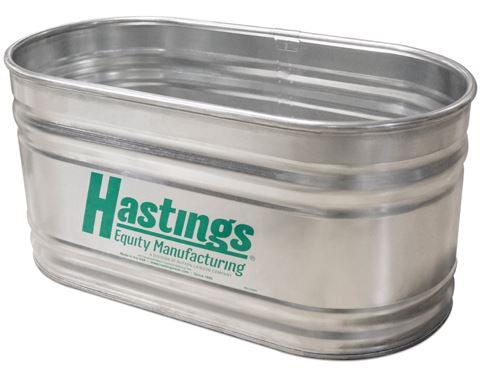
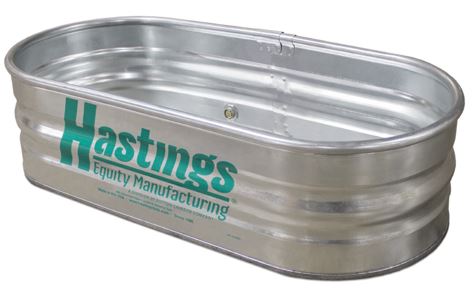
The round-end galvanized tank listing describes G90 steel, a reinforced rim, a four-ply locking seam between the wall and the bottom, and a drain fitting. It also describes 20-gauge bottoms paired with 22-gauge walls on certain configurations. Some narrower models use a cross brace for additional support. Those parts should be installed and retained as specified by the manufacturer.
When considering placement along or through a fence, keep the drinking positions accessible and avoid creating sharp edges, pinch points, or a place where animals can be trapped. Do not modify a tank or its support system without confirming that the installation is permitted. A tank serving two pens must still provide enough refill capacity for the combined animal demand.
What Do 20-Gauge and 22-Gauge Mean?
Steel gauge describes sheet thickness, with 20-gauge material generally thicker than 22-gauge material under the relevant steel-gauge system. A thicker sheet may affect resistance to certain loads, but the strength and longevity of a finished tank also depend on the wall shape, bottom seam, frame or rim reinforcement, corrosion protection, handling, and maintenance.
Do not assume that a tank advertised as 22-gauge uses that gauge for the entire body. Some Barn World galvanized models have 22-gauge sidewalls and a 20-gauge bottom. Compare the sidewalls and floor separately, along with any listed support braces. Verify the exact steel specification for the size selected rather than applying one model's details to the complete range.
G90 galvanizing refers to a zinc coating designation used on steel; the protection can reduce corrosion in normal service, but it does not make steel immune to damage. Water chemistry, scratches, manure exposure, and persistent contact with corrosive materials can affect service life. Inspect the tank regularly and follow manufacturer guidance about repair and cleaning.
Choosing a Capacity for Cattle, Horses, Sheep, and Goats
A tank's gallons measure its available storage, not the number of animals it can serve without an adequate water source. Drinking demand changes with animal weight, weather, diet, lactation, and management. During warm periods animals may drink more, and many animals may approach the water at similar times.
Start with species-appropriate daily water requirements and estimate the refill capacity of the supply. A float valve connected to a reliable water line may maintain a smaller tank well, while a remote pasture supplied intermittently by a well, solar pump, or hauled water may benefit from greater stored volume. Compare both the total available water and how quickly it can be replaced.
Tank depth and rim height matter, especially for smaller sheep, young calves and goats. A tall trough can hold more water while limiting practical drinking access for short animals. Measure the height of the selected model and evaluate whether all animals can safely approach and reach the water without climbing on the rim.
Watch herd behavior after installation. If dominant animals prevent others from drinking, moving the trough or adding another watering position may be more useful than increasing tank volume.
Drains, Cleaning, and Water Quality
Many of the listed galvanized stock tanks include a threaded drain, which can make it easier to remove sediment and perform a thorough cleaning. Confirm the drain plug type, whether it ships installed, and where discharge water can be directed. A drain against a wall or directly into a muddy livestock lane may not be practical to use.
Inspect the water surface for algae, feed particles, floating debris, and manure contamination. Drain and scrub the tank according to the manufacturer's directions, then refill it with suitable drinking water. Avoid using cleaning methods or chemicals that could damage the galvanizing or leave unsafe residue for animals.
The bottom seam and wall-to-floor connection deserve regular checks for leaks and corrosion. Small leaks waste water and create wet ground that can become a slipping or hoof-health problem. Do not drag or lift a filled tank; water weight can be substantial even when the empty tank is relatively light.
Installing a Galvanized Stock Tank
Place the tank on stable, reasonably level ground with adequate support under the base. Uneven support, projecting rocks and severe impacts can damage the tank or strain its seams. Consider the route used by livestock, the distance to the supply line, the available space for cleaning, and where runoff will go.
If the tank is filled automatically, check the float-valve model and mounting method. Not every valve or fitting is suitable for every tank, and drilling new openings may require manufacturer approval. Keep water lines protected from animals, machinery, and freezing temperatures where applicable.
For winter use, remember that an open galvanized trough can ice over. Suitable freeze protection may require a heater or an alternative watering arrangement. Follow the heater manufacturer's instructions for the tank material, circuit protection, grounding, and cord placement. Keep electrical equipment out of reach of livestock and arrange a backup water supply for outages.
Bulk Stock Tank Freight and Nesting Requirements
Stock tanks can be expensive to transport because they occupy substantial space even when empty. Nesting several similar tanks can reduce the shipping footprint and make freight more economical. That is why the current Barn World galvanized round and round-end product listings state that individual tanks cannot be shipped under their normal arrangements.
For round-end galvanized tanks, a minimum order of about three or more is typically described as necessary for economical freight. The correct quantity varies with size, shipping origin, distance and how tanks fit together. A truck carrying nested tanks may still require special unloading or delivery access, so the full shipping arrangement must be confirmed before the order is finalized.
Request a Barn World quote using the tank shape, dimensions, gauge, quantity, delivery ZIP code and unloading situation. Include access restrictions such as a narrow driveway, limited turnaround area, or lack of a loading dock. A higher per-unit price for a small shipment may make a larger order more economical when the additional tanks will actually be used.
Galvanized Versus Poly Stock Tanks
Galvanized tanks provide rigid metal construction, while molded polyethylene tanks resist rust and may be easier to handle when empty. Both are available in round or round-end designs through Barn World, with model-specific capacities and fittings. Galvanized surfaces and seams require inspection for corrosion, while poly walls need suitable support and protection from impact or inappropriate modification.
Where rust resistance is a high priority, compare our Poly Stock Tanks. For oversized reservoirs assembled at the site, the separate Bottomless Stock Tanks range has different sealing and installation requirements. The main Stock Tanks guide compares all three styles.
Frequently Asked Questions About Galvanized Stock Tanks
What is the difference between a round and round-end stock tank?
A round tank is circular and may allow access around much of its rim. A round-end tank is elongated with curved ends, which can be convenient in narrow pens or along suitable fence lines.
How many gallons do galvanized stock tanks hold?
Current category descriptions identify approximate ranges of 101–1,358 gallons for round tanks and 74–400 gallons for round-end designs. Confirm the capacity of the specific size and model before ordering.
Are galvanized tanks available in 20- and 22-gauge steel?
Yes. The listed ranges include these gauges, though not every size or part uses the same thickness. Some 22-gauge models have 20-gauge bottoms.
Do galvanized stock tanks rust?
Galvanizing helps protect steel from corrosion, but damaged coatings, unsuitable water chemistry and prolonged harsh exposure can still lead to deterioration. Routine inspection remains important.
Do the tanks have drain plugs?
The current round and round-end product listings describe threaded drains. Verify the fitting and included components for the particular tank before ordering.
Can one tank water animals in two pens?
Some round-end layouts can be incorporated into a suitable fence-line arrangement, but placement, animal access, fencing safety and total water-delivery capacity must all be addressed.
Can I buy just one galvanized stock tank?
Both current galvanized stock tank product listings state that individual-tank freight shipment is unavailable. Tanks are designed to nest and ship in groups; contact Barn World with the size and delivery location for feasible quantities.
What determines the right stock tank size for a cattle herd?
Consider animal water consumption, refill rate, drinking access, site layout, and how the group uses water at peak periods. Gallon capacity by itself is not a reliable head-count rating.
Can a galvanized stock tank be used in freezing weather?
Open tanks can freeze. Use a properly selected and installed cold-weather watering arrangement, including an approved heater where applicable, and keep a backup supply plan.
What is needed for a galvanized stock tank freight quote?
Provide the tank shape, size, gauge, number of tanks, delivery ZIP code and available unloading equipment. Minimum practical quantities depend on the tank dimensions and delivery arrangements.