
Head Gates
Recently viewed
A cattle headgate is a front restraint component used in an appropriately built livestock working alley, calving pen, or squeeze chute. Its design affects how cattle enter, how they are held during an approved procedure, and how they exit. Choosing the right headgate is therefore about more than deciding whether a unit is manual or self-catching: the cattle's size, the surrounding alley, the mounting arrangement, and the operator's access all matter.
Barn World carries Sioux Steel automatic and manual cattle headgates as well as the Powder River S1500 and S2000 self-catching headgates. The collection also contains an older Powder River Value model marked discontinued, which is not a current purchasing option. Compare the available models using their listed dimensions, release openings, operation, and compatibility before requesting a freight quote.
Headgate versus complete chute: A standalone headgate controls the head and neck area. It does not provide the full-body restraint, side-access panels, tailgate, or floor of a complete squeeze chute. If your operation requires those features, review our Squeeze Chutes and Calf Tables collection alongside the headgate options.
Compare Sioux Steel and Powder River Cattle Headgates
The table summarizes selected product specifications currently listed by Barn World. Each product is a separate headgate, not an entire cattle working system. Confirm exact dimensions, mounting hardware, handing, and configuration before ordering or replacing an existing gate.
| Headgate | Operation / specifications | Compatibility considerations |
|---|---|---|
| Sioux Steel Auto Return | Self-catching design, automatic reset after release, adjustable neck setting listed at 4–10½ in. | Designed for compatible Sioux Steel calving pens and squeeze chutes; left- or right-hand options |
| Sioux Steel Manual Return | Operator-controlled headgate; product listing describes a 28-in. opening and friction-lock controls | Confirm the exact mechanism, mounting pattern, and handing for the chosen Sioux Steel setup |
| Powder River S1500 | Self-catching; 31½-in. release opening; listed headgate weight 215 lb | Compatible Powder River panels or suitably adapted alley; mounting must be verified |
| Powder River S2000 | Self-catching; 31½-in. listed opening; approximately 297 lb | Pin-and-clevis mounting details; verify compatibility with the actual Powder River panels and working system |
Specifications such as release-opening width and overall frame width describe different measurements. They should not be compared as though they were the same dimension. Similarly, the 4–10½-inch adjustment listed for the Sioux Steel Auto Return concerns its neck restraint settings, not its total animal-release opening.
Manual Versus Self-Catching Headgates
A manual cattle headgate allows the trained operator to control the catching sequence and release. This can be useful where the operator wants to adjust timing for cattle that differ in size or behavior. It does require the handler to be attentive and familiar with the controls; improper timing or an unsafe position near the gate can create a serious hazard.
A self-catching headgate is designed to catch a suitable animal as it advances into a correctly adjusted opening. This may simplify some single-operator working arrangements, but it should never be treated as unattended, fully automatic livestock handling. An incomplete catch, an unexpected backward movement, or a poorly adjusted setting may require a safe release and another approach.
University extension guidance notes that self-catching headgates may be convenient for certain operations, while also identifying possible drawbacks when handling horned cattle or animals with unsuitable frames. The best headgate is the one that fits the animals and working system and can be operated safely by the people on site.
Also distinguish the catch function from the return or reset mechanism. A product called “Auto Return” may automatically reset its catch configuration after a release; that is not the same as a generic statement that every manual headgate has the same reset behavior. Confirm the manufacturer’s current operating sequence for the exact unit being purchased.
Sioux Steel Automatic Return Headgate
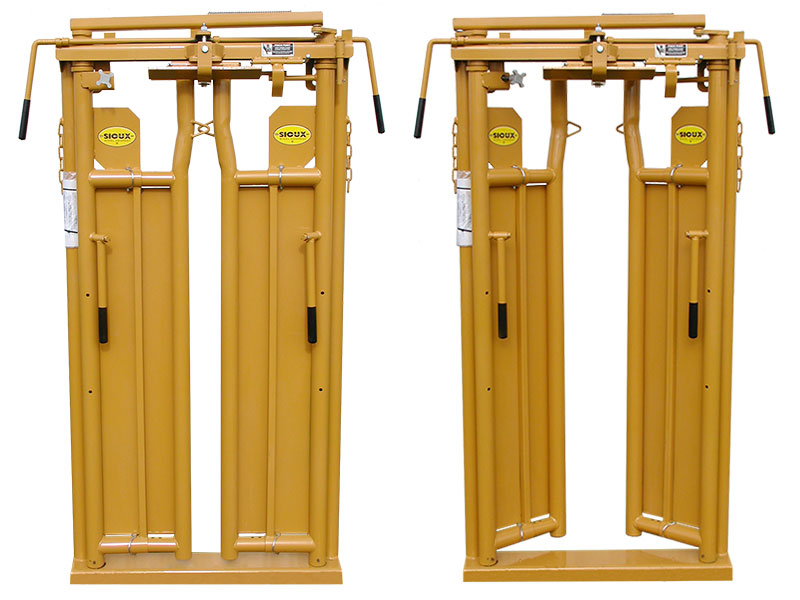
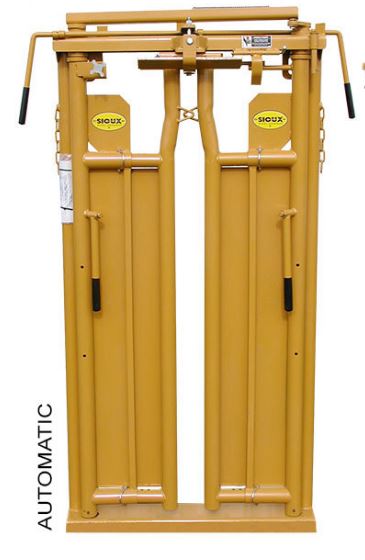
Barn World's Sioux Steel automatic headgate listing describes an adjustable, self-catching design with spring-loaded return and cushioning features. It is intended for compatible Sioux Steel squeeze chutes and calving pens. The listing describes left- and right-handed operating options, which should be selected according to the location of the handler and adjoining equipment.
The listed neck adjustment range is four to ten and a half inches. This is useful information when comparing operation, but the setting does not establish that the headgate fits every possible animal or mature bull. Check body size, horn configuration, and the applicable maker's instructions before placing any animal in the restraint.
The headgate is described with direct linkage rather than external ropes or cables, an automatic reset after a release, and a spring-loaded cushioning arrangement. Those features can be useful in a busy handling setup when maintained and operated correctly. They do not eliminate the need to inspect the latch or ensure an animal is properly restrained.
Before replacing an existing unit, confirm the frame dimensions, mounting points, model series, and operator side. Even within the same brand, an older squeeze chute or calving-pen frame may need a different installation arrangement.
Sioux Steel Manual Headgate
The Sioux Steel manual headgate is intended for handlers who prefer operator-controlled closure and release. The product listing describes a friction-lock control, spring-loaded shoulder components, and a relatively wide opening. It also contains differing language about its return or reset mechanism, so the exact current operation should be confirmed with Barn World or the manufacturer rather than assumed from the product name alone.
Manual control can help an experienced operator time the restraint to the animal's movement. However, every catch must be carried out according to the equipment instructions, with the operator positioned away from pinch points and the path of a lunging animal. The fact that a gate can be operated with one hand does not mean the operator should ignore other safety procedures.
When comparing the manual unit with an automatic model, check which side the levers are located on, whether the existing alley provides a safe working position, how the frame attaches, and what release arrangements are provided. Do not assume that a headgate advertised as fitting a standard chute is compatible with every brand, year or gate opening.
Powder River S1500 Self-Catching Headgate
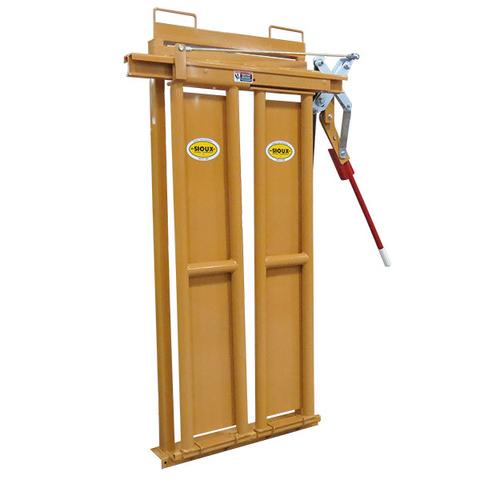
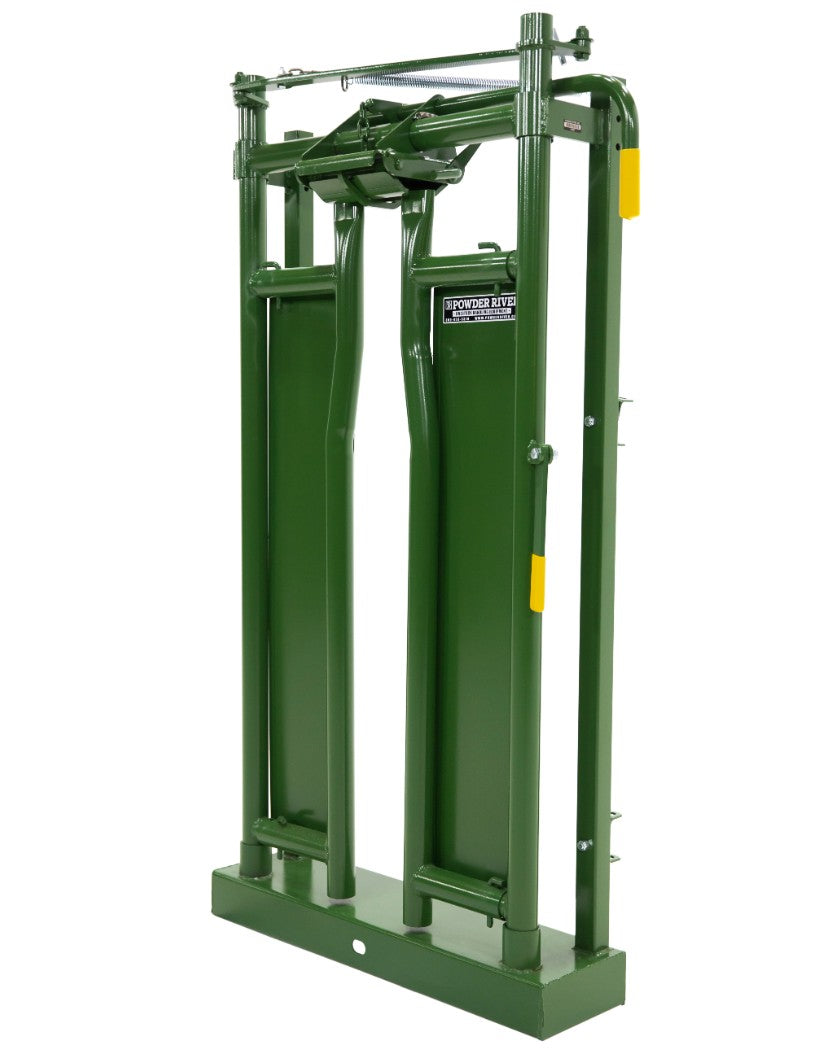
The Powder River S1500 headgate provides a self-catching option for a compatible handling layout. Its product listing identifies a 31½-inch release opening, an overall frame width of approximately 38 5/16 inches, an overall height of about 73 5/8 inches, and a listed headgate weight of 215 pounds.
These dimensions should be used correctly: the overall frame measurements help determine whether a unit fits in a particular installation, while the release opening relates to animal exit. The headgate must be mounted securely and used within its maker's animal-fit guidelines. It is not a complete squeeze chute, even though the same S1500 name may also appear on a full chute product.
Confirm the arrangement of Powder River panel connections or any adapter needed for an existing alleyway. If the headgate is replacing a different manufacturer's unit, check the complete opening, hardware and support details instead of relying on a similar-looking width.
Powder River S2000 Self-Catching Headgate
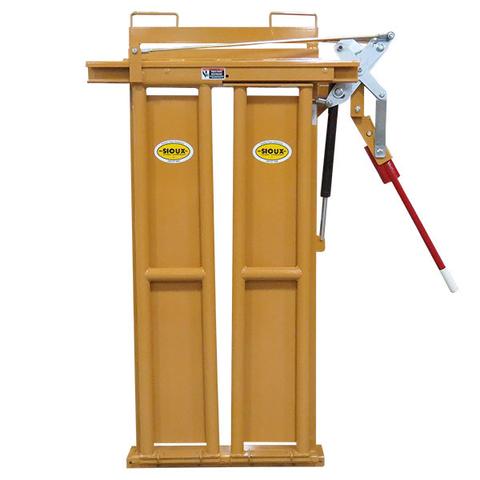
The Powder River S2000 is another self-catching headgate with a listed 31½-inch opening. The Barn World listing describes an overall height of approximately 79 inches, a widest frame point of about 44 inches and a headgate weight near 297 pounds. Those figures make it different in overall dimensions from the S1500 even though both have a listed 31½-inch release opening.
Powder River describes the S2000 with adjustment and quick-release functions intended to help livestock move through a suitable working setup. The listing also refers to pin-and-clevis attachments and Powder River panel compatibility. Verify the precise installation requirements and cattle-size application rather than treating the S2000 as a universally interchangeable replacement for an S1500 or a Sioux Steel model.
More equipment weight is not by itself a guarantee of safer restraint or better performance. The suitable gate is determined by the animals, required access, frame dimensions, control mechanism, mounting arrangement, and the way cattle move through the facility.
Matching Headgate Size to Your Cattle
A headgate needs to restrain the intended animal while allowing a safe release. Calves, yearling stock, mature cows and bulls can have very different neck, shoulder and body dimensions. Horned cattle and exceptionally large-framed animals may require a specialized design or a different handling approach than a generic self-catching model.
Check more than the largest published width. Consider the minimum adjustment, the position of the restraint bars, the available release opening, the overall frame, the animal's horns and body structure, and how the gate is integrated with the alley behind it. An animal at one end of the herd's size range may not be suitable for the same adjustment as animals at the other end.
The headgate should not be used to force an animal that does not fit. Incorrect restraint can cause neck pressure, shoulder injuries or escape. Use manufacturer directions and qualified handling advice when configuring equipment for unusual breeds, horns, very young calves or heavy mature cattle.
Headgate Only or Complete Squeeze Chute?
A headgate controls the head and neck, but a squeeze chute adds body restraint and other features that may make certain procedures more practical. A properly sized chute can reduce excessive sideways movement, allow appropriate access to the animal, and integrate with a tailgate, squeeze mechanism or veterinary access panels.
For some smaller operations and tasks, a correctly mounted headgate within a properly designed working station may be sufficient. Other operations will need a full squeeze chute because of the animals being handled, the procedures performed, or the number of handlers available. University extension guidance emphasizes choosing the appropriate level of restraint instead of assuming a standalone headgate replaces a complete chute.
If you need the full system, compare Barn World's Livestock Working Equipment and squeeze chute collections before ordering the gate alone. This also helps prevent accidental purchases of an accessory when a complete handling station is required.
Mounting a Cattle Headgate to an Existing Alley
The safe installation depends on the connection between the headgate frame and the surrounding fence, alley or chute. Headgates are heavy moving assemblies, and their catch or release forces must be transmitted through properly rated supports. A similar overall width does not establish that two brands share the same attachment holes, brackets or required reinforcement.
Before placing an order, record the make and model of the existing equipment, the clear opening, outside frame dimensions, mounting points, operator access, and the way the animal will exit. Manufacturer diagrams or clear photos may help determine whether a selected headgate can be installed without unsafe modification.
Ensure the approach alley provides controlled single-file movement and that a secure rear gate or appropriate backstop prevents a second animal from entering the restraint area prematurely. Check that the operator can reach controls without standing between moving panels or within the animal's forward path.
Do not remove critical braces or weld a new support directly to a finished headgate without approval from the manufacturer or a qualified installer. The assembly and its supports should be inspected before the first animal enters and after any heavy impact.
Operator Safety and Proper Headgate Use
Cattle can lunge or reverse suddenly when frightened. A self-catching gate may be convenient, but it can also lead to an imperfect catch or a shoulder impact if the opening is poorly adjusted. Operators should understand the intended closing sequence and keep hands, arms and tools away from moving jaws, bars and lever mechanisms.
Inspect the gate, latches, hinges, springs, locking parts, frame anchors and release mechanisms before use. If the headgate does not open or close normally, correct the problem before handling an animal. An improperly functioning gate is not safe simply because it appears to hold a particular cow.
Maintain stable footing in the approach and release area. Remove avoidable distractions, manage cattle calmly in appropriately sized groups, and provide a clear route forward after release. Animals should not be held longer or more tightly than necessary, and specialized procedures should be supervised by qualified livestock or veterinary personnel.
Know how the selected model releases under normal and emergency conditions. Never attempt an improvised adjustment while an animal is struggling against the gate. Protect bystanders and make sure handlers understand who is responsible for opening the gate and controlling the next animal.
Maintenance and Service Life
Routine cleaning and inspection support reliable operation. Check the headgate's sliding or pivoting components, return mechanisms where fitted, springs, latch guards, bushings, pins and locking hardware. Manure, dirt and corrosion can prevent parts from moving as designed, which may cause an unsafe or incomplete catch.
Use the manufacturer's lubrication and adjustment instructions. A gate that is suddenly difficult to close, opens inconsistently, or no longer returns to its expected position needs investigation and repair before use. Replace damaged safety parts with approved components rather than bypassing guards or substituting improvised fasteners.
Check the frame and mounting supports after a strong animal impact or a change to adjoining panels. The gate may still appear functional even if bolts have loosened or the surrounding structure has shifted.
Freight Shipping and Headgate Quotes
Cattle headgates are substantial steel components, with product listings describing weights of more than 200 pounds for several models. Freight costs depend on the selected headgate, packaging, distance, delivery access and available unloading equipment. Include the complete delivered cost when comparing an accessory purchase with a new squeeze chute.
To request a Barn World quote, provide the headgate model, whether manual or self-catching operation is preferred, any required left- or right-hand control configuration, the make and model of the adjoining equipment, your delivery ZIP code, and unloading capabilities. If replacing an old headgate, include measurements or photos of the existing frame and connection arrangement.
Confirm the included mounting components and whether any additional brackets, adapters or supports will be needed. Historical items marked discontinued should not be assumed available; select among the current products or request advice on compatible alternatives.
Frequently Asked Questions About Cattle Headgates
What is a cattle headgate used for?
A headgate provides controlled restraint at the animal's head and neck within an appropriate working alley, calving pen or chute. It is used during approved livestock management or veterinary procedures.
Is a self-catching headgate better than a manual one?
Not for every operation. Self-catching designs can simplify some working sequences, while manual gates give a trained operator direct control of timing. Animal size, horns, handler experience and the facility matter.
Is the Powder River S1500 headgate a complete squeeze chute?
No. The S1500 headgate is a separate front restraint component, even though Powder River also sells complete squeeze chute equipment using the S1500 name.
What is the release-opening width of the S1500 and S2000 headgates?
Current Barn World listings specify a 31½-inch release opening for both models. Their overall frame measurements differ, so confirm the fit and mounting details of the selected gate.
What does automatic return mean on a headgate?
It generally describes a feature that resets the gate mechanism after release in the specified model. The animal still requires operator supervision, suitable adjustment and the manufacturer’s safe handling procedure.
Can a Sioux Steel headgate replace a Powder River headgate?
Not automatically. Mounting points, frame dimensions, operation and connection hardware differ. Confirm the exact fit or required approved adapters before attempting a replacement.
Is a headgate enough for working mature cattle?
That depends on the animals, procedures and surrounding facility. Some work may require a complete squeeze chute to provide appropriate body control and safer operator access.
Can a cattle headgate be used with horned animals?
Only where the particular model and installation are approved for the animal's horn configuration and size. Self-catching designs may be less suitable for some horned cattle; follow manufacturer guidance.
What should I inspect before using a headgate?
Check frame mounts, gate movement, catches, latches, springs, locking mechanisms and release operation. Look for damage or pinch hazards, and do not use a malfunctioning gate.
What details are needed for a headgate freight quote?
Provide the model, operation or handing preference, quantity, existing mounting arrangement, delivery ZIP code and unloading equipment. Include compatibility details when replacing an existing gate.