
Horse Hay Feeders

Recently viewed
Horse Hay Feeders for Stalls, Paddocks and Pastures
Hay is a central part of many horses' diets, whether they are maintained on pasture, fed in a dry lot, or housed in stalls for part of the day. The feeding arrangement affects how much hay is available to eat, how much is scattered onto the ground, and how comfortably horses can reach the forage. A well-chosen horse hay feeder helps keep the feeding area organized while reducing avoidable waste from trampling, moisture, and manure contamination.
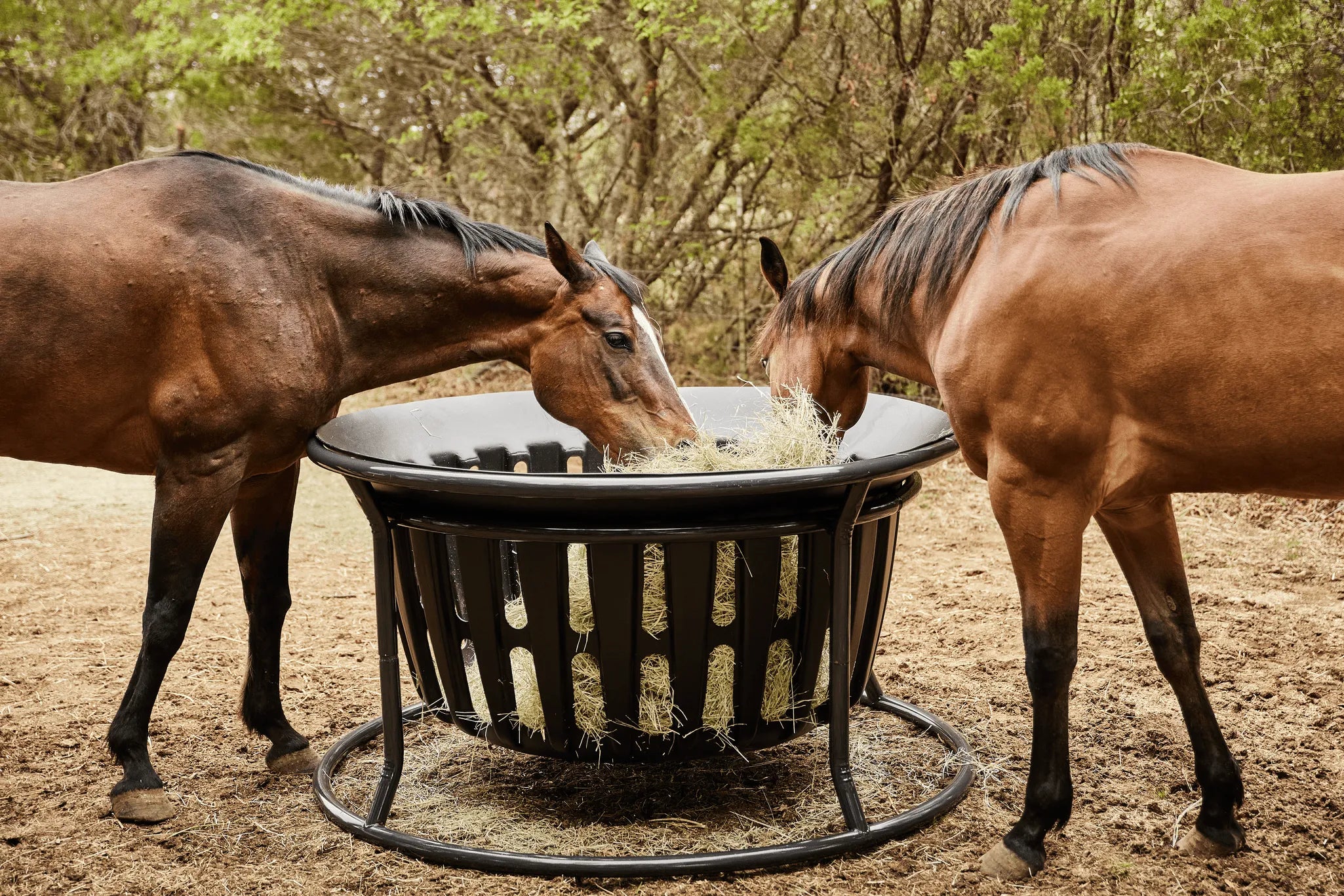
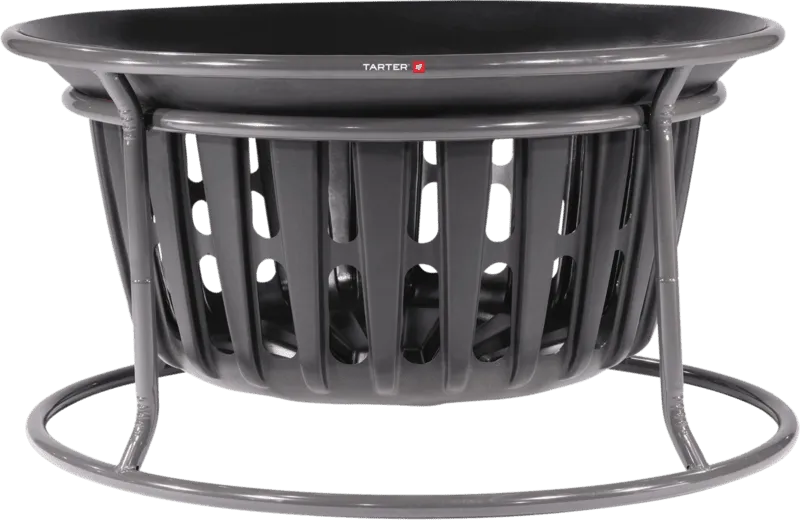
Barn World's horse hay feeder selection includes round-bale designs, covered hay feeding stations, modular polyethylene feeders, paddock hay racks, rack-and-trough arrangements, and compatible accessories. They are built for different uses. A round-bale feeder that serves a group of mature horses in a pasture is not necessarily appropriate for one miniature horse, a foal, or a stall with limited space.
Before selecting a feeder, consider the form of hay you use, the number and size of horses, how often feed is delivered, the room available around the feeder, and the amount of work required to load it safely. The goal is not simply to hold the largest possible bale: it is to keep suitable forage accessible while supporting safe, predictable feeding.
How Horse Hay Feeders Help Reduce Hay Waste
When hay is placed directly on the ground, horses may pull it apart, walk through it, lie on it, or scatter it into mud and bedding. Once hay becomes wet or mixed with manure, much of it is no longer appropriate to feed. Waste can be particularly expensive with large round bales, because their outer layers may be exposed to weather and livestock contact for days.
A feeder creates a physical boundary around the bale or holds smaller portions in a designated area. Some designs restrict how much hay a horse can pull from the bale at once. Others use a lower retaining surface or trough that catches loose stems. Covered feeders can limit direct rain or snow exposure. These features can reduce waste, but their value depends on the feeder's construction, its placement, herd behavior, and hay condition.
In round-bale feeding research reported by the University of Minnesota Extension, horses feeding without a feeder wasted about 57% of the hay, compared with 5% to 33% using the tested feeder designs. The specific design affected the amount lost. These are study findings, not promised results for any particular Barn World product or every farm. The useful lesson is that feeder design and feeding practices both matter.
Pay attention to where loose hay accumulates. A ring of trampled forage outside the feeder may indicate that animals are pulling out more than they can eat, that the bale is positioned poorly, or that the feeder does not retain falling hay. An appropriate design adjustment, a different feeding arrangement, or more frequent cleanup may be more valuable than simply buying a larger feeder.
Compare Common Horse Hay Feeder Styles
Different designs solve different problems. Use the following comparison to narrow the style of equipment before examining individual products and their exact specifications.
| Feeder style | Typical use | Important considerations |
|---|---|---|
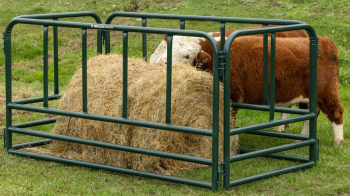
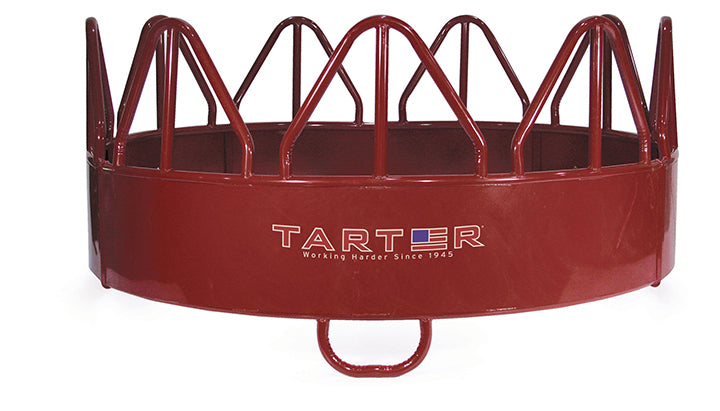
| Round-bale ring or poly feeder | Outdoor feeding of large bales to compatible horses | Bale diameter, safe openings, access around perimeter, footing and loading |
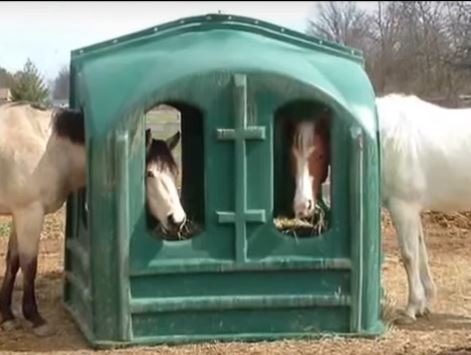
| Covered bale feeder | Hay storage and feeding in exposed paddocks or pastures | Feeding windows, drainage, airflow, cleaning, pallet freight and lead time |
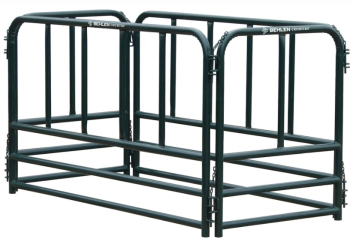
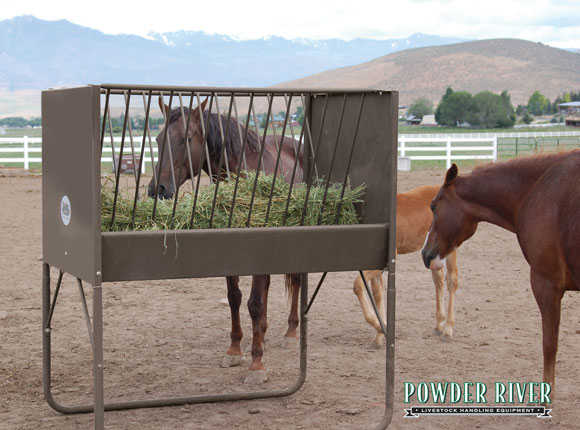
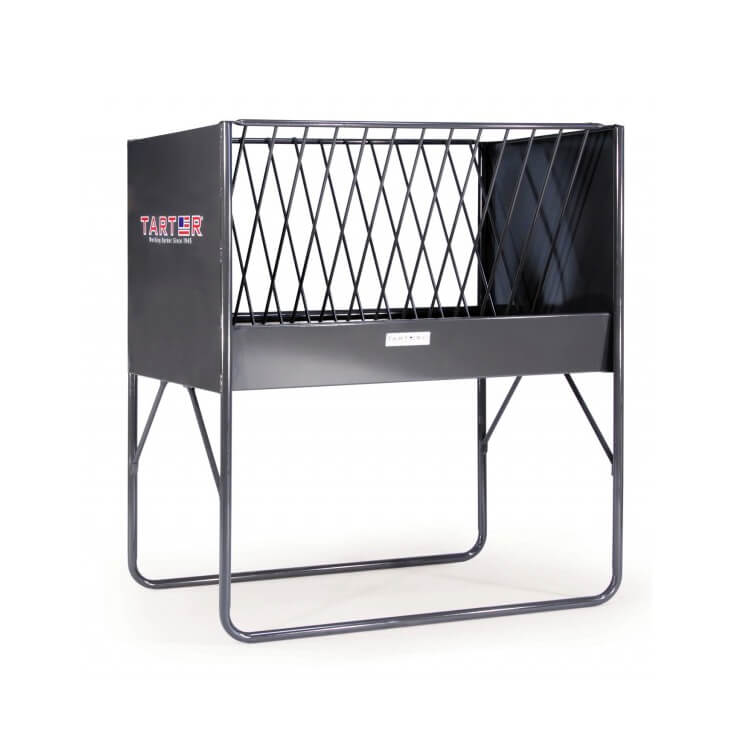
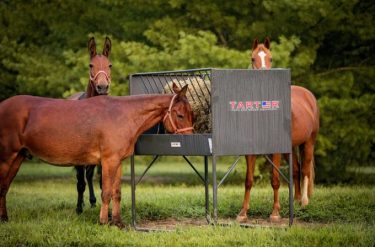
| Rack-and-trough feeder | Daily hay feeding in paddocks or suitable facility areas | Rack height, bar spacing, falling hay, trough access and cleaning |
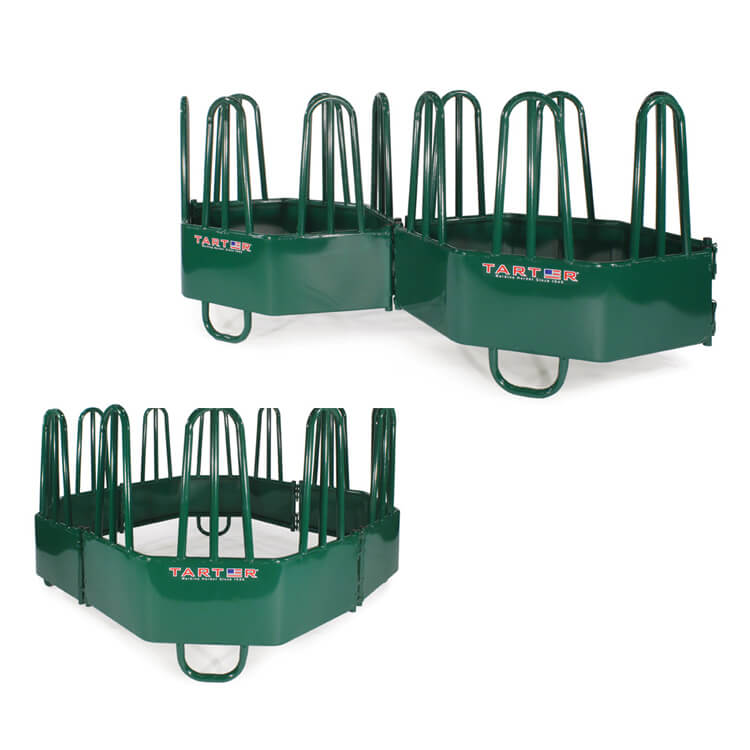
| Paddock V-rack or basket-style feeder | Measured hay feeding in designated outdoor areas | Hay retention, base stability, head clearance and reach |
| Stall or wall-adjacent feeder | Individual horses and smaller portions in confined spaces | Mounting safety, height, sharp edges, entrapment points and daily access |
Availability varies by model. Some historical feeder designs or accessories shown in this category may be discontinued; consult the current product details and request a quote only for equipment confirmed as available. Do not substitute a cattle-only feeder for an equine feeder without reviewing animal safety and manufacturer suitability.
Round Bale Feeders for Horses
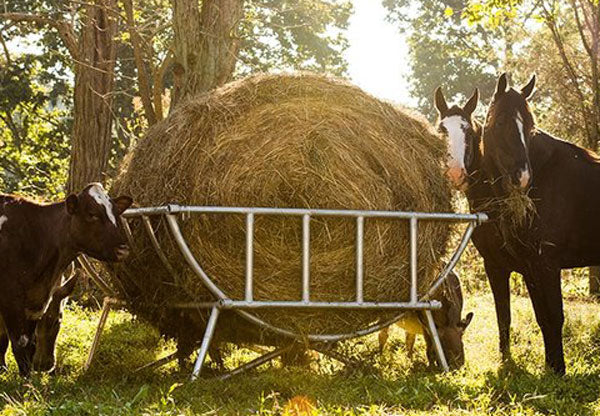
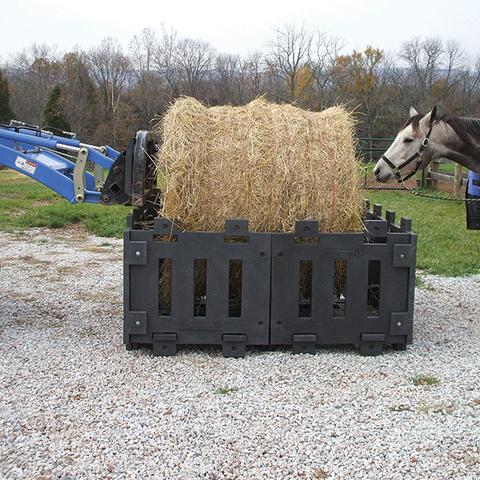
Large round bales can simplify feeding for operations with several horses, particularly during winter or when animals spend extended periods in dry lots. The feeder should accommodate the intended bale and allow the horses to reach hay without entering the structure or pulling large amounts onto the ground. Measure the actual bale diameter and width; bales that are unusually large or misshapen may not fit the same as standard bales.
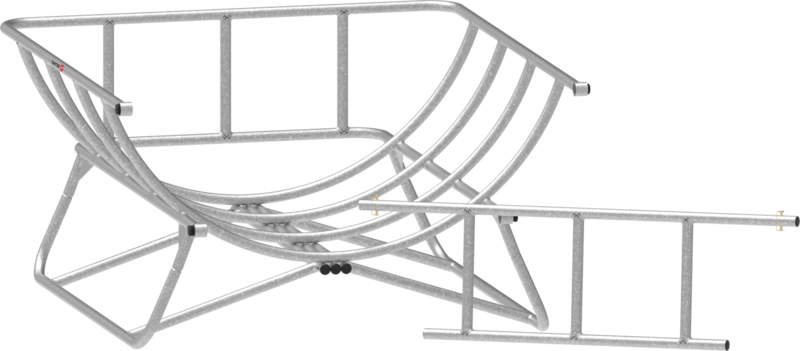
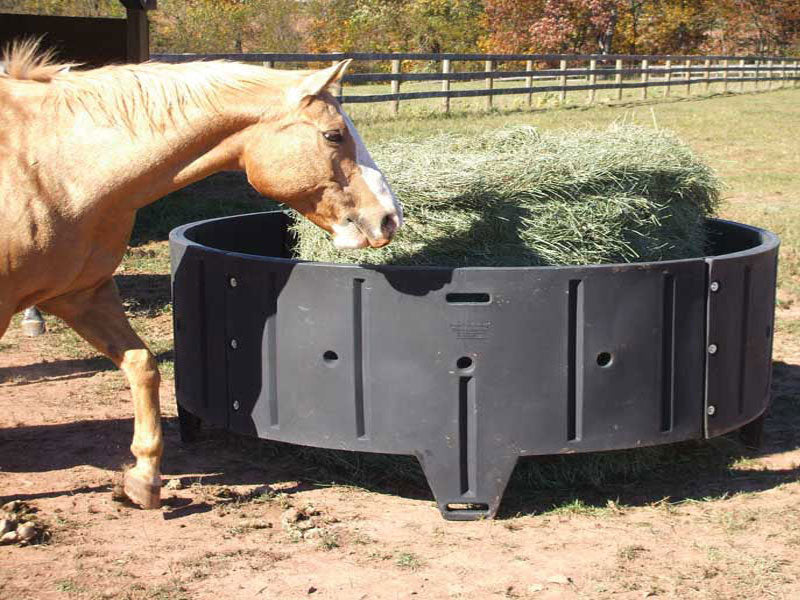
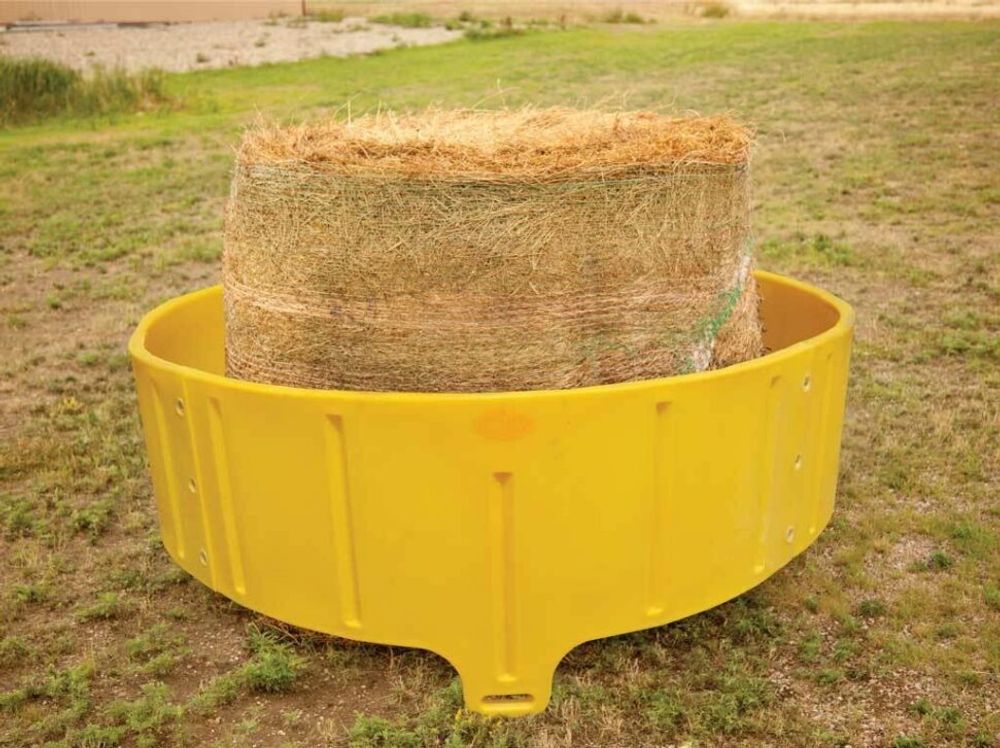
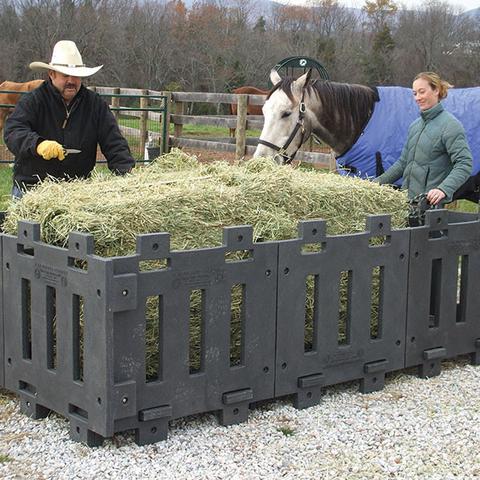
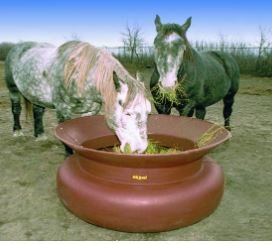
Round poly feeders are assembled from sections around a large bale. Barn World's currently listed round-poly model uses four connecting sections and is approximately 100 inches across when assembled. Because the sections form a complete ring, it is important to distinguish the complete feeder from an individual replacement curved poly panel. A separately sold single panel does not create an entire round feeder and should not be ordered as one.
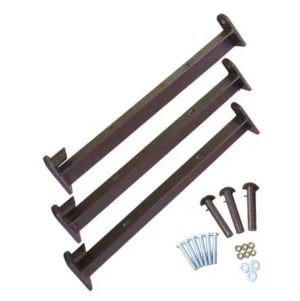
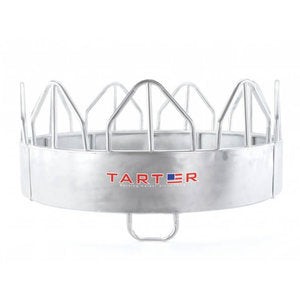
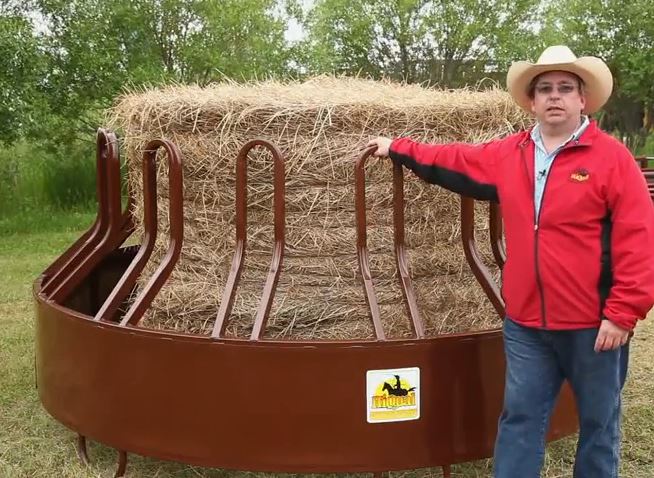
Metal tombstone-style equine feeders use upright openings around a bale. The openings and rails should be suited to the size and conformation of the horses. An optional compatible hinge kit may make it possible to open part of a particular feeder to load a bale from the side; the kit is an accessory, not a complete feeder, and compatibility must be checked before ordering.
Make sure loading machinery can approach and clear the feeder safely. Never lift a heavy bale over people or livestock. Move horses away from the area during loading, remove bale twine or net wrap as directed, and verify that the feeder is stable before allowing access. Observe how the animals use the feeder once the bale becomes smaller, because reaching and head positions can change as hay is consumed.
Covered Hay Feeders for Outdoor Pastures
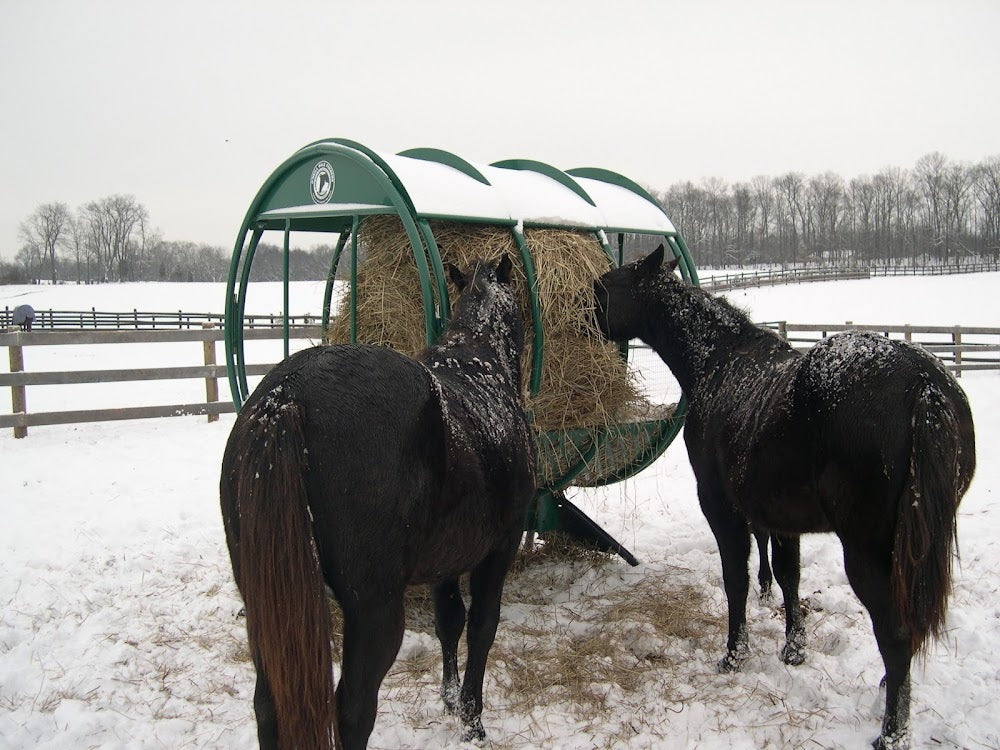
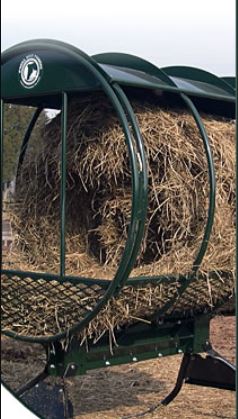
A covered feeder can help shield hay from direct rainfall and snow while providing feeding access around the enclosure. This may be useful where a hay barn is distant from the horses or a bale remains in a pasture for several days. However, a cover is not a guarantee against mold, condensation, wind-driven moisture, or contamination from the surrounding ground.
Some covered polyethylene models offer multiple feeding windows around a protected bale. Barn World's current covered model is described with eight windows, but the number of usable positions depends on the horses' size and how the unit is placed. A feeder next to a fence or barn wall may lose access to some windows and create crowding at the remaining ones.
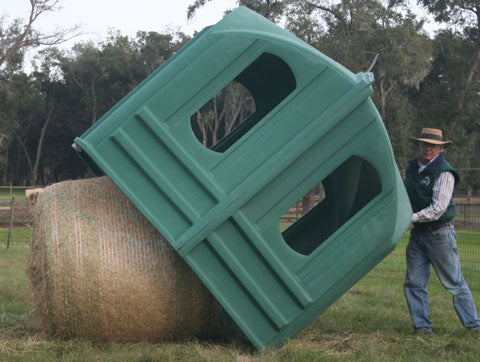
Plan for adequate ventilation and for removing spoiled material. Keep the base on well-drained ground, inspect the hay frequently, and avoid using a covered feeder to conceal forage that was already damp or moldy when loaded. Check whether the equipment ships assembled or on a large pallet and whether the supplier specifies a minimum order quantity or an extended production lead time.
Horse Hay Racks and Rack-and-Trough Feeders
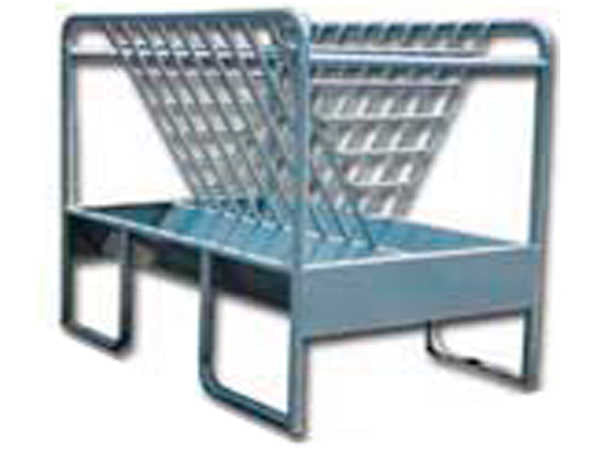
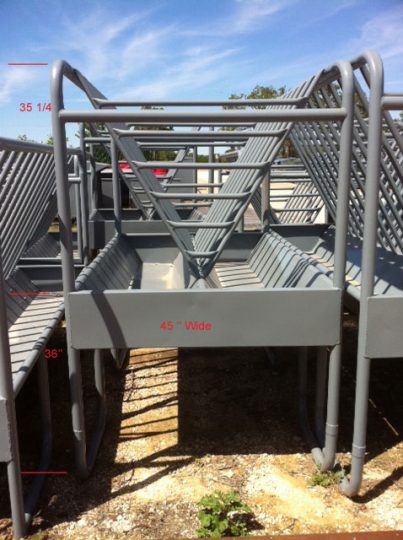
Rack-and-trough designs hold loose hay in an elevated rack with a lower trough beneath. The trough can help catch stems that fall when horses pull hay from the rack, reducing waste that would otherwise land on muddy ground. Some troughs may also be used with appropriate feed products, but the hay rack and grain-feeding arrangements should be managed to avoid contamination or unsuitable feeding access.
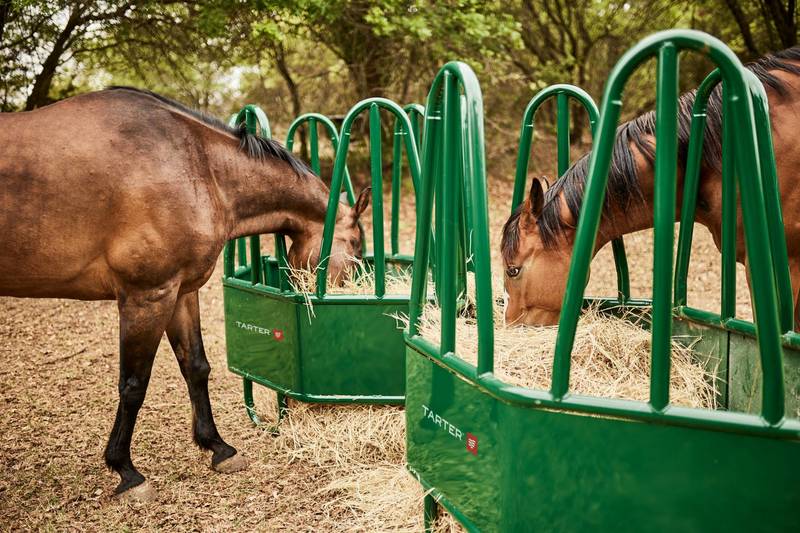
The placement and height of a rack are particularly important for horses. A high rack that requires an awkward head position can create unnecessary problems with reach, dust exposure, or falling forage. Horses normally spend much of their day grazing with the head lowered; where practical, choose feeding arrangements that allow a comfortable, more natural posture while keeping hay away from manure and excessive ground moisture.
Consider the spacing between bars and the possible risk of heads, jaws, hooves, or tack becoming caught. Evaluate the horse's size and behavior, not just the size of the hay flakes. For feeders used by several animals, pay attention to the space around each side, the ability to enter and leave, and the cleaning access beneath the rack.
Powder-coated or galvanized steel still needs routine inspection. Look for damaged welds, bent rails, loose fasteners, corrosion, and sharp edges. Where a rack includes a lower trough, remove accumulated wet hay and feed residue rather than allowing it to spoil under fresh forage.
Horse Hay Feeders for Stalls and Smaller Spaces
Stall feeding presents a different set of requirements from a pasture bale feeder. A horse must have enough room to approach the hay, turn, and move without striking its head or becoming caught against a wall. A stall feeder should never create projecting hardware or an opening that could trap a hoof, halter, or jaw. For a small stall, the safest solution may be a simpler, lower feeding arrangement rather than a large rack.
Wall-adjacent panels and smaller hay holders need suitable mounting support. Confirm whether the product includes mounting hardware and whether it is designed for individual panel use. For example, Barn World's single curved poly panel is an individual component, not a complete enclosure, and its product listing describes separate mounting requirements.
Use compatible fasteners and inspect them regularly. The weight of hay is not the only load: horses may push, rub, or pull on an installed feeder. Keep the installation away from doors, latches, and other pinch points, and arrange the feeding height so forage is available without placing the animal's muzzle directly in dust or requiring prolonged unnatural reach.
Feeding Horses in a Comfortable Head-Down Position
Equine feeding behavior differs from that of many livestock species. Horses are adapted to grazing and frequently eat with their heads low. University extension guidance recommends allowing a head-down feeding position when practical. A feeder should reduce waste without forcing a horse to maintain an awkward neck angle or routinely pull hay from above eye level.
At the same time, feeding directly on dirt or mud can contaminate forage. A low, well-designed feeder or contained ground-level feeding surface can help balance natural posture with cleanliness. The correct height depends on the individual horse, including ponies, miniature horses, older animals, and horses with dental or mobility limitations.
Watch how horses eat rather than relying on the manufacturer's photograph. If hay consistently falls into the eyes or face, the horse must twist its neck to reach the center, or one animal is unable to use the openings, the arrangement may need changing. Animals with specific veterinary or dental concerns may require a customized feeding approach.
Managing Slow-Feeding Nets and Restricted Access
Some horse owners use slow-feed nets or restricted-access systems to extend the time horses spend eating and limit the amount of hay pulled loose. These systems are not a direct substitute for a properly designed bale feeder, especially in mixed groups. Mesh size, mounting height, bale movement, and the horse's shoes or tack can create entanglement hazards when nets are used incorrectly.
For a round-bale net, consider whether a compatible enclosing feeder can keep the bale contained as it becomes smaller. A collapsing bale can allow horses to step onto remaining hay or become tangled with loose net material. Follow the net manufacturer's installation instructions and check frequently for damage, stretching, and exposure of loose ends.
Restricted access can also affect the way horses interact in a group. If one or two dominant horses control a limited feeding area, other animals may be driven away. Introduce a new system gradually and observe whether every horse can eat comfortably. Hay nets and slow feeders should not be assumed suitable for every foal, senior horse, or horse with dental difficulties.
Provide Enough Feeding Stations for the Herd
Feeding space can be as important as total bale capacity. A large feeder may store plenty of hay while offering too few usable positions for the horses in the pasture. Dominant horses may displace others from the trough, particularly when hay is scarce, weather is severe, or the animals have recently been grouped together.
Observe the herd during feeding and allow room for horses to move away without being pinned against a wall, fence, or corner. Separate feeders placed at practical distances from one another can help reduce competition, especially when horses vary considerably in age, size, or temperament. Do not place every feeder in one tight cluster merely because that location is convenient for a tractor.
Check for horses waiting a long time to approach the hay, chasing and kicking near the feeder, or returning with less body condition than the rest of the group. These are reasons to review feeding access and the broader nutrition program. Adding more hay to the same crowded unit may not resolve an insufficient number of feeding positions.
Choose a Well-Drained Feeding Site
Feeding sites receive repeated hoof traffic. Over time, a previously firm spot can become muddy, rutted, and contaminated with manure. Hay that falls into this material is usually wasted. Choose a well-drained location with adequate room around the feeder, and plan access for the equipment that will deliver fresh bales or remove accumulated waste.
Where horses use a feeder daily through winter, a properly designed all-weather surface may help manage mud and erosion. Gravel or another stable base should be suitable for equine footing and should not create sharp stones or unstable edges. In some pasture arrangements, periodically relocating a movable feeder can help limit damage to one area, but move it only according to the manufacturer and when no horse can be injured.
Do not place a feeder in a tight corner or directly in the travel path of a gate. Make it possible for subordinate horses to approach and retreat. Keep adequate separation from machinery, fencing hazards, overhead obstructions, and water or feed stations that might create congestion.
Protect Hay Quality During Storage and Feeding
A feeder cannot make poor hay nutritious or safe. Start with forage suited to the horse's nutritional needs and verify that it was properly cured and stored. Inspect bales for unusual heat, musty odor, visible mold, excessive dust, foreign objects, and signs of spoilage. When large round bales remain outside, the exposed outer layers and the bottom in contact with damp ground deserve special attention.
Store hay on a well-drained surface and protect it from precipitation before feeding. Once placed in a feeder, monitor how quickly the horses consume it. A bale that remains in a warm, humid feeder for a long time may deteriorate even under a roof. Remove unacceptable material rather than placing fresh hay on top and hiding it.
Remove twine, plastic wrapping, and loose bale netting before allowing horse access, following the feeder and hay supplier's instructions. These materials can become tangled in equipment or consumed accidentally. Inspect rack and trough areas for foreign objects, loose fencing material, and manure contamination during regular chores.
Forage requirements vary by body weight, workload, life stage, and health. Use suitable hay and a balanced feeding plan developed with an equine nutritionist or veterinarian when needed. Reducing waste is valuable, but not if the method limits essential forage intake or creates avoidable hazards.
How to Evaluate the Cost of a Horse Hay Feeder
A feeder is an equipment investment intended to improve feeding efficiency over many seasons. Compare the purchase price with the amount of hay currently lost, the price of replacement forage, the labor involved in daily feeding, and the expected durability of the unit. The value of preventing contaminated hay varies by climate, bale type, pasture conditions, and feeding behavior.
A simple approach is to estimate how much hay the herd uses and how much is discarded around the current feeding site. Multiply the amount of avoidable waste by the actual cost per pound or ton of forage. Then compare that annual figure with the complete delivered cost of an appropriate feeder. Use your own measurements rather than assuming that published research savings will be repeated exactly.
Include loading equipment, any additional panels or accessories, installation, maintenance, and transportation. A large covered feeder might reduce labor or protect hay effectively but have higher freight charges than a sectional ring feeder. A less expensive model can become costly if it needs frequent repairs or results in excessive hay loss.
Maintenance, Inspection and Long-Term Safety
Inspect every feeder routinely for loose fasteners, broken hinges, projecting metal, damaged poly panels, cracked components, and unstable supports. Look for places where a hoof, head, or jaw could become trapped as the feeder shifts or the bale settles. Replace damaged hardware with compatible parts, and do not improvise structural repairs in a way that creates new injury hazards.
Clean out wet hay and manure from retaining lips, baskets, and troughs. Remove sharp debris from the surrounding ground, and maintain drainage to help control mud. After severe wind or snow, check whether covered feeders have shifted and whether their roofs or openings remain secure. If a large unit has been struck by equipment, inspect it before allowing horses to use it again.
Pay attention to the animals themselves. Rub marks, cuts, unusual reluctance to eat, crowding, or frequent hay spillage may signal a design or placement issue. Even a feeder sold for horses should be checked for suitability in the particular herd and facility.
Freight Delivery and Ordering a Horse Hay Feeder
Large horse hay feeders often ship as oversized freight rather than ordinary parcels. Some arrive as sections that must be assembled, while certain covered models may require a long pallet, special handling, minimum order quantity, or extended lead time. The delivered cost can be a significant part of the purchase, especially for one large feeder going a long distance.
Before requesting a quote from Barn World, identify the intended feeder style, number of horses, bale size, expected quantity, and where the equipment will be installed. Provide the destination ZIP code, available unloading equipment, and any driveway restrictions. Confirm which panels, bolts, lids, hinges, or mounting hardware are included; an accessory or replacement panel is not necessarily a complete feeder.
If you also need equipment for other livestock, you can compare Barn World's broader hay feeders collection. Always verify that a design is suitable for horses before selecting it for an equine paddock or stall.
Frequently Asked Questions About Horse Hay Feeders
Do horse hay feeders really reduce wasted hay?
They can. In University of Minnesota research comparing different round-bale feeding arrangements, the tested feeder designs resulted in less wasted hay than feeding without a feeder. Actual savings depend on feeder design, hay condition, weather, stocking density, and daily management.
Is a covered hay feeder better for horses?
Covered feeders can reduce direct exposure to rain and snow, but they may be more expensive or difficult to ship and load. The best option depends on the site, hay storage time, livestock access, and whether the cover and base allow routine inspection and cleaning.
Can I use a cattle round-bale feeder for horses?
Not automatically. Some cattle feeders have openings or construction features that may create injury risks for horses. Use equipment specified for equine use and evaluate bar spacing, entrapment hazards, footing, head position, and the animals that will have access.
Should a horse eat hay from a high rack or near the ground?
Horses naturally spend much of their feeding time with the head lowered. A feeder that allows a comfortable head-down posture while keeping hay away from mud and manure can be practical. Avoid installations that force awkward reaching, create falling dust near the face, or allow entanglement.
How many horses can use one round-bale feeder?
The appropriate number depends on usable feeding openings, the circumference of the unit, animal size and temperament, and how the group is managed. Observe competition at feeding times and add feeding stations where necessary rather than relying on bale capacity alone.
Can one horse hay feeder handle both small square and round bales?
Some multipurpose designs may accommodate different forage packages, but many are intended for a particular bale size or feeding arrangement. Check the maximum bale dimensions, loading method, and design specifications for the exact model.
Are slow-feed hay nets safe inside a large feeder?
They may be used when the net, feeder, and animal-management arrangement are compatible and securely installed. Loose mesh, exposed ends, and a shrinking bale can create entanglement risks. Follow manufacturer directions, monitor the system regularly, and avoid assuming every horse is a good candidate for restricted-access feeding.
What is the difference between a curved poly panel and a complete round feeder?
An individual curved panel is one component of a larger enclosure. It does not include the other panels and hardware required to create a complete round hay feeder. Review the listing's included components and any mounting requirements before purchasing.
How should I prepare a horse hay feeder location for winter?
Choose stable, well-drained footing, allow safe movement around the feeder, and keep loading equipment access available. Where repeated traffic creates mud or ice, improve the surface as appropriate for horses and remove contaminated hay during routine chores.
How do I prevent mold and spoiled hay inside a feeder?
Use properly cured forage, keep the feeding area drained, remove wet or contaminated material, and inspect the bale regularly. A roof or cover can help limit precipitation but does not dry damp hay or guarantee that feed will remain safe indefinitely.
What details are needed for a horse hay feeder shipping quote?
Provide the feeder model or style, quantity, bale dimensions, delivery ZIP code, and available unloading equipment. For especially large covered or assembled units, confirm freight restrictions, production lead time, and any minimum order requirement before placing an order.