
Animals Shelters - Metal



Recently viewed
Metal livestock shelters can provide a practical covered space for calves, cattle, sheep, horses, and certain farm uses when the structure is matched to the animals and installed correctly. The term “metal shelter” covers very different products: a compact galvanized calf hut that ships assembled, a wide sectional livestock shelter that must be assembled on site, and a tubular horse-shelter frame without included roof or siding are not directly interchangeable.
Barn World's selection includes galvanized calf huts, 6-, 10- and 14-foot metal shelter families, a 12-by-12-foot steel horse-shelter frame, and an Osborne outdoor farrowing house. Compare each model's dimensions, usable interior clearance, included hardware, ventilation, anchoring and freight requirements. Two older horse-shelter listings in this collection are specifically marked discontinued or unavailable and should not be considered current equipment choices.
For other materials and molded calf nurseries, see the Animal Shelters category guide.
Compare Metal Animal Shelters by Size and Application
The following table summarizes current product descriptions. A nominal width does not establish the exact usable clearance, and models with the same material may have different shipping and installation requirements. Confirm the specifications of the selected configuration before placing a freight order.
| Shelter model | Listed size / application | Ordering and shipping |
|---|---|---|
| Galvanized calf hut | 7 ft 6 in. L × 4 ft 6 in. W × 3 ft 10 in. H | Ships assembled; three stakes included; front and pen options available |
| Medium metal shelter | 6 ft wide; 7 or 11 ft lengths | Ships assembled; optional front enclosures; check freight quantities |
| Large metal shelter | 10 ft wide; about 6 ft 3 in. overall height | Ships in sections; assembly required; anchoring stakes not included |
| Extra-large metal shelter | 14 ft nominal width; about 8 ft overall height | Sectional assembly; roof braces; anchors not included |
| Steel horse-shelter frame | 12 ft × 12 ft tubular frame | Roofing, plywood siding and anchors are not included |
| Osborne Hog Hut | 93 × 72 × 54 in. outdoor farrowing unit | Insulated composite-panel design; approximately 945 lb |
The Osborne unit is a specialized farrowing house with composite insulation and a galvanized support structure, not an ordinary galvanized corrugated hut. Every structure must be evaluated for its intended livestock use, ventilation, site and handling requirements.
Galvanized Steel Calf Huts
Barn World's smaller calf hut uses corrugated galvanized steel supported by an angle-iron frame. Its listed dimensions are 7 feet 6 inches long, 4 feet 6 inches wide and 3 feet 10 inches high, with an approximate empty weight of 145 pounds. A rear ventilation opening supports air exchange, and three ground tie-down stakes are included in the specified configuration.
Optional front panels, a hinged door, pen panels and a bottle holder allow certain housing arrangements to be adapted to the farm's management plan. Those options are not necessarily included in the base shelter. Where connected pens are used, confirm the correct connectors and panels; the dimensions and weight of optional pen sections are separate from those of the hut itself.
A young calf should be able to lie down and rise normally, with suitable space and fresh air. The rear vent must be considered when a front enclosure is added, particularly in cold conditions when operators may be tempted to block airflow. Bedding and manure must be managed so moisture and waste do not accumulate inside.
These calf huts are shipped fully assembled. Because they take significant space on a truck, the product listing indicates that orders of approximately five or more are typically needed for reasonable freight economics. Confirm actual availability, quantity requirements, and shipping arrangements rather than assuming one hut will qualify for normal parcel delivery.
Medium Six-Foot Metal Livestock Shelters
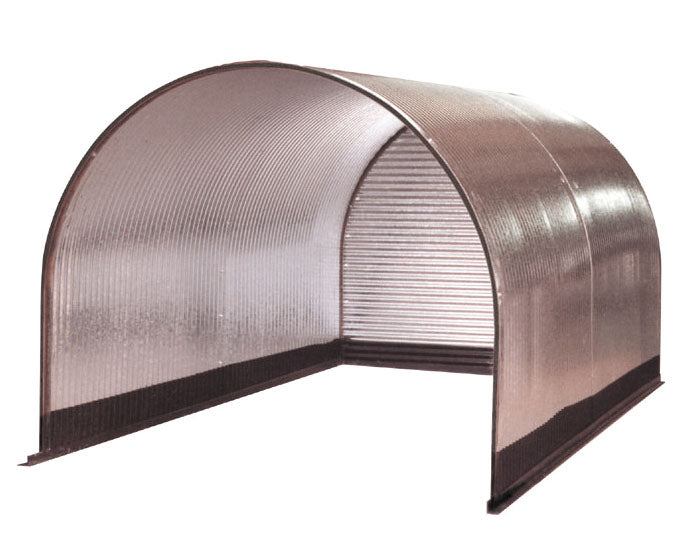
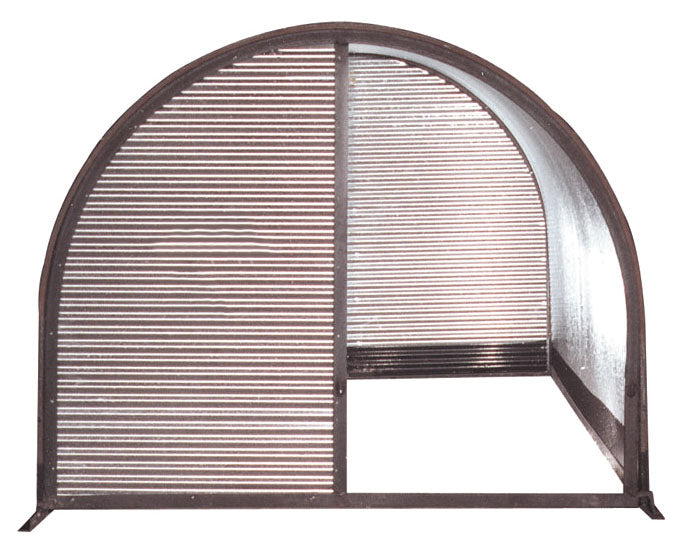
The medium metal-shelter range includes a six-foot nominal width and available seven- and eleven-foot lengths. The shelter uses a galvanized corrugated steel exterior with an angle-iron frame and rear ventilation. Its product listing describes optional partial front closure and door arrangements. Confirm which arrangement fits the intended animals and whether it includes a ground-level front crossbar or other components.
Like the smaller calf hut, this shelter is generally shipped assembled. A single unit may cost more to ship than its weight suggests because of its size. For producers housing several groups of smaller livestock, comparing the total delivered price for multiple units may be more useful than looking at the product price alone.
Check the actual opening height, ventilation, and interior clearance before using a six-foot model for a particular species or animal size. Adequate shelter is about accessible, usable space rather than simply fitting an animal inside the exterior footprint.
Ten-Foot Galvanized Animal Shelters
The ten-foot-wide shelter provides a larger covered area and is described with galvanized corrugated material and an angle-iron frame. Its product listing gives an approximate overall height of 6 feet 3 inches, but the roof's internal cross brace has a lower clearance. This matters when bringing in livestock or machinery: the tallest animal or vehicle must clear the lowest structural components, not only the outer opening.
The shelter ships in approximately seven-foot-long sections and requires assembly. Listed components include wooden skids with pull straps, wall protection, braces and bolts. Ground anchor stakes are not included, so the anchoring arrangement must be planned separately for the ground conditions and wind exposure.
An upper rear hinged opening may be used to adjust ventilation. Manage it according to the selected use and weather, and make sure the mechanism can be inspected and operated safely. Optional end or front components should be evaluated for whether they are intended for animals or for equipment storage.
Fourteen-Foot-Wide Metal Shelters
The extra-large metal shelter family offers wider coverage for compatible animals or equipment. The product description identifies a nominal fourteen-foot width and an overall height of about eight feet. Its steel shell and supporting framework arrive in sections, with roof braces and frame connections that must be assembled properly on site.
The actual length and internal clearance depend on the selected configuration. Do not assume that all of the nominal width or height is unobstructed: cross braces, spreader bars, and internal wall protection can reduce usable space in certain locations. Measure the intended animals or equipment and compare the dimensions with the manufacturer's current drawings.
This shelter's product listing notes that anchor stakes are not included. The site and anchoring method should be chosen with regard to the soil, wind exposure and installation instructions. Roof bracing and other structural supports are essential components; omit or alter them only if the manufacturer explicitly permits it.
Some optional front doors on these shelters are described as not intended for livestock use. If the enclosure will house animals, confirm that every opening, latch and panel is appropriate and does not create sharp projections or entrapment points.
Horse Shelters: Know What the Kit Includes
A horse pasture shelter should give animals a sheltered area with safe clearances and room to enter and leave without being trapped. Herd dynamics matter: dominant horses may block access to a confined opening, while exposed posts and rails can create hazards if an animal turns or pushes against them.
Barn World's currently listed horse-shelter product is a 12-by-12-foot tubular steel frame. Its listing states that plywood siding, roofing material and anchors are not included. It is therefore a framework that requires correctly selected and installed finish materials before it becomes a complete weather shelter.
When comparing its cost to a roofed shed, include siding, roofing, fasteners, anchoring and installation labor. Review site-specific wind and snow demands and do not assume a photograph of a fully covered shelter represents what arrives in the shipment. Two historical horse shelters associated with this collection are marked unavailable or discontinued; they are not recommended as current purchase options.
Osborne Hog Hut for Outdoor Farrowing
The Osborne Hog Hut is a specialized farrowing house for use with sows and piglets, not a general-purpose calf or horse shelter. The listed structure uses insulated composite panels supported by a galvanized framework. A separate piglet creep area and hinged roof and floor components support particular animal-care, ventilation and cleaning procedures.
The product listing describes a 93-by-72-by-54-inch exterior, approximately 46.5 square feet of floor space, and a weight of about 945 pounds. Proper machinery and approved handling methods are required for moving the unit. Follow the manufacturer's lifting instructions; do not attempt to lift or transport it by improvised attachment points.
Insulation can help moderate heat transfer, but it cannot eliminate weather and ventilation management. Bedding, ventilation, sow access, piglet monitoring and site drainage remain essential. The separate creep area is intended to help protect piglets, but it does not remove the need to observe the sow and litter or prevent every injury.
How to Choose the Right Shelter Size
Compare the intended animal species, age and body size with the shelter's usable interior area, entry dimensions and the number of animals that may use it at once. A nominal ten-foot width is not the same as ten feet of clear walking space if braces or interior fixtures occupy part of it.
A calf hut may be appropriate for individual management, while a wide shelter may serve several compatible animals when safely arranged. A horse shelter needs clearance and a safe escape route; a farrowing hut requires completely different internal access and care provisions. There is no universal animal-capacity number that applies across these structures.
Plan for feeding, watering, cleaning and bedding as well as occupancy. A shelter that creates a dry resting place can lose much of its usefulness if the entry collects mud or the only feeding point causes animals to crowd one another.
Ventilation, Shade and Winter Protection
Corrugated steel can provide a durable shell, but it does not automatically establish a controlled interior climate. In summer, direct solar exposure can cause heat buildup when airflow is limited. During winter, moisture from animals and wet bedding can collect if a shelter is tightly closed. Manage vents and openings to provide appropriate airflow while limiting damaging drafts.
Some shelter models have adjustable rear vents or optional front closures. These should be configured according to the model, species and weather. Do not assume that covering an opening always improves protection; it may reduce necessary ventilation. Inspect condensation, bedding conditions and animal behavior throughout the season.
Roofed structures can provide shade and some shelter from precipitation, but the effectiveness depends on orientation, prevailing winds, drainage and the condition of the building. Keep access to water and suitable resting areas available as part of normal livestock care.
Anchoring, Foundations and Site Preparation
Select a stable, well-drained site with room for animals, caretakers and equipment. Water pooling around a shelter can spoil bedding and make footing unsafe. Ground preparation should address drainage, routine cleaning and any machinery needed to load bedding or remove manure.
The anchoring method must suit the selected shelter and local conditions. Small huts may include ground stakes, while many larger sectional products require separately obtained anchors. Some metal shelters rest on skids, but those skids are not necessarily an adequate wind anchoring system. Follow the manufacturer and any applicable local construction requirements.
For frame kits, verify all necessary components and connections before building. Do not leave essential braces, anchors or protective elements out of the assembly to save time. Where animals will contact the structure, check for exposed sharp edges and hardware that could cause injury.
Assembly and Maintenance of Metal Shelters
Smaller fully assembled huts may be placed after safe unloading and site preparation, while larger sectional structures require an organized assembly process. Confirm that all panels, braces, hardware, skid components and directions are present before lifting heavy roof or wall sections. Arrange sufficient workers and suitable lifting equipment for the component sizes and weights.
After installation, regularly check fasteners, braces, hinges, vents and wall connections. Inspect galvanized areas for damage, steel for corrosion, and interior surfaces for sharp projections. Remove accumulated manure and wet bedding and keep the shelter's drainage paths open.
Severe wind, heavy snow and impacts from machinery may damage structural members or shift anchoring points. Inspect the unit after such events before livestock return, and make necessary repairs using compatible components and approved procedures.
Freight Costs and Delivery Requirements
Shipping cost can be an important part of a livestock shelter purchase. A fully assembled calf hut may be relatively light but occupy substantial freight space. A larger sectional shelter may travel more economically by flatbed, yet requires unloading and assembly. The Osborne farrowing house is heavy and needs specialized handling. The best shipping arrangement is therefore specific to the model and quantity.
The calf hut listing notes that multiple-unit orders are typically needed for economical freight, while the larger ten-foot shelter listing indicates that shipping one unit can also be cost-prohibitive over long distances. Review the actual delivered price rather than assuming a nearby-looking model has similar freight costs.
For a Barn World quote, provide the shelter model, width and length, quantity, selected front or pen options, delivery ZIP code, available unloading equipment and site access restrictions. Confirm whether roofing, siding, doors, stakes, braces and other accessories are included. Some accessory products are Unlisted and are not intended for purchase without their compatible shelter.
Frequently Asked Questions About Metal Animal Shelters
Do galvanized metal shelters come fully assembled?
Some small calf huts and medium shelters ship assembled. Larger ten- and fourteen-foot models generally ship in sections and require on-site assembly. Confirm the specific product configuration.
What sizes of metal livestock shelters does Barn World carry?
Current metal offerings include a small calf hut, six-, ten- and fourteen-foot nominal-width shelter families, a twelve-by-twelve-foot horse-shelter frame, and a specialized farrowing house. Dimensions differ by model.
Are the anchors included with a metal shelter?
Not always. Some small huts include stakes, while certain larger metal shelters specifically exclude anchors. Verify the included components and site-specific anchoring requirements.
Does the metal horse shelter come with roofing?
No. The listed twelve-by-twelve-foot tubular horse frame is supplied without roofing, plywood siding or anchors. Those materials must be obtained and installed separately.
Can the large metal shelters be used for equipment storage?
Some models are described for livestock or farm equipment, depending on their configuration. Check the actual clearance and intended use of doors and end panels before ordering.
Is the Osborne Hog Hut a regular galvanized steel calf hut?
No. It is a specialized outdoor farrowing shelter with insulated composite panels, a galvanized support structure and management features for sows and piglets.
How much ventilation does a livestock shelter need?
Ventilation depends on the animals, enclosure, climate, bedding and shelter configuration. Use the manufacturer's vents appropriately and avoid trapping moisture or excessive heat.
How should a metal animal shelter be anchored?
Follow the selected manufacturer's installation instructions and evaluate site conditions. Shelter weight and included skids do not necessarily provide enough resistance to wind on their own.
Can I purchase optional front closures and pen panels individually?
Not necessarily. Certain accessories are designed as add-ons to a compatible shelter and are not sold separately. Confirm options as part of the shelter quote.
How can I estimate freight on a large animal shelter?
Provide the model, quantity, selected accessories, delivery ZIP code and available unloading equipment. Freight varies with shipping dimensions, assembly status, distance and vehicle access.