
Cattle Guards


Choose a Cattle Guard for Your Crossing
Cattle guards, also called cattle grids or stock grids, allow vehicle access through a fence line without opening a gate at every crossing. Choose the guard around the vehicles using the road, the required crossing dimensions, site conditions, and the livestock being contained.
Compare steel grids, concrete cattle guard forms, and specialized ATV crossings below. Confirm the selected model’s load documentation and installation requirements before ordering.
Steel Cattle Guards and Rail Options
Steel cattle guards are available with different rail profiles, widths, and supporting structures. Round-rail and flat-top designs offer different crossing characteristics; use the specific product specifications to compare them. Road speed and approach design should suit the selected guard and installation.
For a starting point, compare a 14-foot steel cattle guard with the 12-foot H20 cattle guard. Their dimensions and load classifications differ, so they should not be treated as interchangeable.
Select the Required Load Rating
Choose the guard for the actual vehicles, axle loads, axle spacing, and equipment expected to cross. Private driveways may also carry heavy trucks or machinery. A location being privately owned does not establish the load capacity it needs.
For a public-road or specified construction project, obtain the required design loading, dimensions, certification, and foundation requirements from the road authority or project engineer. Match the manufacturer’s documentation to those requirements. Do not assume that H-20, HS-20, or another rating is interchangeable, or select a guard solely from a simplified tons-per-axle chart.
Concrete Cattle Guard Forms
Concrete forms allow a guard to be cast at the installation site. Compare the reusable cattle guard form with the in-ground cattle guard form. Follow the instructions for the selected form, including concrete, reinforcement, ground preparation, drainage, curing, and any load limitations.
Concrete and steel designs have different rail and opening configurations. Neither should be described as guaranteeing protection against hoof entrapment or injury. Confirm the design’s suitability for the livestock and intended use.
Foundations, Drainage, and Fence Connections
The supporting foundation and prepared site are part of the installation. Follow model-specific requirements for bearing surfaces, anchoring, drainage, and approach grading. A boxed or ground-set design still requires the site preparation specified for that model; it is not permission to place any cattle guard on unprepared ground.
Compare cattle guard foundations and cattle guard wing posts where appropriate. Verify compatibility with the selected guard and connect the surrounding fencing so livestock cannot simply walk around the crossing.
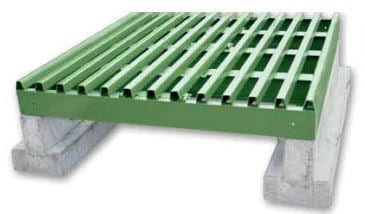
ATV Crossings
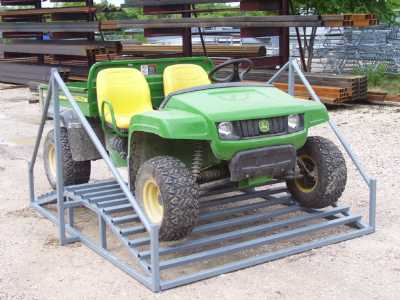
An ATV cattle guard provides a specialized crossing option for suitable all-terrain vehicles. Check its dimensions, intended vehicles, and installation requirements. Keep the crossing visible and maintain drainage and the connecting fence line.
Livestock Suitability and Ongoing Checks
Cattle guards are intended primarily for cattle. We do not recommend them for horses, and smaller-hoofed animals such as goats may cross some designs. Provide an appropriate separate route for horses, pedestrians, or other users who cannot safely use the grid.
A cattle guard can reduce routine gate opening, but it does not guarantee containment or eliminate maintenance. Inspect rails, welds, supports, anchoring, fencing, and the space beneath the grid. Remove accumulated debris and address damage according to the manufacturer’s instructions.
For a comparison of crossing options, read cattle guards instead of gates.
Plan Your Order and Freight Delivery
Contact Barn World with the crossing dimensions, expected vehicles, required load documentation, site details, and delivery ZIP code. Confirm the guard, compatible foundations, wings, posts, and other components included in the quote.
Arrange unloading equipment suitable for the shipment’s weight and dimensions, with adequate access at the delivery site. Confirm unloading requirements before scheduling delivery.
Call Barn World at (720) 238-2190, email Sales@BarnWorld.com, or use chat for help selecting a configuration and obtaining a freight quote.