
Bottomless Stock Tanks
Recently viewed
Bottomless stock tanks provide large-capacity water storage and drinking access for cattle and other livestock. Compare Hastings bottomless stock tanks, Sioux Steel bottomless stock tanks, and bottomless tanks with liners to find the right configuration for your operation.
These tanks assemble from wall sections at the installation site. Unlike a conventional tank with an integrated floor, a bottomless tank requires a properly prepared, watertight base or a compatible liner. Follow the installation instructions for the selected tank and liner.
Compare Bottomless Tank Options
- Hastings tanks: Compare the model-specific diameter, wall height, steel gauge, and capacity on the Hastings product page.
- Sioux Steel tanks: Review the galvanized steel tank specifications and installation requirements before selecting a size.
- Tanks with liners: Choose the tank-and-liner configuration when a lined system suits your site. Check the included components and installation requirements on the product page.
Choose Tank Size and Water Capacity
Plan capacity around herd size, water demand, available refill rate, and the reserve needed between refills. Check each product's dimensions and capacity chart: available diameters and wall heights differ by manufacturer and configuration. Make sure livestock can reach the water safely at the selected wall height.
Liners and Replacement Parts
A compatible liner provides a barrier between the stored water and the prepared ground. When replacing an existing liner, match the manufacturer, tank diameter, and wall height. Compare Sioux Steel bottomless tank liners and Sioux Steel liner clamps, and check which clamps and hardware are included before ordering.
Site Preparation and Water Supply
Review the manufacturer's assembly and foundation instructions before preparing the site. Plan for a level installation area, suitable equipment access, plumbing, and cleaning. In freezing climates, confirm an appropriate winter watering plan for the tank and supply line with the manufacturer and a qualified local installer.
A float-controlled inlet can regulate filling when connected to a suitable water supply. It does not replace regular checks of the water level, refill system, leaks, and cleanliness. For remote pastures, account for changes in pump output and interruptions to the water supply.
Large Bottomless Stock Tanks for Cattle and Pasture Watering
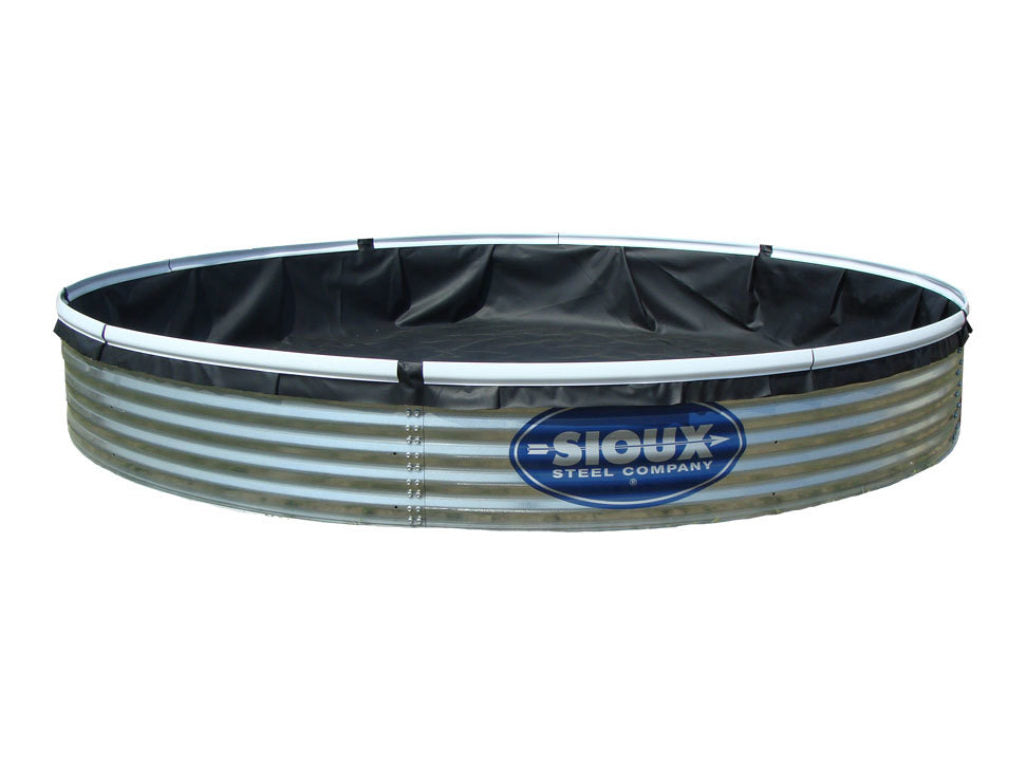
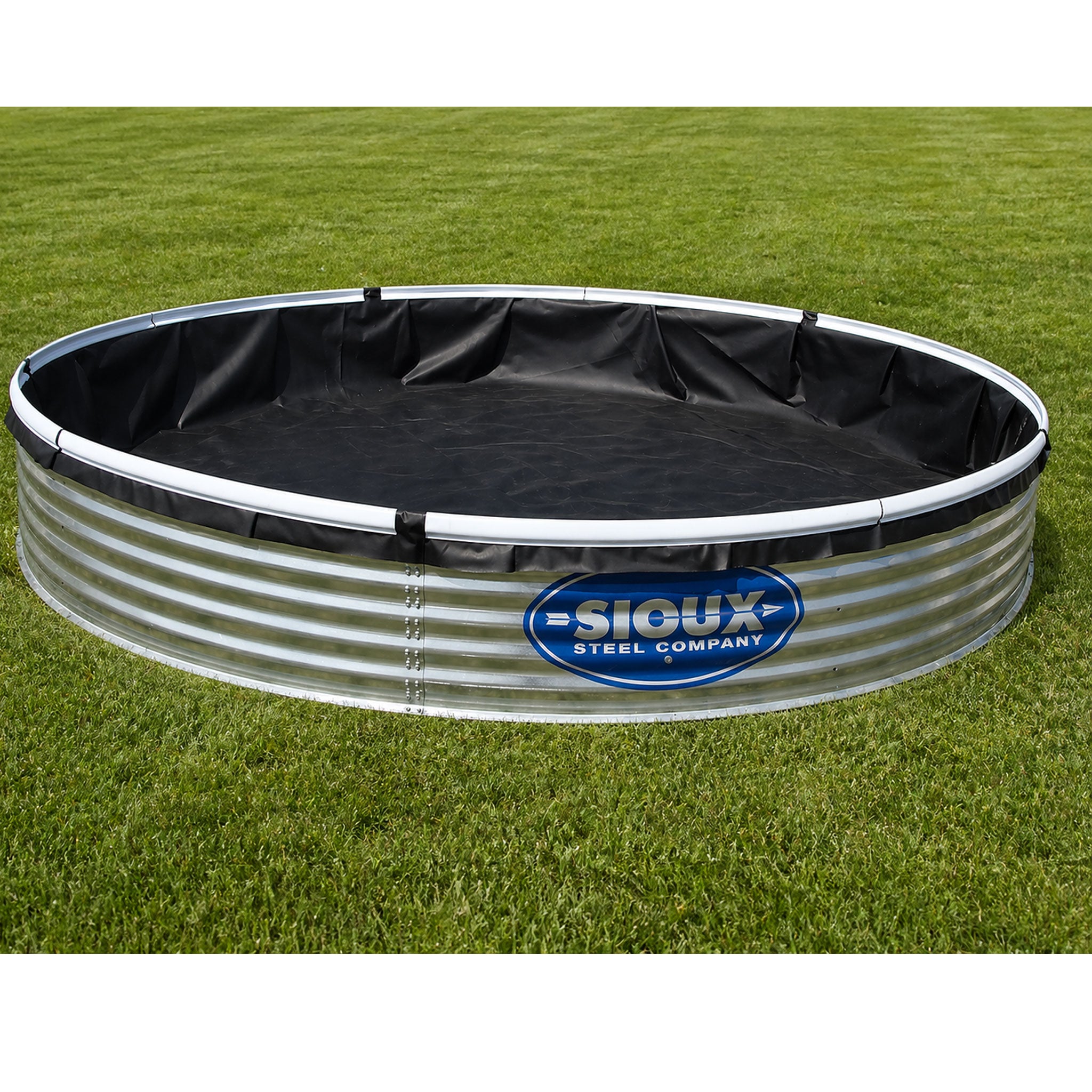
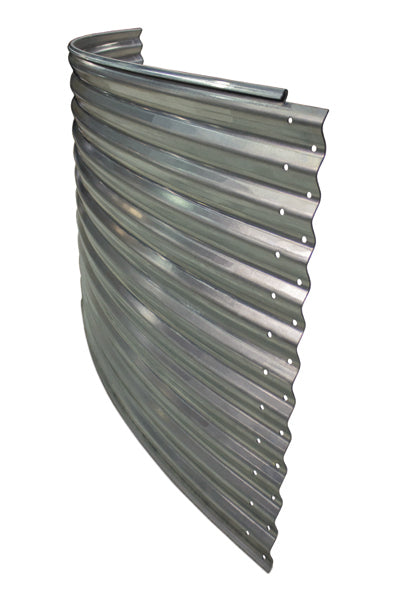
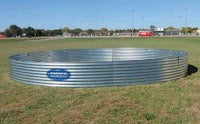
A bottomless stock tank is a large, circular livestock watering reservoir assembled from steel wall sections at the installation site. It provides a substantial volume of water while allowing animals to drink directly from the tank when the wall height and approach are suitable. Because the tank is assembled from sections, it can be transported to some locations where bringing in one completely welded tank would be impractical.
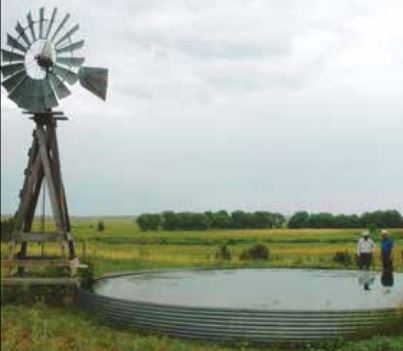
These tanks are often chosen for cattle pastures, remote ranch watering points, and systems where water arrives from a well, solar-powered pump, or windmill. Their capacity may provide a useful reserve during pumping interruptions or between refill cycles. However, stored water is not the same as a reliable water supply. The total system must deliver clean water quickly enough, retain it without significant leakage, and provide safe access for the herd.
Large-capacity tanks are also permanent infrastructure investments. Plan the exact location, base, sealing method, fill arrangement, overflow, livestock traffic, and future cleaning access before selecting a diameter. An oversized tank on a poor foundation may be a worse investment than a smaller, properly supplied and maintained watering system.
How Does a Bottomless Livestock Water Tank Hold Water?
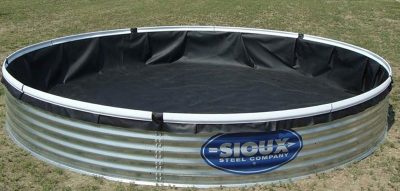
A conventional round stock tank has an integrated floor. A bottomless tank has steel sidewalls but no factory-installed solid bottom; the completed site must provide the water-retaining surface. Depending on the model and installation plan, that may involve a suitable engineered sealed base or a compatible liner. Simply assembling the steel ring on ordinary ground does not make it watertight.
It is important to distinguish the wall joints from the bottom seal. Manufacturer-approved seam tape or other joining materials help seal the connections between wall panels. They do not replace the base or liner beneath the water. The exact bottom-sealing approach must be compatible with the tank, site conditions, and intended use. Do not assume any soil treatment, concrete slab, or general-purpose liner is adequate without the proper installation specifications.
Water places substantial pressure on the sides and base. Even a small leak can become costly in a remote pasture if the pump must run unnecessarily or the tank drains during a power interruption. Verify watertight performance and inspect the finished assembly before relying on it as the herd's primary source of drinking water.
Hastings Versus Sioux Steel Bottomless Tanks
Both product families use bolted steel wall sections to form a large round tank, but their sizes, wall materials, assembly details, and available accessories differ. Choose the model first, then verify the foundation and sealing requirements for that exact manufacturer. Hardware, liners, and installation instructions should not be assumed interchangeable.
Hastings Bottomless Stock Tanks
Hastings lists galvanized steel sections in selected 10-gauge and 12-gauge options, with 25.5-inch and 33-inch wall configurations shown on its current Barn World product page. Diameters listed include 15, 20, 25, and 30 feet. Its wall panels are assembled with the specified overlap, bolting, and joint sealing materials. A watertight bottom or verified liner system is still necessary.
Sioux Steel Bottomless Stock Tanks
Sioux Steel lists a 12-gauge galvanized steel wall construction and panel connections using double rows of bolts. Select models are available as complete tank-and-liner arrangements. The compatible Sioux Steel replacement liner kits described by Barn World use 36-mil polyethylene and are offered for 15-, 21-, and 27-foot-diameter configurations with 25-inch or 33-inch walls. Confirm that the selected liner and retaining hardware match the exact steel tank.
A mil is one-thousandth of an inch, not a millimeter. For example, a 36-mil liner is specified by its material thickness; the designation does not tell you the size of the assembled tank or eliminate the need for proper ground preparation and edge protection.
Compare Large Stock Tank Sizes and Listed Water Capacities
The size of a circular tank affects both water volume and the perimeter from which animals can drink. Wider tanks may provide more storage and greater edge length, but they also require a larger level site, more base preparation, and more room for equipment and livestock circulation. Taller walls increase listed storage capacity but may change access for calves or smaller livestock.
The following figures are taken from Barn World's Sioux Steel bottomless tank-with-liner configuration chart. They describe those particular tank-and-liner systems, not every Hastings or Sioux Steel model. Actual usable capacity depends on the final installation and water level.
| Tank diameter | Wall height | Listed water capacity |
|---|---|---|
| 15 feet | 25 inches | 2,688 gallons |
| 15 feet | 33 inches | 3,544 gallons |
| 21 feet | 25 inches | 5,230 gallons |
| 21 feet | 33 inches | 6,948 gallons |
| 27 feet | 25 inches | 8,646 gallons |
| 27 feet | 33 inches | 11,486 gallons |
Compare these values with the current product specifications before ordering. Tank dimensions, available configurations, and shipped components differ between manufacturers. If smaller stock tanks are also under consideration, compare the complete system's storage volume, refill rate, edge access, and site requirements rather than choosing only the largest gallon figure.
Calculate Water Storage Around the Herd, Not Just Tank Diameter
Daily water needs vary with cattle size, lactation, forage moisture, weather, and activity. Hot conditions can substantially increase consumption, and calves, nursing cows, and larger breeding animals may have different needs. A planning estimate should reflect the peak daily demand of the actual animals in the pasture, not a fixed amount per cow that remains valid year-round.
Start with the number and type of animals, estimate their daily water needs under the hottest likely conditions, and multiply by the number of days of reserve desired. Then compare the result with usable tank storage and the water that the pump or pipeline can reliably supply during that time. Leave an operational margin for changes in herd size, evaporation, maintenance, and interrupted pumping.
For illustration, if 100 cattle require an estimated 25 gallons each on a hot day, they need approximately 2,500 gallons that day. A tank holding roughly 2,700 gallons would not provide several days of reserve unless the water supply continued replenishing it. Actual herd demand needs to be verified for the livestock and climate. Colorado State University Extension emphasizes evaluating both cattle water requirements and the flow rate available to replace what the herd drinks.
A large tank also does not ensure that every animal can drink at once. Observe crowding and give calves and less dominant cattle enough safe access. A high-volume tank with poor approach footing, fencing bottlenecks, or an inadequate drinking edge may not serve a large herd as well as its gallon capacity suggests.
Refill Rates, Solar Pumps, and Remote Water Sources
A bottomless stock tank can be useful where water is pumped intermittently by a solar system or windmill. The reserve helps smooth out changes in pumping conditions, but water availability must still be checked. Cloudy weather, low wind, pump failure, well limitations, and power interruptions can all reduce the amount entering the tank.
Compare the system's expected gallons per hour or gallons per minute with peak herd demand and the operating hours realistically available. Include pipe length, elevation, friction loss, and pump output at the actual site. A water line that looks large enough may still deliver too slowly when several animals arrive together or when the storage level has fallen.
Where a float valve is installed, use components appropriate for the pressure and flow of the source. Provide a means of identifying an overflow or uncontrolled fill, and protect the inlet and valve from damage by livestock. A float valve regulates the level when working correctly but cannot make up for an undersized supply or an empty well.
For remote pasture systems, establish a routine for checking water levels and pump operation. During high heat or when the herd depends entirely on one tank, inspection frequency should reflect the consequences of an interruption. Consider the reliability of backup water arrangements as well as the capacity printed in the tank catalog.
Preparing the Site Before Assembling Steel Wall Sections
The installation site should be level, stable, accessible, and suitable for the total water load. Plan sufficient space for the tank diameter, assembly work, servicing the inlet and drain, and movement of cattle around the exterior. Low ground, drainage channels, and areas with frequent vehicle traffic may create avoidable problems. Check for underground utilities before excavation or site work.
Ground preparation must follow the selected manufacturer's instructions. Depending on the engineered installation, suitable preparation may involve compacted material, a carefully prepared sealed surface, a designed concrete base, or a compatible protective underlayment and liner. The correct choice depends on soil and site conditions, model requirements, and local regulations. A watertight installation should not rely on an improvised seal beneath a large loaded tank.
Inspect the base for protruding rocks, sharp objects, ruts, or uneven areas that could damage a liner or create concentrated stresses. Plan surface runoff around the site so heavy rain does not erode supports or leave muddy approaches. Drainage outside the tank is different from preventing water loss through the tank's bottom, and both need to be addressed.
Assembly, Wall Seams, and Leak Checks
These large steel tanks are shipped as sections rather than as one fully assembled water vessel. Check the supplied wall panels, bolts, sealing material, and other components against the selected model's instructions before starting. Use appropriate lifting, handling, and personal protection practices when moving curved steel panels.
Align and join the panels using the specified lap direction, seam tape or sealant, fasteners, and tightening procedure. Some designs use double rows of bolts to secure wall overlaps. Correct seam preparation matters: dirt, incorrect tape placement, uneven contact, or unsuitable hardware can cause leaks after filling.
Complete the prescribed base or liner installation before filling. Check the finished perimeter, seams, and retaining components, then introduce water according to the manufacturer's instructions while watching for movement, seepage, or loss of level. If leaks occur, address the cause using the prescribed repair process rather than relying on an unapproved coating or quick fix.
Never attempt to move, dismantle, or loosen a water-filled tank. Thousands of gallons of water create large loads on the walls and supports. Drain and service the tank safely following the installation and maintenance guidance for that exact model.
When a Bottomless Tank Liner Is the Better Option
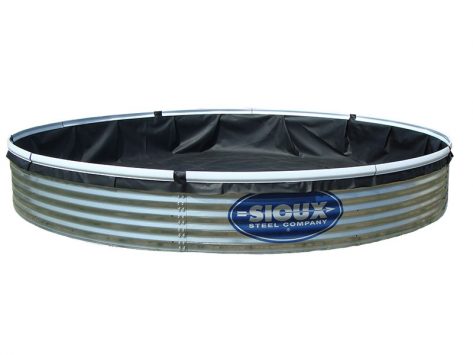
A compatible liner creates an internal water-retaining barrier where a lined system is preferable to relying on an engineered sealed bottom. Liner installation still requires a suitable foundation and careful protection against punctures, abrasion, and sharp edges. The steel tank and the flexible liner perform different functions: the tank walls provide the structure; the liner helps retain the water.
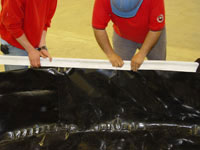
For the compatible Sioux Steel systems shown in this collection, Barn World's replacement kits are specified with 36-mil polyethylene material and model-matched retaining components. The liner kits include clamps and trim lock for the selected tank size. The replacement-liner listing does not include the steel tank itself. A complete tank-with-liner product may have a different set of included components, so compare package descriptions before ordering.
Match the liner to the exact diameter and wall height. It is not enough to select a roughly similar round liner or one described only by gallon capacity. The retaining edge and protection system must also fit the manufacturer's steel rim. Barn World's separate Sioux Steel liner-clamp product is specified for Sioux Steel applications; it should not be assumed to fit a Hastings tank without confirmation.
Inspect lined tanks for displacement at the top edge, wear where cattle drink, punctures, and unexplained water loss. When replacing a liner, check the underlying surface and steel structure. A new liner cannot compensate for a weakened tank wall or dangerous foundation conditions.
Safe Drinking Access and Mud Control
The perimeter of a large tank provides drinking space, but the surrounding area needs to be suitable for animals of different sizes. A wall height that works for mature cows may be awkward for calves. Assess the herd's reach and footing before selecting a taller design. Avoid sharp or damaged edges, unstable ground, and narrow areas where animals can become trapped against fencing.
Concentrated livestock traffic can create mud and manure buildup. In wet weather, repeated use of the same watering point may damage the soil and increase the amount of material tracked into the water. A prepared heavy-use surface, adequate drainage, and occasional maintenance of the surrounding area can reduce those problems. Keep gates, feed bunks, and nearby fences from restricting safe approaches to the tank.
For some systems, controlling access along a defined section of tank perimeter may reduce contamination, but any railing or fence must allow animals to drink without injury or unnecessary competition. The goal is to provide safe, dependable water while keeping the area around the tank workable for cattle and maintenance equipment.
Keep Large Tank Water Clean and Palatable
A large volume does not automatically mean good water quality. Sunlight, warmth, manure, feed residues, leaves, and other debris can encourage algae and bacterial growth. Stagnant water may become less desirable for livestock to drink, and some cyanobacteria can produce dangerous toxins. Inspect both the tank and the source regularly, particularly during warm weather.
Remove debris, clean surfaces as appropriate, and address sources of contamination. Avoid adding chemical treatments without guidance appropriate for livestock drinking water; some products used for pools or ornamental ponds are unsuitable. Consider water-quality testing if the source changes, animals show signs of a problem, or unusual color, odor, or growth appears. University extension resources recommend monitoring and cleaning watering tanks rather than relying on a single treatment or an arbitrary cleaning interval.
When draining and cleaning a large tank, control where the water will go and take care not to damage a liner or disturb its retaining hardware. Keep cattle away from maintenance work and protect the inlet and plumbing from accidental impacts. Check the tank again after refilling to confirm normal function.
Planning for Winter and Freezing Conditions
Large tanks can still freeze. Water capacity alone does not guarantee an ice-free drinking opening or prevent the supply line, float valve, or exposed plumbing from freezing. In northern climates, plan the winter watering system before temperatures drop, especially if the tank is intended to serve livestock year-round.
Depending on the site, winter management may involve a protected or buried supply line, appropriately designed heating or circulation equipment, insulated components, or a separate frost-resistant livestock waterer. Any electrical or heating equipment must be suitable for livestock use and installed according to its instructions and local requirements. Do not assume that a general-purpose heater is compatible with a flexible liner or the tank construction.
Inspect ice buildup, drinking access, and water levels frequently during freezing conditions. Removing ice or working around a large tank can create fall and injury hazards. Select a winter approach based on local climate, power availability, livestock needs, and the manufacturer's recommendations.
Maintenance and Long-Term Operating Costs
Inspect the tank walls, bolt joints, foundation area, water-control devices, and surrounding fencing as part of routine livestock checks. Look for wet spots outside the tank, unusual water loss, shifting or corrosion of the steel sections, damaged edges, and blocked inlets or drains. For lined systems, check the visible liner and retaining components for damage or displacement.
The total cost of a large stock tank includes more than the steel wall kit. Add the necessary foundation or sealed base, liner where used, plumbing, float valve, pump and power system, site preparation, freight, unloading, installation labor, and ongoing water and maintenance costs. A less expensive tank body may be a poor value if the site requires extensive work or the supply cannot meet herd demand.
When comparing a larger tank with several smaller waterers, consider how the layout affects herd access, pasture use, and the risk of a single supply interruption. A large reservoir can be a valuable buffer, but it should support a reliable watering plan rather than become a substitute for one.
Frequently Asked Questions About Bottomless Stock Tanks
What is a bottomless stock tank?
It is a large livestock water tank assembled from wall sections without a factory-installed solid floor. A suitable water-retaining base or compatible liner completes the storage system. The arrangement can provide substantial water capacity for cattle and other livestock.
How does a bottomless stock tank keep water from leaking into the ground?
It relies on a properly designed and installed sealing system at the base, often including a compatible liner or another manufacturer-approved water-retaining installation. Wall seam tape seals the steel panel joints but does not make ordinary soil watertight.
How many gallons does a large bottomless stock tank hold?
Capacity depends on diameter, wall height, and the exact model. For example, Barn World's listed Sioux Steel tank-with-liner configurations range from 2,688 gallons for a 15-foot-by-25-inch model to 11,486 gallons for a 27-foot-by-33-inch model. Confirm the current product chart before ordering.
Can I use a bottomless stock tank for a remote cattle pasture?
Yes, provided the tank is installed properly, the herd can reach the water safely, and the pump or other source can replenish it. Solar and windmill systems may benefit from storage reserve but can still be interrupted, so check water levels and source performance regularly.
Do all bottomless stock tanks need liners?
No single method applies to every design. Some installations use an appropriately engineered sealed base, while others use a compatible liner. The selected manufacturer's instructions and site requirements should determine the approach.
Will a Sioux Steel liner fit a Hastings tank?
Do not assume it will. Liner dimensions, wall height, top-edge shape, and retaining components must match. The Sioux Steel replacement kits and separate clamps are described for compatible Sioux Steel tanks, not as universal products.
How do I choose the right tank diameter?
Compare peak herd water demand, required storage reserve, refill rate, usable drinking perimeter, livestock size, site space, and delivery constraints. A larger diameter increases storage potential but also increases the installation footprint and site-preparation requirements.
Can cattle drink directly from a large bottomless tank?
Many installations are designed for direct livestock access, but wall height, footing, the surrounding layout, and the type and size of animals determine whether it is suitable. Make sure calves and less dominant animals have safe access.
Can a bottomless stock tank freeze in winter?
Yes. Large tanks, supply lines, and float valves can freeze. Winter use may require a separately designed frost-control system or alternative waterer that is compatible with the tank and local conditions.
How often should a livestock stock tank be cleaned?
Inspect it routinely and clean when algae, manure, sediment, or other contamination accumulates. Frequency varies with season, water source, herd traffic, and site conditions. Water quality is more important than following one fixed interval for every operation.
What information is needed for a bottomless stock tank freight quote?
Provide the preferred manufacturer, tank diameter, wall height, steel gauge where applicable, whether a liner or replacement components are needed, quantity, delivery ZIP code, and unloading or site-access constraints. Confirm what is included in the selected kit before ordering.
Request a Freight Quote
Freight requirements depend on the tank and destination. Contact Barn World with the selected model, size, delivery ZIP code, and unloading requirements for a shipping quote. Let us know whether liftgate service is needed so it can be included in the quote.
For help choosing a tank, call, chat, or email Sales@BarnWorld.com.
Need a smaller option? Compare galvanized stock tanks and livestock waterers, or browse all stock tanks.