

Bottomless Stock Tanks with Liners for Livestock Watering
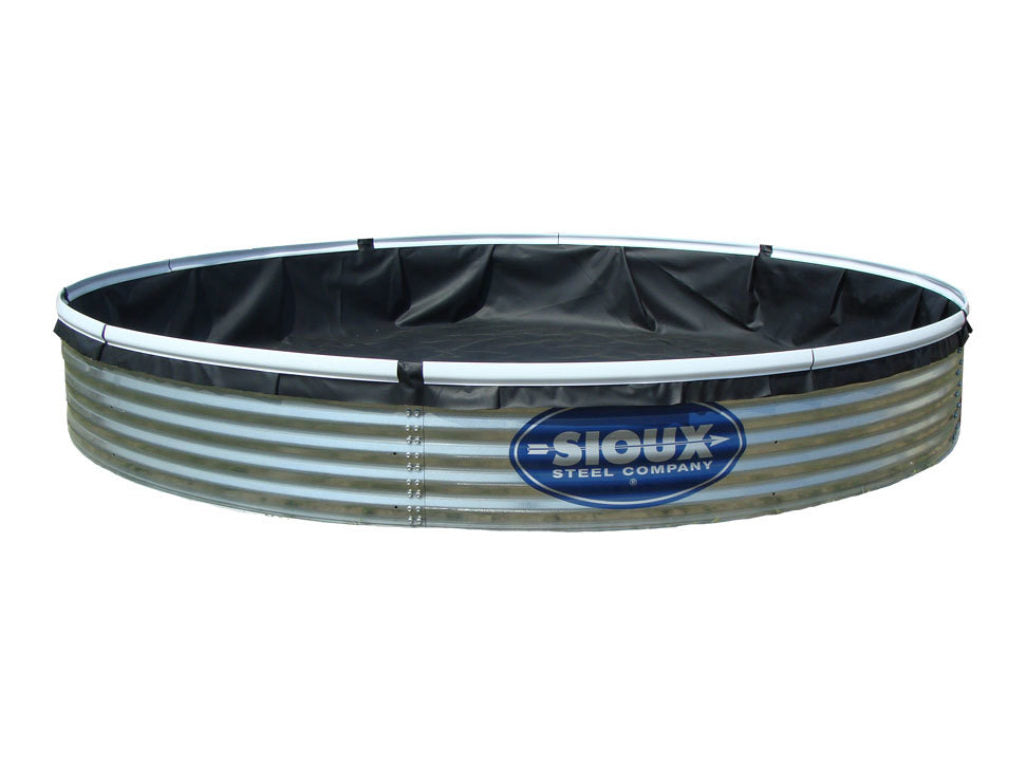
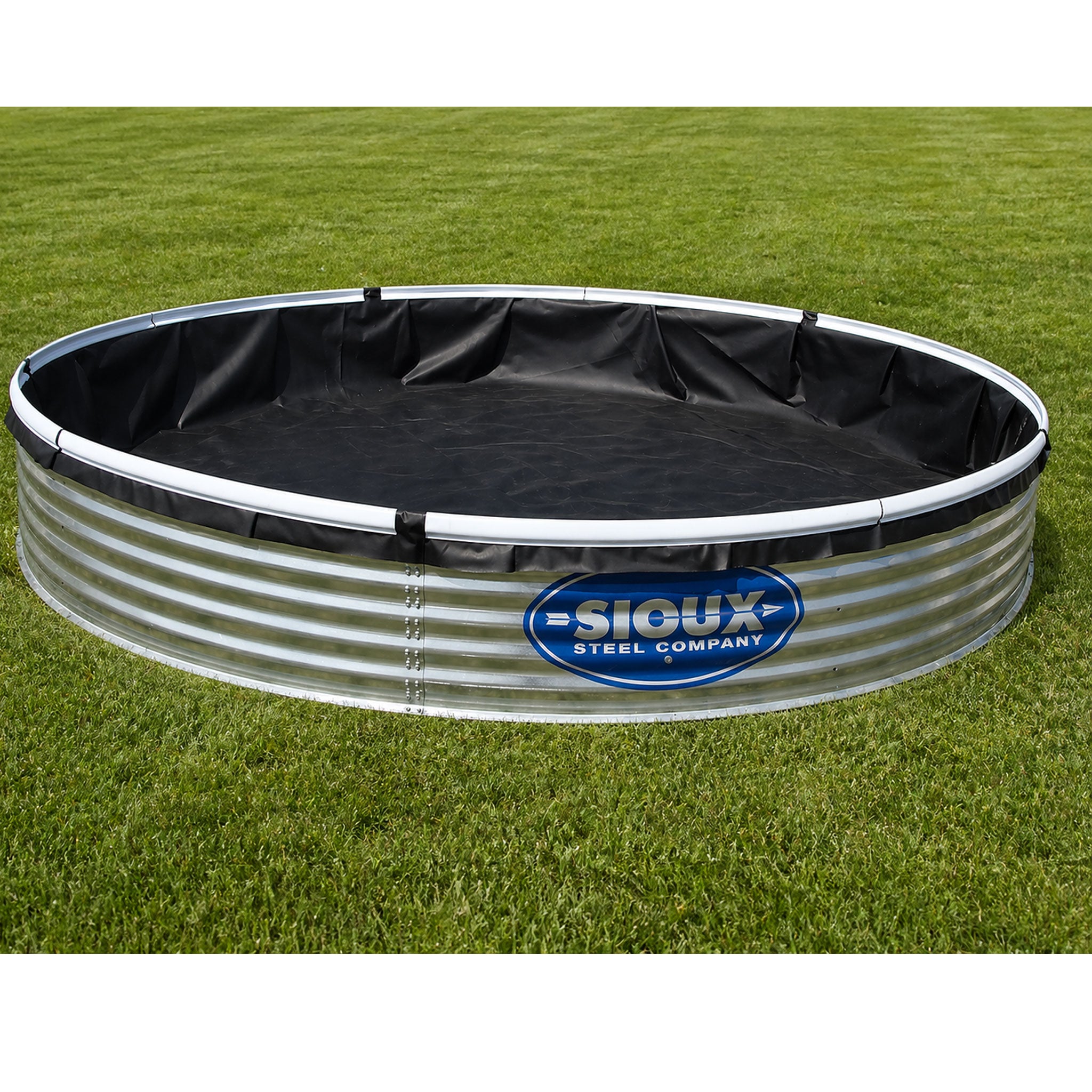
These large-capacity bottomless stock tanks with liners pair a galvanized steel wall with a 36 mil poly liner to create a dedicated livestock watering reservoir. Unlike an ordinary stock tank with a built-in metal bottom, this system relies on a properly prepared base and its liner to hold water. It can be a useful option for cattle operations that need substantial water storage at a pasture or remote watering site.
Compare the available sizes, capacities and installation requirements in the chart below. Site preparation, water supply, livestock access and delivery arrangements all matter when selecting the right tank. For other configurations, browse bottomless stock tanks, or explore livestock stock tanks.
Bottomless Tank and Liner Specification Chart
| Size | Sections | Capacity | Weight |
|---|---|---|---|
| 15' × 25" | 5 | 2,688 gallons | 614 lbs |
| 15' × 33" | 5 | 3,544 gallons | 783 lbs |
| 21' × 25" | 7 | 5,230 gallons | 873 lbs |
| 21' × 33" | 7 | 6,948 gallons | 1,111 lbs |
| 27' × 25" | 9 | 8,646 gallons | 1,149 lbs |
| 27' × 33" | 9 | 11,486 gallons | 1,455 lbs |
Bottomless Tank and Liner Details
Livestock water tanks are available in various shapes and sizes, but these oversized bottomless stock tanks can maintain substantial amounts of fresh water for your animals over long periods. When combined with the included liner, their enhanced durability and longevity guarantee that these premium stock tanks will consistently provide a reliable source of fresh water for large herds.
Stock Tank Specifications
- The 12-gauge galvanized steel sidewalls provide extra strength for large water capacities.
- The stock tank top flange is made from one piece, just like the sidewall.
- The wall connections are made twice as strong with two rows of double-bolted overlap.
- Includes 36 mil poly liner!
- Keep your livestock supplied with fresh water with a dependable, long-lasting, bottomless stock tank from Barn World
Advantages of a tank liner
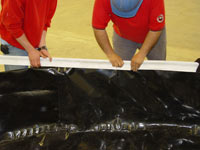
A properly installed liner eliminates the need to mess with the underlying soil to prevent water from seeping out of your tank. It's simple, cost-effective, and very convenient, especially in remote places. To install the liner on a bottomless stock tank, first, install the trim lock edge over the edge of the tank. Next, lap the liner over the edge and slide the clamps on with a rubber mallet. The clamps are curved edge sections approximately 115" long and go on fairly easily with a rubber mallet. All necessary parts are included for the installation of the liners when ordering a tank with a liner. The bottomless stock tank liners have a 1-year warranty, but will last much longer!
If you don't need the liner, take a look at all our bottomless tanks here!
Pictures of the bottomless stock tanks with a liner installed
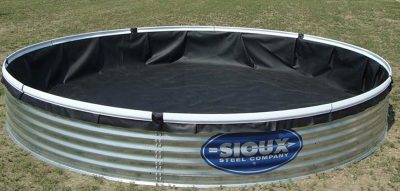
Stock Tank Liner Details
The liner is made of 36 mil polyethylene. To install the liner, a "trim lock edge needs to be installed first, then the liner needs to be lapped over that edge, and then the clamps need to be hammered onto the edge. These specially designed clamps have curved edge sections approximately 115" long.
How to Install a Bottomless Stock Tank for Cattle | Complete Installation Guide
Watch this installation video for a bottomless stock tank system. This video gallery provides clear, step-by-step instructions for proper setup, installation, and long-term use in livestock watering applications.
Designed to help ensure proper drainage, durability, and reliable performance in agricultural environments.
The bottomless stock tanks have an easy seam sealing system that uses a Perma-tite Tape that simply sticks onto the inside seam of the tank and is compressed to form an air and water-tight seal when the tank walls are assembled. It is also designed for joint movement and allows for expansion and contraction without compromising the water-tight seal. The service life is a minimum of 20 years, and the service temperature ranges from +220°F to -60°F.
Click here if you need replacement liner clamps to hold the sides of the liner up.

Bottomless Stock Tank Assembly Manual
Liner Specification Sheet
Bottomless Stock Tank with Liner
Are you looking for a hassle-free solution to provide water for your cattle in remote areas? Look no further than our Bottomless Stock Tanks with Liners. The addition of the liner to the tank combines convenience, efficiency, and long-term benefits for both ranchers and the health of your livestock.
Convenience of Setup
Setting up our bottomless tank with a liner is a breeze. The tank's wall sheets easily bolt together, and the waterproof liner lies inside. The sides are held in place with the included top of the tank wall snap-on trim.
Benefits for Ranchers
The bottomless tanks with liners streamline the ability to provide water to your cattle, saving you valuable time and labor. With a reliable water source in place, you can focus on other essential tasks knowing that your livestock's hydration needs are met.
Necessity of Remote Water Supplies
In remote areas where natural water sources may be scarce or unreliable, our bottomless stock tank with a liner becomes indispensable. Ensuring consistent access to clean water is crucial for the health and well-being of your cattle. Proper hydration promotes digestion, regulates body temperature, and enhances overall vitality, leading to healthier and more productive livestock.
Longevity of Water Supply for Health
The liner in our bottomless tank helps maintain the cleanliness and quality of the water supply over time. By preventing contamination and evaporation, the liner ensures that your cattle always have access to fresh and potable water, essential for their growth and longevity.
Invest in the Bottomless Stock Tank with Liner today and experience the convenience, efficiency, and benefits it brings to your ranching operations. Your cattle's health and your peace of mind are our top priorities.
Product Review for Bottomless Stock Tank with Liner
I'm a rancher managing a lot of head in a remote area, and providing a consistent water source that I don't have to run a truck to every few days for my animals is crucial. I recently purchased the bottomless stock tank with a liner from Barn World, and I couldn't be more satisfied with my decision.
I was impressed by the quality of the materials used in the tank and liner. Installation was a straightforward and easy. Unlike traditional tanks without a liner that require pouring cement or mixing limestone with the soil, I only had to prepare the ground by making it flat. The liner went right in, and the wall clamps hold it in place. This saved me a significant amount of time and effort.
The liner played a vital role in making the installation process easier and more efficient. The tank can hold water without leaking while also preventing any contamination from the underlying soil at the site. Now, I have peace of mind knowing that my cattle are drinking clean, fresh water without worrying about leaks or low supply.
In addition to the ease of installation, it has provided many benefits to the cattle. The design allows for a constant supply of water, even during dry spells, and my cattle have shown improved health and hydration since I switched to this system. Most importantly, I don't have to keep filling a smaller tank for them.
Overall, I highly recommend the tank with a liner to anyone looking to simplify their water management while ensuring their livestock have access to clean water. I couldn't be happier with the results!
Why Choose a Bottomless Stock Tank with a Liner?
A bottomless livestock water tank provides a way to build a large reservoir without using a conventional factory-formed metal bottom. Its galvanized steel ring supplies the vertical walls, while the fitted liner retains water across the prepared floor and up the interior sides. This arrangement is especially worth considering where a ranch needs more watering capacity than a small portable stock tank can provide.
Buying the tank and liner as a matched configuration can simplify equipment selection, but it does not eliminate the need to plan the site, base, inlet, overflow and livestock access. Check all supplied components and instructions for the specific diameter and configuration before starting installation.
How the 36 Mil Tank Liner Works
The liner acts as the water barrier beneath and inside the galvanized tank wall. A smooth, well-prepared base supports the weight of the filled tank and helps protect the liner against punctures. Proper installation and securement at the tank wall are essential: sharp debris, poor support, stretching or incorrect attachment can shorten liner life or cause leaks.
The liner is a component of the water-retention system, not a substitute for ground preparation or drainage planning. Follow the manufacturer’s instructions for the appropriate bedding material, liner positioning, clamping and filling sequence. Do not drive equipment onto an exposed liner or place sharp objects against it.
Benefits of Large-Capacity Water Storage for Cattle
Pasture watering demand can change quickly with herd numbers, body size, temperature, feed and lactation. A larger reservoir can provide more stored water between refill cycles, which may be helpful where supply lines or pumps deliver water intermittently. Storage capacity alone does not guarantee an adequate drinking supply, however. The inlet and refill rate must also be sufficient to meet the herd’s peak demand.
When comparing sizes, consider the number and type of animals, daily consumption, how frequently the tank can refill and how many cattle may drink at the same time. Provide safe access around the perimeter and take steps to reduce mud, erosion and crowding at the watering location.
Bottomless Tanks vs. Conventional Stock Tanks
A conventional steel or poly stock tank comes with an integrated bottom and may be simpler for sites where a smaller, movable container is sufficient. A bottomless tank with liner is more of a planned installation: its size, foundation preparation and water barrier must all work together. The tradeoff is the ability to configure a large watering reservoir for a fixed location.
If you expect to relocate the tank frequently, or if the ground cannot be prepared to the required standard, a conventional tank may be more suitable. Compare the total installed cost rather than tank price alone, including site work, water supply, fencing, freight and unloading.
Choosing the Right Bottomless Tank Size
Start with expected livestock water use and work backward to the storage volume you need. The largest tank is not automatically the best choice: site footprint, refill capacity, soil conditions and access for delivery equipment should influence the decision. Review the specification chart above for available dimensions and stated capacities.
For a new installation, account for the space needed outside the tank for animals and maintenance. If the tank will be filled from a well, pipeline or hauled-water source, verify the system’s ability to replenish water at the rate animals need it. Include a plan for controlling overflow so the surrounding ground does not become unstable.
Preparing the Site and Installing the Tank
Choose firm, level ground with suitable drainage and room for safe animal access. Remove rocks, roots and debris from the base area and prepare the surface exactly as directed in the installation instructions. Check the tank wall alignment and fasteners before laying out the liner. Avoid dragging or folding the liner over sharp edges, and verify that it is properly positioned and secured before filling.
Filling introduces substantial weight, so the prepared base, tank structure and liner must be able to support the intended water volume. Follow the supplied installation guide and consult a qualified installer when site conditions or foundation requirements are uncertain. Plan for local freezing conditions and water-system protection where applicable.
Maintaining a Bottomless Livestock Water Tank
Inspect water levels and the visible liner perimeter regularly, particularly after installation, storms or major temperature changes. Look for worn attachment points, abrasion, leaks, damaged wall sections and movement around the foundation. Remove sediment and debris as needed using cleaning methods compatible with the liner material. Avoid tools that could scratch or puncture the liner.
Good maintenance also includes checking the inlet, any float-control equipment and overflow arrangements. Keep drinking water clean and monitor the approach area for excessive mud or unsafe footing. A liner can help contain the water, but regular management is still necessary to maintain water quality.
Freight, Delivery and Long-Term Value
Large galvanized stock tanks and liners require advance delivery planning. Check the packed dimensions, freight-access restrictions and unloading needs before ordering. The tank components may be easier to transport than a single fully assembled large reservoir, but final freight costs depend on the chosen size, destination and carrier requirements.
For the best long-term value, choose a tank capacity that matches actual livestock demand and invest in correct installation from the outset. Protecting the liner, maintaining the water supply and inspecting the galvanized wall can help avoid unnecessary repairs. Contact Barn World with your preferred size, delivery ZIP code and intended use to discuss product selection and obtain a freight quote.