
Grain Bins







Poly and Metal Grain Bins for Bulk Feed Storage
Compare grain bins for sale, including polyethylene and galvanized steel hopper-bottom feed bins for on-farm storage and dispensing. Barn World offers poly bins, Sioux Steel and Hog Slat metal feed bins, and smaller manual-dispensing models. Use the product listings to compare sizes, specifications, configurations, and current availability.
Choose a bin around the material being stored, the quantity used between deliveries, the available installation space, and the unloading method. Construction material alone does not establish which feed or grain a bin can safely store.
Poly Bulk Feed Bins
Poly bins use polyethylene storage bodies, with frames and hardware that vary by model. The polyethylene body does not rust, while any steel supports, fasteners, and unloading components still require inspection and maintenance.
Some models have translucent walls for checking the remaining material and smooth interiors that can assist flow. Confirm the selected model's construction, dimensions, included components, and assembly requirements. Do not assume every poly bin uses the same design.
Galvanized Steel Feed Bins
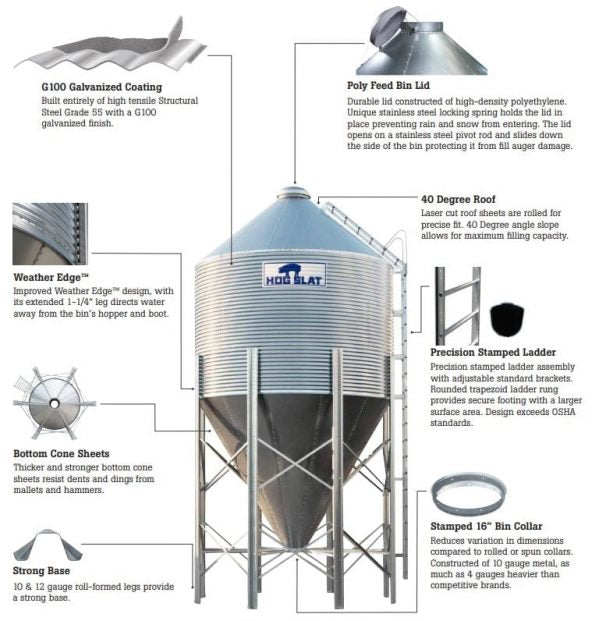
Metal bulk feed bins provide storage in a range of diameters, heights, and capacities. Compare the selected manufacturer's steel specification, coating, corrugation, hopper design, and available options. Details differ between models and manufacturers.
Small feed bins can suit manual bucket filling, while other configurations support compatible auger unloading equipment. A smaller bin is not automatically suitable for every bulk material or dispensing system.
Material Compatibility and Capacity
Check the manufacturer's requirements for the intended feed, grain, seed, or other material. Consider bulk density, moisture, flow characteristics, and any required hopper reinforcement or unloading equipment. High-moisture grain, dense supplements, and materials that bridge need specific confirmation rather than a general assumption of suitability.
Bushel, cubic-foot, and ton capacities describe different aspects of storage. Listed tonnage depends on the material-density basis used for that model. Compare the capacity chart and intended contents before choosing a size, and follow the manufacturer's loading limits.
Manual Dispensing and Auger Options
Review the selected bin's outlet, collar or boot, slide valve, and available ground clearance. Confirm which components are included. Manual valves, auger unloaders, and other attachments are not interchangeable across all bins.
If using an auger, match its intake, diameter, length, motor requirements, and discharge height to the bin and receiving equipment. Some small bins are intended only for manual dispensing. Confirm compatibility before ordering accessories.
Foundations, Access, and Installation
Plan a site with the space, drainage, vehicle access, and supporting base required for the selected model. Follow its foundation and anchoring instructions. Check fill height, overall footprint, and access for feed deliveries as well as the route for unloading.
Ladders, cages, stiffeners, and other options may be required or sold separately, depending on the model and intended use. Verify the complete configuration and installation requirements before site work begins.
Protecting Stored Feed
Close lids and outlets as directed, inspect seals and components, and maintain suitable storage conditions. Enclosed storage helps protect contents but does not guarantee exclusion of insects, wildlife, moisture, or contamination. Ventilation does not remove the need to manage feed condition and moisture.
Inspect the bin and dispensing system regularly, monitor the stored material, and clean according to manufacturer and feed-supplier guidance.
Grain Bins for Sale: Choosing the Right Feed Storage System
The phrase “grain bin” can describe very different equipment. Barn World primarily offers hopper-bottom bins for on-farm livestock feed and other suitable dry bulk materials. These are designed around delivering feed to a trough, bucket, cart, or compatible conveying system. They should not be confused with a large commercial flat-bottom grain storage facility built for a different loading, aeration, and unloading arrangement.
Start with how the bin will be used. A ranch that dispenses a few buckets of feed each day may need a simple small bin and slide valve. An operation receiving bulk feed for several barns may need a larger storage capacity with a carefully matched auger and outlet. The bin should fit the feeding system, not just the available ground area.
Consider four questions before comparing models: What material will be stored? How much feed must fit between deliveries? How will it be unloaded? And where can a loaded delivery truck safely fill it? Those answers narrow the useful choices more quickly than choosing on the basis of price or nominal tonnage alone.
Compare Poly and Galvanized Metal Feed Bins
Polyethylene and galvanized steel bins can both be appropriate for dry feed storage, but their construction, frame requirements, outlet arrangements, and options are not identical. Compare the complete model and its included hardware rather than making a decision on material alone.
| Bin type | Construction and function | What to verify |
|---|---|---|
| PWA poly bulk feed bins | Polyethylene storage body, with a separate supporting structure; translucent material may allow visual level checks | Selected capacity, frame, fill height, lid, outlet angle, slide valve, and optional equipment |
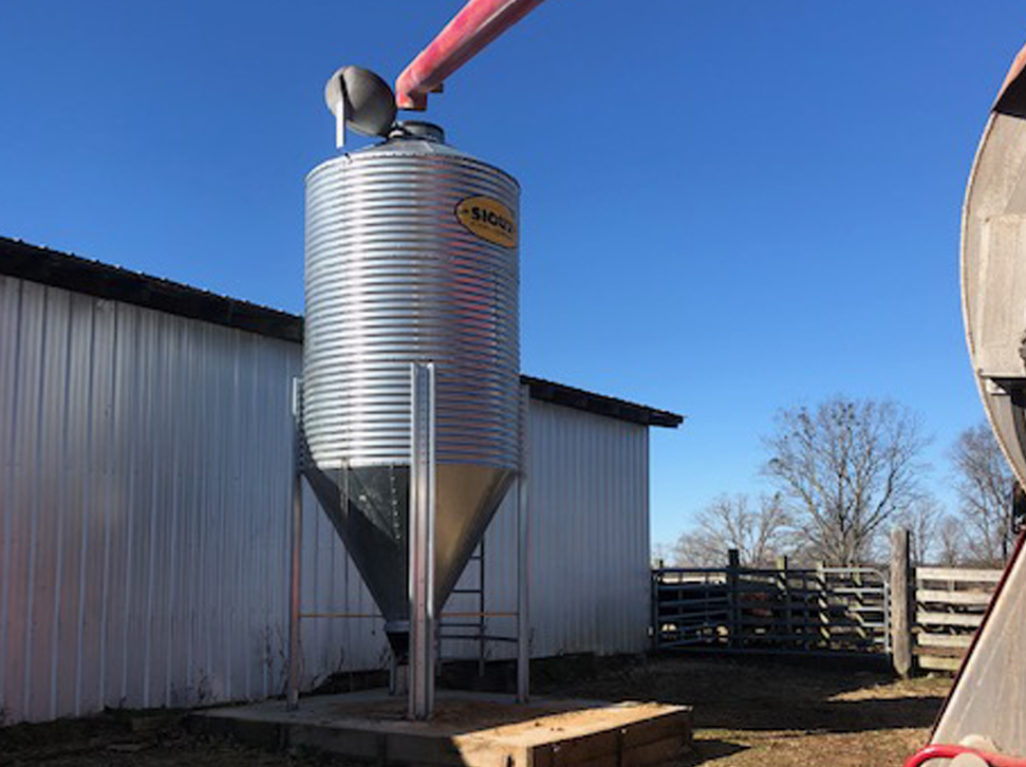
| Sioux Steel metal grain bins | Galvanized-steel hopper-bottom bins offered in multiple diameter and capacity configurations | Rows and diameter, current options, outlet and auger compatibility, foundation, and filling height |
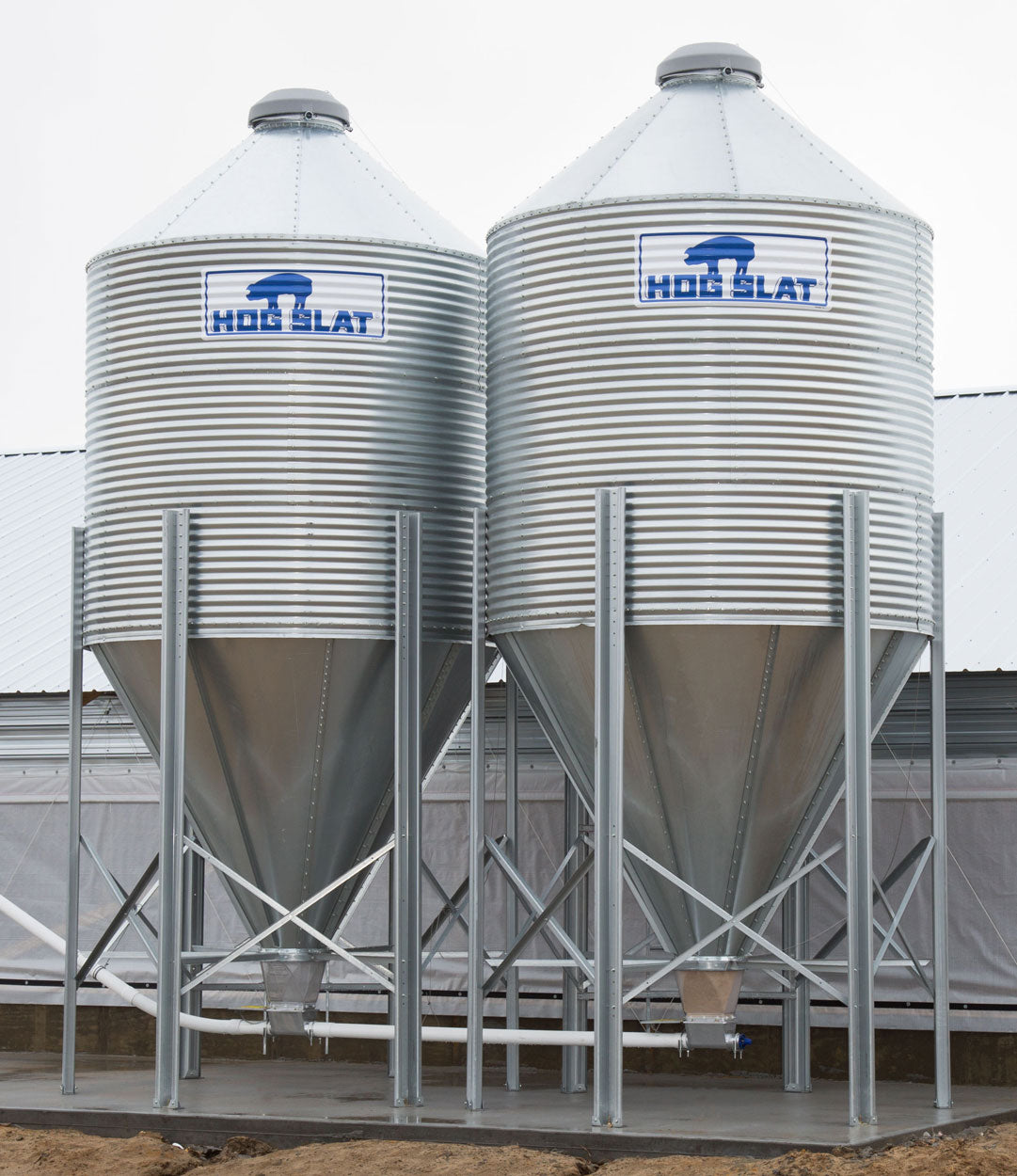
| Hog Slat metal feed bins | Galvanized-steel bulk feed bins, including larger configurations used in feeding operations | Storage capacity, ladder choice, hopper discharge, auger components, and assembly requirements |
| Small manual-feed bins | Compact galvanized-wall bins with poly hopper and slide-valve dispensing | 40- or 65-bushel model, clearance beneath outlet, manual use, and unloading requirements; not an auger-ready substitute |
A poly bin's storage shell does not rust, but its steel supports and hardware still require inspection. Galvanized steel can be a practical choice where its strength, configuration, and accessories meet the job, but exposed or damaged coatings should be maintained. Neither construction material guarantees that damp, sticky, or unusual feeds will flow without problems.
How Much Grain Bin Capacity Do You Actually Need?
Capacity should relate to a realistic feed delivery schedule. Estimate how much material the operation uses each day, then determine the number of days of storage you want between deliveries. For example, a herd consuming 400 pounds of a particular feed per day would use roughly 2,800 pounds over seven days. That consumption estimate is only a starting point; allow for delivery size, unused reserve, safe fill limits, and changes in the herd's feeding program.
Bulk deliveries may be economical only above a supplier's minimum quantity, while keeping feed too long can increase the risk of quality problems. A well-sized bin balances delivery logistics against inventory turnover. Bigger is not automatically better if the stored product is used slowly or is sensitive to moisture and storage time.
It is also important to distinguish a bin's nominal volume from the weight it can hold. Cubic feet describe volume; pounds and tons describe weight. The conversion depends on the material's bulk density. Some Barn World manufacturer tables use 40 pounds per cubic foot to express a listed ton capacity, while the small 40- and 65-bushel bin specifications use 56 pounds per bushel for their stated pound capacities. Those are different calculation bases, and the manufacturer's rating and intended material should control.
Do not apply a single bushel-to-ton conversion to every feed ingredient, seed, or grain blend. Soybean meal, whole corn, pellets, and other materials can differ in density and flow behavior. Verify the expected material density with the supplier and ensure that the selected bin and supporting structure are approved for the resulting load.
Hopper-Bottom Bins Versus Flat-Bottom Grain Storage
Most bulk feed bins sold through Barn World use a hopper or cone-shaped bottom that directs free-flowing material toward a discharge opening. This design can make it convenient to dispense feed into a bucket, wagon, flexible auger, or another compatible receiving device. In contrast, some larger grain-storage systems use flat floors and a different combination of unloading and aeration equipment.
These designs address different workflows. A hopper-bottom bin can simplify regular dispensing near a barn or feeding system, but it is not automatically suited to every type of grain, prolonged high-moisture storage, or the capacity of a commercial elevator. Choose equipment based on the specific stored material and discharge method rather than the broad phrase “grain storage.”
Manual Slide Valves, Boots, and Auger Unloading
The discharge system determines what happens after the material is in the bin. A manual slide valve may be suitable when employees fill buckets or carts. The valve and outlet should be accessible from the ground or the intended work position, with enough clearance below the hopper for the receiving container.
Augers can move feed to another location, but an auger requires an appropriate boot or collar, correctly matched diameter and length, power supply, discharge arrangement, and sometimes additional supporting equipment. The outlet angle may also affect clearance and which accessories fit. An auger kit intended for one manufacturer or bin configuration should not be assumed to fit another.
The small Barn World mini feed bins are described for manual dispensing and are not offered as auger-ready units. For a mechanized feeding system, select a compatible model from the outset. Review product specifications for included valves, collars, boots, ladders, augers, and other items; components shown in a photo may be optional or sold separately.
Choosing a Bin for Pellets, Whole Grain, and Other Materials
A bulk bin works best when the material flows and stores as the manufacturer expects. Dry, free-flowing grain behaves differently from fine meals, damp feed, sticky blends, or dense supplements. Some materials can compact or bridge over the outlet, while others may separate during handling or move too quickly through an oversized opening.
Before ordering, tell the bin supplier or manufacturer exactly what will be stored, including whether it is whole grain, pellets, mineral supplement, seed, or another material. Ask whether the wall, cone, discharge angle, and loading limitations are suitable. Pay attention to special feed ingredients that may react to moisture or require particular storage, cleaning, or handling practices.
Do not assume that a smooth interior always prevents bridging or that a larger discharge opening cures every flow problem. A blocked outlet may result from material moisture, storage conditions, hopper geometry, or equipment compatibility. Diagnose these issues from outside the bin using trained personnel and approved methods; never enter or stand beneath bridged material to force it to flow.
Why Bin Height and Site Clearance Matter
A bin's listed capacity does not tell the whole installation story. Measure the maximum fill height, overall diameter, leg spacing, and the working clearance below the discharge. Check whether a delivery truck can reach the fill location with enough space for its equipment. Nearby rooflines, overhead utilities, trees, gates, and turning areas may limit where the bin can safely be placed.
Plan the location around how feed is received and used. A bin next to the barn may shorten an auger run but interfere with truck access; a bin placed far away may require longer conveyance or repeated handling. Allow room for future maintenance, ladder access where permitted, and safe inspection from outside. Never plan access that requires workers or delivery equipment to operate near electrical lines.
Review the actual model's foundation instructions before pouring concrete. Bin feet, anchoring points, total loaded weight, soil bearing capacity, and exposure to wind all influence the supporting design. A suitable base should also drain properly and keep the area around valves and unloading equipment serviceable during bad weather. A bin should not be installed on a generic slab design without confirming the manufacturer's requirements.
Protect Feed Quality After Delivery
Enclosed storage can help keep precipitation and pests away from a bulk feed supply, but it does not eliminate the need for careful management. Make sure the lid is closed correctly and that access points, seals, vents, and discharge openings remain in good condition. Inspect for leaking joints, damaged components, corrosion on metal parts, and evidence of insects or rodents.
Keep stored material within the feed supplier's recommended moisture and holding conditions. Condensation can occur when warm, humid air meets colder surfaces, and changes in weather can affect the stored product. Inappropriate temperature or moisture conditions may lead to clumping, spoilage, or reduced feed quality. Monitoring is particularly important when a bin is filled infrequently or holds feed for extended periods.
Use a sensible inventory rotation approach. Know approximately when each delivery arrived and how much material remains, and avoid repeatedly topping off old, deteriorating feed with fresh product. If contamination, unusual odor, visible mold, or unexplained poor flow appears, stop using the affected material and seek appropriate feed-quality guidance before giving it to livestock.
Safe Grain Bin Operation and Maintenance
Bins, augers, ladders, and moving grain can present serious hazards. Flowing or collapsing grain can entrap and suffocate a person, and moving equipment can cause injuries. A crust of bridged grain may conceal an empty space beneath it. Workers must never walk on moving grain or enter underneath a bridged accumulation to clear a blockage.
Keep inspections, cleaning, and obstruction checks outside the bin whenever possible, using manufacturer-approved methods. Any work involving bin entry requires trained personnel, appropriate hazard assessment, lockout and control of moving equipment, and the protections required by the applicable safety rules. OSHA provides detailed guidance on grain handling and engulfment prevention. Do not treat a small farm feed bin as harmless simply because it is smaller than a commercial silo.
Follow the manufacturer's instructions for servicing auger equipment, valves, lids, and access hardware. Keep children and untrained bystanders away from the equipment. Inspect the frame and fasteners regularly and correct corrosion, damage, loose connections, or signs of foundation movement before they become larger problems.
Comparing the Total Cost of a Grain Bin
The displayed bin price is only part of the cost of a working storage system. A realistic budget includes the selected bin body and stand, foundation, optional ladder, vent or lid components, discharge hardware, conveying equipment, electrical work when required, assembly labor, freight, and unloading. Long-distance shipping and access restrictions can materially affect the delivered price.
Smaller bins may cost less to acquire but require more frequent filling. A large bin might reduce deliveries but increase foundation, installation, or equipment expenses. Compare the complete system against your actual feed usage and the supplier's delivery requirements. Consider maintenance and inventory turnover alongside the initial purchase.
Barn World's quote process is intended to establish those delivered costs before purchase. Select the correct bin size and options on the product page, use Request a Quote where provided, and include your destination ZIP code and any unusual delivery conditions. The draft-order quote will identify the selected equipment and shipping charges so you can evaluate the full purchase.
Frequently Asked Questions About Grain Bins and Feed Bins
What is the difference between a grain bin and a feed bin?
The terms are sometimes used interchangeably, but equipment differs by use. Barn World's hopper-bottom feed bins are intended to store and dispense approved dry bulk materials for farm and livestock operations. Large flat-bottom grain-storage bins may have different unloading, aeration, and foundation requirements.
Should I buy a poly or metal grain bin?
Compare available capacity, material compatibility, construction, unloading accessories, overall size, foundation requirements, and delivered cost. Polyethylene bin bodies avoid rust in the storage shell, while galvanized steel bins provide another range of configurations. Neither material is automatically ideal for every feed.
How do I calculate the capacity I need?
Estimate daily feed consumption, the number of days between deliveries, the supplier's minimum delivery quantity, and the reserve you want. Then compare the resulting weight and volume requirements with each model's published capacity and intended material-density basis.
Are grain bin tons and bushels interchangeable?
No. Tons describe weight, bushels describe a volume-based commodity measure, and the practical conversion varies with the material. Manufacturer tonnage figures may be based on a specified pounds-per-cubic-foot assumption. Use the exact specification table and the density of the contents you intend to store.
Can every feed bin be connected to an auger?
No. Some models have compatible unloading accessories, while smaller bins may be manual-dispensing only. Confirm the boot, valve, outlet angle, mechanical components, and power requirements for the selected unit before ordering.
What foundation does a bulk feed bin require?
Foundation dimensions and anchoring depend on the manufacturer, loaded weight, leg or stand configuration, local ground conditions, and site exposure. Use the selected model's current foundation details and obtain engineering or installation guidance where required.
Can I store pellets, corn, seed, or mineral supplements in the same bin?
Not without verifying compatibility. Materials vary in density, moisture, flow, and storage requirements. Confirm the approved material type and discharge arrangement for the specific model, and follow the supplier's storage recommendations.
How can I tell when a grain bin needs refilling?
Some translucent poly bins allow visual level checks, while certain metal bins may use compatible gauges or monitoring equipment. Use the model's approved approach and inventory records. Never climb into a bin or onto stored material to check the level.
Does a grain bin keep feed completely dry?
Enclosed storage provides weather protection when assembled and maintained correctly, but lids, vents, seals, temperature changes, and the condition of incoming feed all affect moisture. Inspect stored material and equipment regularly; no bin guarantees freedom from condensation or spoilage.
Why is feed sometimes stuck above the outlet?
Bridging and other flow problems can occur when material clumps, compacts, or is unsuitable for the outlet or hopper design. Do not enter the bin or stand on the material to break it loose. Have trained personnel use safe procedures and the manufacturer's guidance.
What information does Barn World need for a freight quote?
Provide the preferred manufacturer and bin size, the intended material, desired valve or auger configuration, quantity, delivery ZIP code, and any unusual unloading or site access requirements. This helps produce a more useful delivered quote.
Freight Quotes and Ordering
Confirm the selected model, capacity, included components, and any optional equipment when requesting a quote. Provide the delivery ZIP code, access details, and unloading requirements so freight arrangements can be reviewed.
Call, chat, or email Sales@BarnWorld.com for help comparing configurations and obtaining a delivered quote.