

ALL CATTLE OILERS
Plastic-Tank Cattle Oiler with Adjustable Flow Control
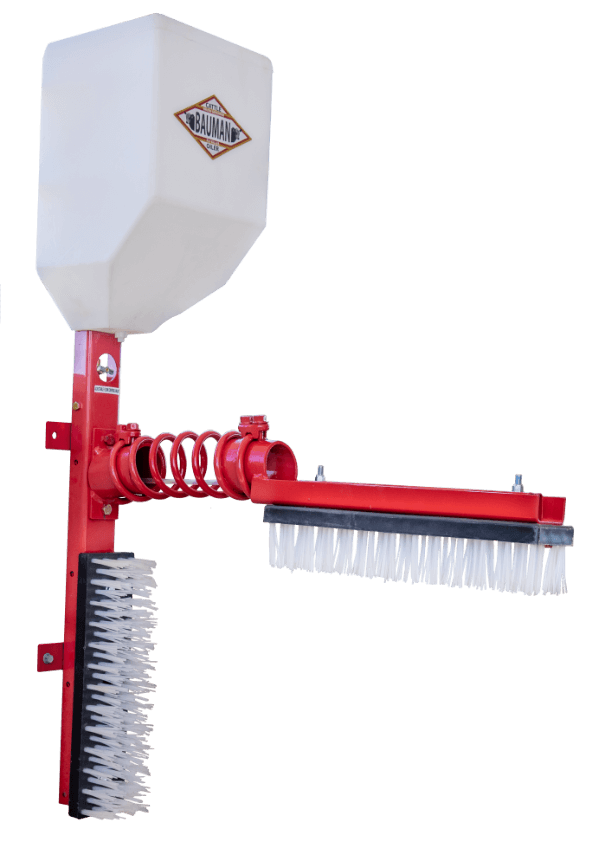
This cattle oiler combines a translucent 5.5-gallon plastic reservoir, adjustable grooming brushes and a pressure-sensitive flow-control valve. Cattle press against the upper brush as they rub, allowing liquid to reach the applicator during use. The valve is designed to close when pressure is released, helping reduce unnecessary dripping. The translucent tank lets you check remaining liquid at a glance.
The standard plastic-tank model weighs approximately 70 pounds and has a five-foot overall length. For a reinforced alternative, compare the dual-spring plastic-tank cattle oiler, or browse all cattle oilers and cow brushes.
Features and Specifications
- Approximately 5 feet long; 70 pounds
- Translucent plastic tank with 5.5-gallon capacity
- Fuel-resistant supply line; confirm treatment compatibility against the product label
- Pressure-sensitive valve with adjustable liquid flow
- Adjustable brush heights for cattle grooming
- Durable brushes to loosen loose hair and surface debris
- Listed shipping dimensions: 12 x 12 x 60 inches; shipping weight approximately 70 pounds
- Optional cattle oiler stand for locations without suitable fixed mounting
Cattle Oiler with a plastic tank
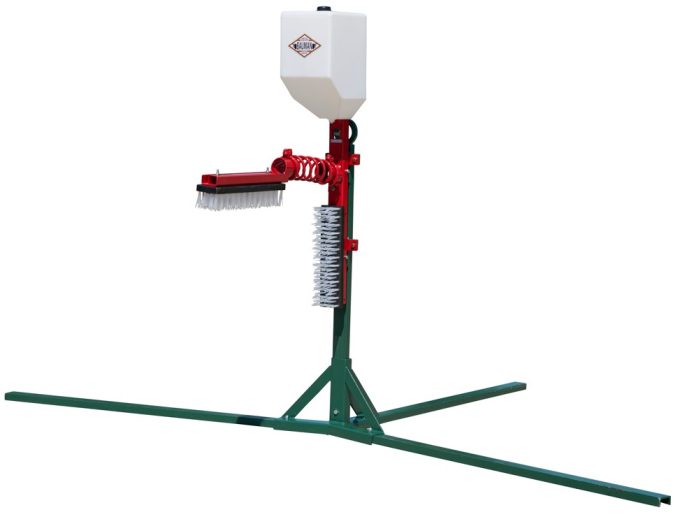
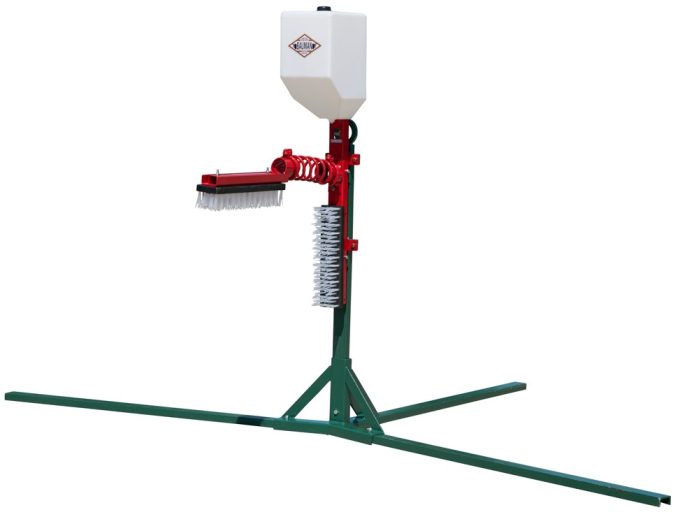
This oiler is designed to fit the Cattle Oiler Stand when a standalone mounting option is not available. Great for pastures and areas where there isn't anything to bolt to.
Why Use a Cattle Oiler?
Cattle naturally rub against solid objects to groom themselves. A cattle oiler provides a designated brush for that activity, with a valve-operated applicator for use with compatible, appropriately labeled livestock treatments. When cattle use the unit regularly, the brushes can help loosen excess hair and distribute an approved pest-control product over contacted areas of the coat.
An oiler can be one part of a livestock fly- and external-parasite-management program. Performance depends on animal use, pest pressure, treatment choice, weather and maintenance. It does not guarantee year-round pest elimination, disease prevention or protection for every animal. Monitor results and follow the treatment label rather than relying on the oiler as the sole control measure.
Self-service grooming may reduce some individual handling, but ranch staff must still refill the reservoir, inspect the valve, maintain brushes and monitor animal access.
How to install and use your cattle oiler
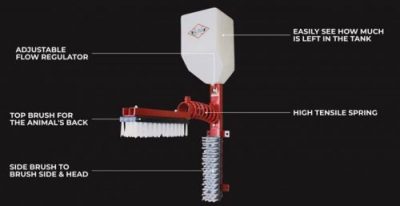
Livestock oilers are designed to remove excess hair and allow livestock to 'self-apply' pesticides and help control and protect them from discomfort and disease. When mounting to a wall, make sure it's installed at a height that allows the top brush to be just below the height of your cattle's back. It will allow them to put upward pressure and get the best leverage and benefit from the brush. Below is a diagram with recommended installation instructions as well as some feature details.
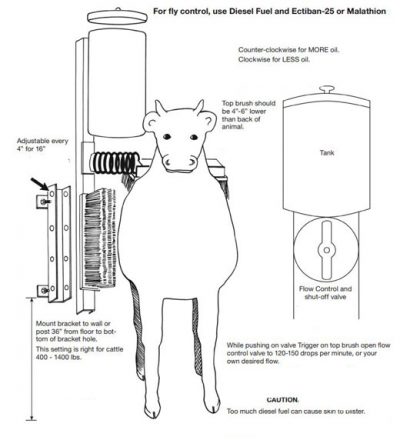
Cattle Oiler Parts List
Below is the parts list and exploded diagram for reference and to assist in identifying and ordering replacement parts. The availability of parts means you won't have to replace the entire unit, but can change out small parts to keep your oiler working economically for many years to come.

How the Pressure-Sensitive Valve Operates
Liquid from the 5.5-gallon reservoir passes through a supply line to an adjustable control valve. The valve is activated as cattle push against the spring-loaded upper brush and is intended to stop dispensing when the pressure ends. This design helps direct application toward periods of actual animal contact instead of relying on continuous dripping.
Adjust the flow carefully and inspect the system during use. Dispensing too much liquid can create waste; too little may not provide the application required by the treatment label. The adjustment setting should never override labeled directions for the selected product.
Why a Translucent Plastic Tank Matters
A visible liquid level makes checking reservoir contents more convenient during routine pasture inspections. The tank holds 5.5 gallons, but the length of time between refills depends on herd use and the amount dispensed per brush contact. Inspect the reservoir for signs of cracking or leaks and keep the lid and connections in good condition.
Standard Plastic-Tank vs. Dual-Spring Cattle Oilers
The standard model on this page uses a 5.5-gallon plastic reservoir and has an approximate listed weight of 70 pounds. The alternative plastic-tank dual-spring oiler retains a 5.5-gallon reservoir but adds a second top spring and is listed at approximately 75 pounds. Compare the expected cattle traffic, brush contact, support arrangement and servicing needs before choosing between them.
Choosing a Mounting Location and Correct Brush Height
Position the oiler where cattle naturally move and can approach the brushes safely. The upper brush should sit just below the animals' back height, allowing comfortable upward pressure. Leave clear space for the side brush and avoid corners or obstacles that prevent contact. Observe herd behavior after installation and adjust the placement when necessary.
Where no suitable fixed support exists, review the compatible cattle oiler stand. Follow the manufacturer's fastening and installation requirements to keep the unit stable during repeated animal contact.
Using Approved Livestock Pest-Control Treatments
Only use treatment products specifically labeled for the livestock species and intended self-application method. Follow instructions for mixing, concentration, permitted equipment, protective gear, application frequency and any meat or milk withdrawal restrictions. A fuel-resistant hose does not establish compatibility with every pesticide, solvent or oil.
For advice on a broader pest-management program, consult the pesticide label and a qualified veterinarian or livestock adviser. Do not assume that treatment through an oiler prevents diseases or provides complete protection against every external parasite.
Brush, Valve and Reservoir Maintenance
Inspect brush wear, valve movement, springs, hose connections and mountings on a routine schedule. Clean the reservoir and application surfaces only as permitted by the equipment and treatment manufacturers. Replace damaged brushes and worn parts before they interfere with grooming or liquid delivery.
Consult the parts diagram above to identify components, and review replacement cattle oiler brushes if the existing brushes no longer provide consistent contact. Parts compatibility should be checked against the exact oiler model.
Ordering and Long-Term Value
Before ordering, compare the standard and dual-spring models, confirm the preferred mounting arrangement and allow access for refilling and maintenance. The existing shipping specifications list a 12 x 12 x 60-inch package at approximately 70 pounds. Contact Barn World to confirm current delivery options and any accessories required for your site.