

Free shipping in the lower 48 states!
SEE ALL OF OUR CATTLE OILERS!
Scroll down for more pictures and details.
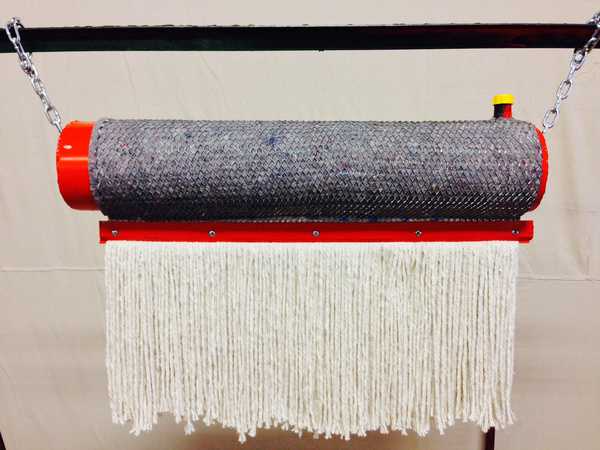
The 45-Inch Hanging Cattle Oiler is a livestock liquid applicator designed to hang above a route cattle regularly travel. As cattle walk beneath the unit and contact its rayon mop, the movement helps transfer compatible livestock treatment liquid from the applicator to the animals' coats. The unit features a 4-gallon steel reservoir, a 45-inch-long mop assembly, and included hanging chains.
This hanging mop design offers an alternative to stationary brush-style cattle oilers. It is intended for operations that want cattle to contact an applicator as they pass through a suitable area. When used with a treatment specifically labeled for cattle and this application method, the oiler can be part of an external parasite management program. Explore Barn World's cattle oilers and cow brushes for additional configurations.
45-Inch Hanging Cattle Oiler Specifications
| Feature | Specification |
|---|---|
| Oiler length | 45 inches |
| Diameter | 5.5 inches |
| Circumference | Approximately 17.5 inches |
| Reservoir capacity | 4 gallons |
| Tank material | Steel |
| Mop material | Rayon |
| Mop extension below tank | Approximately 10–12 inches when mounted |
| Mounting chains | Included, approximately 12 inches long |
| Fill cap | Metal screw-on cap |
| Listed weight | Approximately 17 pounds |
Product note: The current listing describes an updated metal fill cap. Some original photographs may show an earlier cap design.
How the Hanging Mop Cattle Oiler Works
The oiler uses a gravity-fed liquid distribution system rather than the brush-activated valve found on some other cattle oiler designs.
The steel tank contains openings positioned approximately 1½ inches below the top. When the hanging unit moves or tips as cattle contact the mop, liquid can pass through the openings and reach the surrounding felt.
The felt absorbs the liquid and transfers it to the rayon mop. As cattle pass underneath and rub against the hanging material, the mop contacts their coats.
This arrangement is intended to distribute liquid through animal contact and movement. However, it should not be described as a completely drip-free or precisely metered system. Actual liquid delivery depends on the formulation, fill level, mop condition, movement, and installation.
Why Use a Hanging Cattle Oiler?
Animal-Activated Contact
The hanging design takes advantage of cattle moving through familiar areas. When positioned appropriately, animals contact the mop while passing beneath it.
This can reduce the need for direct handling during every application, although individual animals may use the equipment differently.
Four-Gallon Steel Reservoir
The 4-gallon tank provides storage for compatible liquid treatment. Its capacity can reduce refill frequency compared with smaller reservoirs, depending on animal traffic and the amount of liquid distributed.
Check the liquid level regularly rather than assuming the tank will provide treatment for a fixed number of days.
Replaceable Rayon Mop
The rayon mop provides the contact surface for transferring liquid to cattle. Over time, repeated use and exposure to treatment formulations may cause wear.
Barn World offers a replacement 45-inch cattle oiler mop for maintaining the applicator.
Simple Overhead Mounting
The original listing specifies included hanging chains approximately 12 inches long. These support the oiler at both ends when attached to an appropriate overhead structure.
Use a support that can safely accommodate the filled unit and the forces created when cattle contact it.
45-Inch Hanging Cattle Oiler Product Photo
The original product photograph shows the hanging mop oiler in its installed configuration.

Choosing the Best Location for a Hanging Cattle Oiler
Placement is especially important with hanging applicators because they depend on cattle making contact with the mop.
A suitable location should be familiar to the animals, allow normal movement, and provide adequate support for the equipment.
Livestock Travel Routes
Areas cattle regularly use may provide opportunities for consistent contact. Examples include suitable passageways between grazing areas or other frequently traveled locations.
Avoid positioning the applicator where it creates a bottleneck, encourages crowding, or interferes with animal movement.
Overhead Support
The supporting structure must accommodate the filled tank and the additional movement and forces caused by cattle contact.
Do not assume that a lightweight fence component or unsupported overhead member is adequate for mounting.
Hanging Height
Set the height according to the manufacturer's instructions and the size of the animals using the unit.
The mop should make appropriate contact as cattle pass underneath without creating excessive resistance or forcing animals into an unsafe position.
Environmental Considerations
Avoid locations where treatment liquid could contaminate drinking water, feed, waterways, or drainage areas.
Provide enough access to inspect, refill, and maintain the applicator safely.
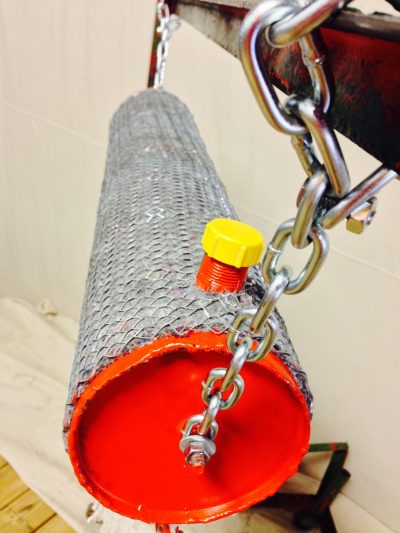
Tank Ends and Hanging Chains
The original photograph below shows an end of the cattle oiler and its mounting arrangement.
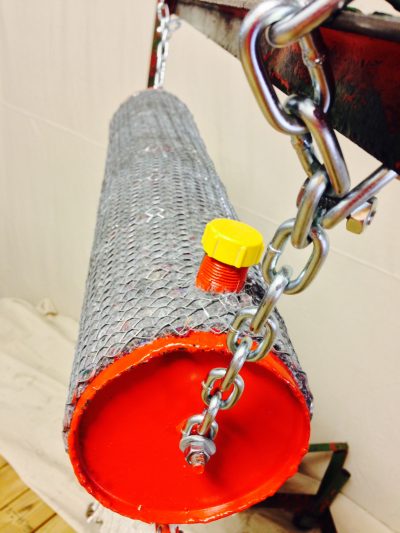
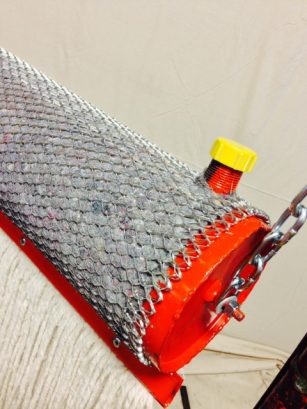
Steel Tank and Metal Fill Cap
The original product listing describes a metal screw-on fill cap that replaced an earlier plastic version.
Inspect the cap and surrounding tank components before filling. Make sure the cap closes securely and that the tank does not leak.
Using a Hanging Cattle Oiler for Fly and External Parasite Management
Hanging cattle oilers are often used as one component of a broader livestock external parasite management program.
When an approved treatment is used, the applicator can transfer liquid to areas of the animal's coat that contact the mop.
Actual treatment coverage depends on how animals move beneath the unit, the condition of the mop, the selected formulation, and the equipment setup.
Important: Use only pesticide or livestock treatment products specifically labeled for the animal species and the intended applicator method. Follow all label requirements for dilution, handling, protective equipment, application frequency, and meat or milk withdrawal intervals where applicable.
A hanging oiler does not guarantee complete fly, lice, tick, or other parasite control. Effective management may also require monitoring, sanitation, manure management, and other appropriate control methods.
Choosing a Compatible Liquid
Not every insecticide concentrate or oil-based product is suitable for a hanging mop applicator.
Confirm that the product label permits use with this type of equipment and specifies an appropriate formulation or carrier.
Do not substitute unapproved mixtures or assume that a treatment labeled for spraying or another method can be used in the oiler.
Monitoring Application
After filling the tank, observe the applicator during initial use. Check that the felt and mop receive liquid as intended and that excessive dripping does not occur.
Inspect the area beneath the unit for spills and check the applicator for uneven saturation.
Follow the treatment label rather than relying on visual appearance alone to determine the correct application rate.
How to Fill the Hanging Cattle Oiler
Before filling, inspect the reservoir, fill cap, felt, mop, and mounting components.
- Confirm treatment compatibility: Verify that the product is approved for the intended cattle application and equipment.
- Follow label directions: Prepare the liquid using the manufacturer's specified formulation and handling precautions.
- Inspect the tank: Check for corrosion, leaks, and secure mounting.
- Fill carefully: Use the equipment manufacturer's procedure and avoid overfilling.
- Secure the cap: Close the fill opening and inspect for leakage.
- Check operation: Observe the felt and mop during initial animal contact and confirm that the unit operates as intended.
Use suitable personal protective equipment when handling livestock treatment products. Prevent spills and dispose of unused material according to the label.
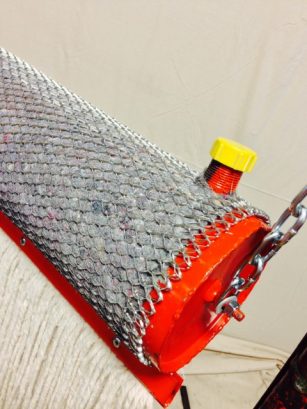
Original Cattle Oiler Filling Photograph
The following photograph from the original listing illustrates the filling process.

Installing the 45-Inch Hanging Cattle Oiler
1. Inspect the Mounting Structure
Choose a suitable overhead support that can safely carry the filled applicator and withstand movement from cattle contact.
The unit weighs approximately 17 pounds before adding liquid. The actual installed weight will be greater when the reservoir is filled.
2. Attach the Hanging Chains
The original listing describes two included chains, each approximately 12 inches long.
Attach the chains securely according to the manufacturer's instructions and inspect all connection points.
3. Set the Appropriate Height
Adjust the hanging position so the mop contacts cattle appropriately as they pass underneath.
Account for differences in animal size and avoid placing the unit where contact could obstruct or injure animals.
4. Check Clearance
Allow sufficient room for the unit to move during use without striking nearby structures or interfering with gates, feeders, or other equipment.
5. Observe the Herd
Monitor initial use to determine whether animals contact the applicator naturally.
If cattle avoid the unit or contact it in an unsafe way, reassess the location and mounting height according to the equipment instructions.
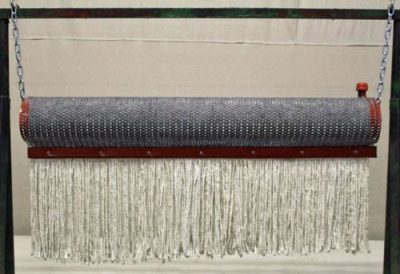
Original Hanging Oiler Installation Photograph
The original product listing includes this additional image illustrating a hanging cattle oiler arrangement.

Replacement Parts for the 45-Inch Cattle Oiler
The hanging oiler includes serviceable components that may need replacement as the equipment ages.
Replacement Rayon Mop
The mop is the primary animal-contact surface. Inspect it for worn, damaged, or deteriorated material.
When replacement is necessary, review the 45-inch replacement cattle oiler mop.
Replacement Wire
The original product listing identifies a replaceable wire component used with the felt assembly.
Review the cattle oiler replacement wire and confirm fit before ordering.
Replacement Felt
The felt helps transfer liquid from the reservoir to the mop.
Inspect it for deterioration, uneven saturation, or damage. Barn World lists replacement cattle oiler felt.
Check the exact model and current part compatibility before purchasing replacement components.
45-Inch vs. 30-Inch Hanging Cattle Oilers
Barn World also offers a 30-inch hanging cattle oiler for customers who prefer a shorter applicator.
The appropriate length depends on the installation area, available mounting space, and how animals will contact the mop.
The 45-inch version offers a longer contact assembly, but that does not automatically make it more effective for every herd or installation.
Review the dimensions of the intended mounting location before selecting a length.
Hanging Mop Oiler vs. Brush-Style Cattle Oiler
Both equipment types are designed around voluntary animal contact, but their application mechanisms differ.
Hanging Mop Oiler
The hanging design uses a suspended rayon mop and a gravity-fed reservoir arrangement. Cattle contact the mop as they pass beneath it.
This configuration may suit operations with an appropriate overhead mounting location and a regular cattle travel route.
Brush-Style Cattle Oiler
Brush-style oilers provide a stationary rubbing surface. Some models use a pressure-sensitive valve that opens when cattle engage the brush.
For example, Barn World's double-spring steel-tank cattle oiler uses a 3-gallon reservoir and adjustable grooming brushes.
Compare the equipment's contact method, mounting requirements, reservoir capacity, and maintenance needs before selecting a design.
Maintaining the Hanging Cattle Oiler
Inspect the Tank
Check the steel reservoir for corrosion, damage, leaks, and secure mounting. Inspect the fill cap and any surrounding seals.
Check the Mop and Felt
Look for excessive wear, uneven liquid distribution, damaged fabric, or material that no longer contacts cattle appropriately.
Inspect the Chains
Check both hanging chains and all mounting connections for wear, corrosion, deformation, or looseness.
Do not operate the applicator with compromised mounting hardware.
Watch for Dripping or Leakage
Inspect the area below the applicator. Unusual dripping may indicate excessive movement, incorrect filling, damaged components, or another issue requiring attention.
Clean and Store Appropriately
Follow the equipment and treatment manufacturers' cleaning instructions. Remove or dispose of remaining liquid according to the product label before seasonal storage or major maintenance.
Frequently Asked Questions
How long is the hanging cattle oiler?
The listed overall oiler length is 45 inches.
How much liquid does the tank hold?
The steel reservoir has a listed capacity of 4 gallons.
What is the mop made from?
The original product listing identifies a rayon mop assembly.
How far does the mop extend below the tank?
The listing specifies approximately 10–12 inches when mounted.
Are hanging chains included?
Yes. The original listing identifies included chains approximately 12 inches long.
Does the oiler require electricity?
No. The described liquid distribution system operates mechanically through gravity and movement of the hanging applicator.
Does it dispense liquid continuously?
The design uses movement to help distribute liquid from the reservoir to the felt and mop. It is not a precision metering system, and improper filling or damaged components may cause dripping.
Can I use any cattle insecticide?
No. Use only a product specifically labeled for the intended animals and application method. Follow all label instructions and restrictions.
Will the oiler eliminate flies and ticks?
No. A hanging oiler can be one component of an appropriate external parasite management program, but results depend on the approved treatment, animal contact, and other management practices.
Can I replace the mop?
Yes. Barn World lists a replacement mop for the 45-inch cattle oiler.
Can the felt and wire be replaced?
The original listing identifies replacement felt and wire components. Confirm current availability and compatibility before ordering.
Is a shorter hanging oiler available?
Yes. Barn World also lists a 30-inch cattle oiler.
Does the oiler eliminate the need for regular inspection?
No. The reservoir, mop, felt, chains, and liquid-distribution components should be inspected routinely.
Order the 45-Inch Hanging Cattle Oiler
The 45-Inch Hanging Cattle Oiler provides a 4-gallon steel reservoir, rayon mop, and included mounting chains in a suspended livestock applicator designed for voluntary cattle contact.
Its gravity-fed arrangement offers an alternative to stationary brush-style oilers, while replaceable mop, felt, and wire components can help maintain the unit over time.
Before ordering, consider the available mounting structure, cattle traffic patterns, intended treatment, and the size of the installation area.
For product availability, replacement-part questions, or shipping information, contact Barn World at (720) 238-2190 or Sales@BarnWorld.com.
Explore more cattle oilers and grooming equipment to compare available livestock applicators.