
Cattle Guards


Choose a Cattle Guard for Your Crossing
Cattle guards, also called cattle grids or stock grids, allow vehicle access through a fence line without opening a gate at every crossing. Choose the guard around the vehicles using the road, the required crossing dimensions, site conditions, and the livestock being contained.
Compare steel grids, concrete cattle guard forms, and specialized ATV crossings below. Confirm the selected model’s load documentation and installation requirements before ordering.
Compare Cattle Guards for Sale by Type
Start with the crossing you need to build, then compare the guard style and its required supporting equipment. Barn World's round-rail cattle guard selection includes steel guards in multiple lengths, while the flat-rail cattle guard information covers an alternative top profile. For site-cast installations, see reusable concrete cattle guard forms. Specialized recreational access is covered under ATV cattle guards, and compatible support components are grouped under cattle guard foundations and wings.
These are different solutions, not interchangeable versions of one product. Compare model dimensions, vehicle ratings, livestock suitability, available support systems, and freight handling before deciding. Some categories provide selection information rather than a full product-card listing; follow the model specifications and contact Barn World when your crossing needs a particular design.
Steel Cattle Guards and Rail Options
Steel cattle guards are available with different rail profiles, widths, and supporting structures. Round-rail and flat-top designs offer different crossing characteristics; use the specific product specifications to compare them. Road speed and approach design should suit the selected guard and installation.
For a starting point, compare a 14-foot steel cattle guard with the 12-foot H20 cattle guard. Their dimensions and load classifications differ, so they should not be treated as interchangeable.
Select the Required Load Rating
Choose the guard for the actual vehicles, axle loads, axle spacing, and equipment expected to cross. Private driveways may also carry heavy trucks or machinery. A location being privately owned does not establish the load capacity it needs.
For a public-road or specified construction project, obtain the required design loading, dimensions, certification, and foundation requirements from the road authority or project engineer. Match the manufacturer’s documentation to those requirements. Do not assume that H-20, HS-20, or another rating is interchangeable, or select a guard solely from a simplified tons-per-axle chart.
Concrete Cattle Guard Forms
Concrete forms allow a guard to be cast at the installation site. The reusable cattle guard form is removed after the concrete has gained sufficient strength and can be used to cast additional sections. The in-ground form is discontinued and unavailable. Follow the reusable form’s instructions for concrete, reinforcement, ground preparation, drainage, curing, and any load limitations.
Concrete and steel designs have different rail and opening configurations. Neither should be described as guaranteeing protection against hoof entrapment or injury. Confirm the design’s suitability for the livestock and intended use.
Foundations, Drainage, and Fence Connections
The supporting foundation and prepared site are part of the installation. Follow model-specific requirements for bearing surfaces, anchoring, drainage, and approach grading. A boxed or ground-set design still requires the site preparation specified for that model; it is not permission to place any cattle guard on unprepared ground.
Compare cattle guard foundations and cattle guard wing posts where appropriate. Verify compatibility with the selected guard and connect the surrounding fencing so livestock cannot simply walk around the crossing.
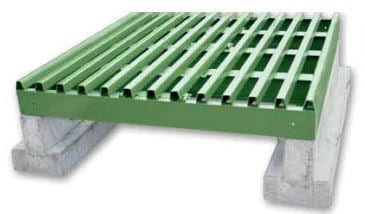
ATV Crossings
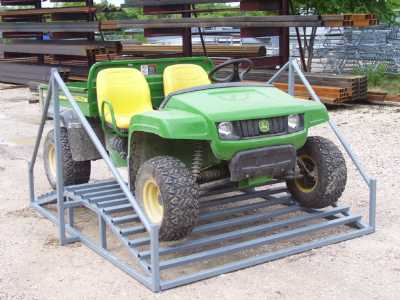
An ATV cattle guard provides a specialized crossing option for suitable all-terrain vehicles. Check its dimensions, intended vehicles, and installation requirements. Keep the crossing visible and maintain drainage and the connecting fence line.
Livestock Suitability and Ongoing Checks
Cattle guards are intended primarily for cattle. We do not recommend them for horses, and smaller-hoofed animals such as goats may cross some designs. Provide an appropriate separate route for horses, pedestrians, or other users who cannot safely use the grid.
A cattle guard can reduce routine gate opening, but it does not guarantee containment or eliminate maintenance. Inspect rails, welds, supports, anchoring, fencing, and the space beneath the grid. Remove accumulated debris and address damage according to the manufacturer’s instructions.
For a comparison of crossing options, read cattle guards instead of gates.
What Does a Cattle Guard Do?
A cattle guard is a vehicle crossing installed in an opening in a livestock fence line. The spaced rails or grid openings discourage cattle from walking across the gap, allowing authorized vehicles to enter or leave without stopping to open and close a conventional gate each time. The same general crossing may be called a cattle grid, stock grid, cattle grate, or driveway cattle guard.
Its usefulness depends on the complete site. The approach must let vehicles cross at the intended speed, the surrounding fence must tie into the ends correctly, and the structure must be suitable for the loads crossing it. A cattle guard is a livestock management tool rather than a guarantee that no animal can cross. Individual animals may jump, avoid, or negotiate different designs; fences and gates still require routine inspection and repair.
Choosing the Right Width and Crossing Dimensions
Begin by measuring the road or driveway where the guard will be placed. Note the usable travel width, the space between fence lines, vehicle turning patterns, and the shoulders on both sides. A narrow private ranch entrance and a roadway carrying large trucks may call for very different overall crossing dimensions. Allow for vehicles that use the road occasionally—not only the pickup that travels it every day.
Check the direction in which the manufacturer measures the guard. The listed dimension across the roadway and the dimension in the direction of vehicle travel are different measurements, and terminology can vary by listing. Do not assume that the nominal product length describes the exact driving surface or foundation footprint. Compare the detailed drawing before making a pit, setting forms, or pouring a base.
Consider the vehicles that will be using the crossing. Wide agricultural equipment, stock trailers, delivery trucks, and service vehicles may require more clearance than everyday cars. Curved approaches and steep grades can also change how tires track onto the guard. If a road authority or engineer has specified a width or approach design, that requirement controls the selection.
Understanding H-15, H-20, HS-20 and Other Load Classifications
Load terminology is especially important when buying a cattle guard for a working ranch, construction entrance, or public access route. Labels such as H-15, H-20, HS-20, U-54, and U-80 refer to different published or manufacturer-defined loading criteria. The numbers must be interpreted in the context of the actual model documentation, design vehicle, axle configuration, supported span, and installation conditions.
For example, a truck's gross weight alone does not establish how much load each axle can impose on a crossing. A loaded trailer adds axles and changes the loading arrangement. Heavy farm machinery may have different tire spacing and concentrated loads from a highway truck. Obtain the manufacturer's relevant rating documentation and match it to the specific equipment and traffic expected on the site.
Where a project calls for an engineer's approval, an agency certification, or a particular roadway design standard, confirm the documentation before ordering. A guard marketed for one load class should not be represented as satisfying another merely because the model looks similar. Support and foundation details are part of the rated installation, and the same steel grid may not perform as documented when placed on an unsuitable base.
Round-Rail, Flat-Rail, and Concrete Designs
Round-Rail Steel Cattle Guards
Round-rail models use a rounded crossing surface. Depending on the manufacturer, individual units are available in different lengths, framing arrangements, and load classifications. A ranch driveway may prioritize straightforward vehicle passage and compatibility with standard foundations, while a heavy equipment entrance may require additional design documentation and a different bearing structure.
Flat-Rail Steel Cattle Guards
Flat-top or flat-rail crossings use a different rail profile. Rail shape is only one part of selection; compare rail spacing, frame construction, supporting members, traffic characteristics, and approved installation methods. Do not choose a flat profile solely from its appearance or infer an axle rating from the rail shape.
Cast-in-Place Concrete Cattle Guards
A reusable concrete form allows the installer to cast a concrete crossing section following the manufacturer's process and specified reinforcement, mix, and curing requirements. This can appeal to operations planning multiple compatible installations or projects where the site-cast approach suits local construction logistics. The form itself is not a finished ready-to-cross guard: concrete, reinforcement, site preparation, curing time, and other specified components must be included in the project plan.
Concrete and steel cattle guards differ in how they are made and installed. Select a design based on its documented use, soil support, traffic, available equipment, and livestock—not an assumption that one material is always stronger, safer, or cheaper.
Site Preparation, Foundations, and Drainage
Even a properly rated steel grid can become unsafe if its supporting foundation settles or shifts. Evaluate the soil, groundwater, drainage path, and bearing conditions before excavation. Use the foundation drawing for the actual model, including the required elevation, support points, anchoring, approach grades, and any excavation or base details. Public-road projects may have additional engineering and inspection requirements.
Water and debris accumulation beneath a guard can create maintenance problems over time. A pit or open area may need a drainage provision compatible with the soil and site. Keep any specified clearance beneath the rails available for inspection and cleaning. Do not allow accumulated sediment, vegetation, or dumped gravel to turn the crossing into a filled surface where livestock may walk across it.
Plan the fence connection at both ends of the crossing. Wings, posts, or adjacent fencing should guide cattle away from bypassing the guard around its sides. Their position must also account for roadside clearances, farm equipment, and other traffic hazards. Where a project includes a public roadway or right of way, use the responsible authority's current requirements.
Installing a Cattle Guard: Practical Sequence
Before equipment arrives, confirm the exact model drawing, required base or foundation, delivery schedule, and unloading arrangements. Prepare the work area and arrange any excavation, concrete, drainage components, or anchoring hardware identified by the plans. Keep livestock and traffic clear of open excavations and suspended loads throughout the work.
Install and verify the supporting structure before placing the grid. Confirm the bearing points, final level and grade, alignment with the approaches, and the specified anchoring method. Follow the manufacturer's lifting guidance; these are heavy steel or concrete assemblies, not components that should be positioned by hand. A qualified installer should verify that the completed crossing has no unexpected edge transitions or unsupported sections.
Finish by connecting the surrounding fence and checking the intended travel path for vehicles. Inspect the crossing after initial traffic and after heavy rain or ground settlement. Never place a load-rated crossing into service until its required foundation and installation are complete.
Cattle Guard Cost: Compare the Complete Installed Project
The price of a steel cattle guard or reusable form is only one part of a crossing budget. To compare options meaningfully, account for the guard itself, foundation materials or castings, excavation, drainage, wings and fence connections, equipment rental, installation labor, shipping, and unloading. A longer or heavier crossing may change freight and installation requirements even if the products look similar.
A less expensive component does not necessarily create a less expensive finished crossing. For example, a reusable form may require substantial local concrete and labor but provide value across multiple compatible pours. A prefabricated steel unit may avoid on-site casting yet still require engineered support and lifting equipment. Review the complete system against the intended service life and vehicle requirements rather than selecting on initial price alone.
Because costs vary by dimensions, rating, location, site work, and transportation distance, Barn World can prepare a more useful freight estimate when you provide the intended model, quantity, delivery ZIP code, and unloading circumstances. For engineered projects, include the required plan or loading specification as well.
Livestock Safety and Where a Gate Is Still Needed
Cattle guards are primarily intended to discourage cattle at vehicle access points. Horses can be injured if they try to cross a grid, and we do not recommend relying on cattle guards for horse containment. Sheep, goats, other smaller-hoofed livestock, wildlife, and some individual cattle may negotiate certain openings differently. A design appropriate for one type of livestock is not automatically suitable for another.
Consider a separate gate, designated walking route, or other managed access where horses, pedestrians, bicycles, motorcycles, or animals that cannot safely cross the grid need to pass. Keep warning and visibility needs in mind at unusual approaches. No cattle guard should be described as injury-proof or escape-proof.
Maintenance After Installation
Inspect the grid and approaches regularly, especially after flooding, heavy vehicle use, snow removal, or ground movement. Look for damaged rails or welds, loose anchoring, worn supports, changes in approach grade, erosion, and debris collecting below the crossing. Maintain the adjacent fencing and wing connections so the livestock boundary remains effective.
Cleaning may be necessary if sediment or vegetation accumulates under the grid. Do not enter beneath an unsecured crossing, work under suspended loads, or remove supports without the proper plan and equipment. Repair damaged components according to the manufacturer or engineer's instructions; an improvised weld or replacement rail can change the behavior of a rated structure.
Frequently Asked Questions About Cattle Guards
What is the difference between a cattle guard and a cattle grid?
They are common names for the same type of livestock-control crossing. A cattle grid, stock grid, or cattle guard uses spaced rails or openings to discourage cattle from crossing an entrance where vehicles can pass.
Can a cattle guard replace a ranch gate?
At a suitable vehicle entrance it can reduce the need to open and close a gate every trip. A conventional gate or separate access route may still be necessary for livestock movements, horses, pedestrians, or conditions in which the guard is unsuitable.
What size cattle guard do I need for a driveway?
Measure the usable crossing width, the direction of travel, approach geometry, expected vehicle sizes, and required foundation space. Compare those dimensions with the manufacturer's drawing; nominal guard lengths alone do not define the full installed crossing.
Will a cattle guard support a loaded feed truck or tractor?
That depends on the guard's documented design and the actual axle loads, vehicle configuration, foundation, and installation. Obtain the manufacturer’s load-rating information and confirm that it covers the heaviest equipment expected to use the crossing.
What is the difference between H-20 and HS-20?
They represent different design loading configurations. The appropriate choice depends on the exact model documentation and the vehicles involved, particularly when trailer axles or other multiple-axle loading patterns matter. The labels should not be treated as interchangeable.
Can cattle guards be used for horses or goats?
We do not recommend cattle guards for horses. Goats and some other smaller livestock may pass through or negotiate certain guard designs. Review containment and animal safety with the manufacturer and use an appropriate alternate barrier when needed.
Does a cattle guard need a concrete foundation?
The required support depends on the specific product. Some guards use compatible precast foundations or other specified bearing systems; cast-in-place designs have separate construction requirements. Follow the model's approved installation details instead of assuming every grid is installed in the same way.
Why are wings or wing posts used with cattle guards?
They help connect the crossing to the adjacent fence and discourage livestock from moving around the ends. Choose components compatible with the guard while also respecting vehicle and roadside clearance requirements.
How much does it cost to install a cattle guard?
The total varies with the guard, required load classification, foundation, excavation, drainage, unloading, fencing connections, labor, and freight distance. An accurate comparison includes the full installation rather than the grid's purchase price alone.
How often should a cattle guard be inspected?
Inspect on a regular maintenance schedule and after events that may affect the structure or approaches, including flooding, settlement, impacts, or unusually heavy traffic. Check support integrity, rails, anchoring, debris, drainage, and the surrounding fence.
Plan Your Order and Freight Delivery
Contact Barn World with the crossing dimensions, expected vehicles, required load documentation, site details, and delivery ZIP code. Confirm the guard, compatible foundations, wings, posts, and other components included in the quote.
Arrange unloading equipment suitable for the shipment’s weight and dimensions, with adequate access at the delivery site. Confirm unloading requirements before scheduling delivery.
Call Barn World at (720) 238-2190, email Sales@BarnWorld.com, or use chat for help selecting a configuration and obtaining a freight quote.