

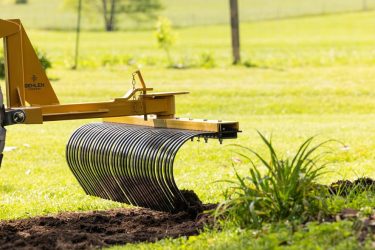
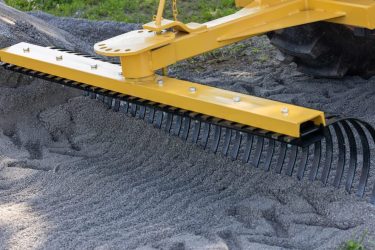


SEE ALL OUR TRACTOR IMPLEMENTS
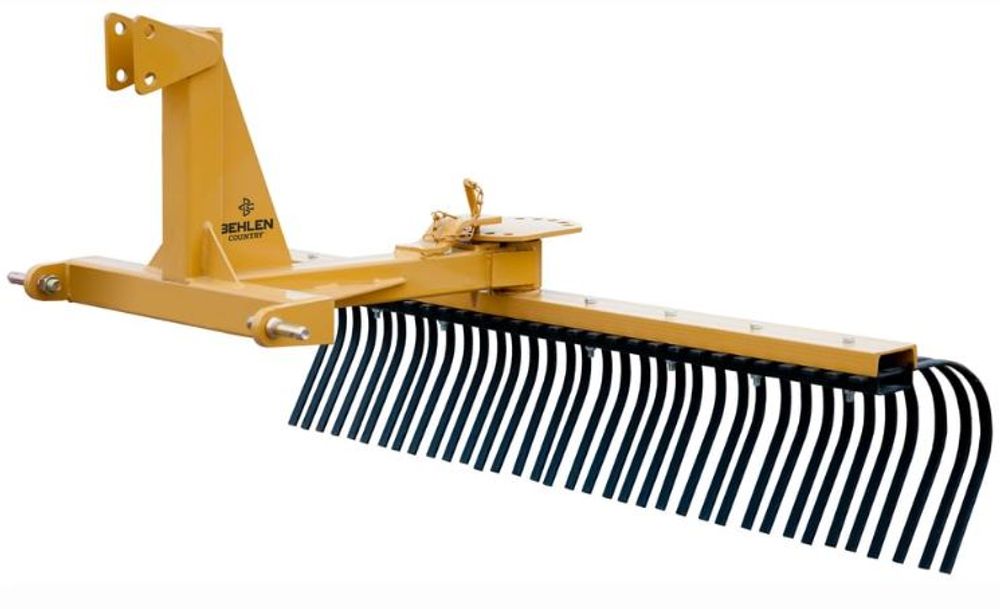
The tractor landscape rake is a Category I three-point hitch implement designed for clearing surface debris, spreading loose gravel, leveling soil and maintaining farm and ranch property. Available in 5-foot, 6-foot and 7-foot widths, it uses heat-treated steel tines to move and separate loose material as the tractor travels across the working area.
With five forward and five reverse angle settings, this tractor rake can be positioned to move material to one side or work across the travel path. Its powder-coated steel construction is designed for agricultural and property-maintenance applications, and an optional wheel kit provides additional height-control capability for suitable operating conditions.
Browse Barn World's tractor implements and attachments for additional grading, leveling and land-maintenance equipment.
Tractor Landscape Rake Specifications
| Landscape Rake Specifications | |
|---|---|
| Available Widths | 5 feet, 6 feet and 7 feet |
| Tractor Hitch | Category I three-point hitch |
| Tines | Heat-treated steel; original listing identifies 1-inch tines |
| Forward Angle Settings | Five |
| Reverse Angle Settings | Five |
| Finish | Powder coated |
| Listed Weight | Approximately 240 lb for the 6-foot model |
| Optional Equipment | Wheel kit for additional height adjustment |
| Typical Uses | Debris removal, gravel maintenance, soil leveling and material spreading |
Before ordering: Confirm the selected rake width, implement weight, hitch compatibility and optional wheel-kit availability. The original listing provides an approximate weight only for the 6-foot model.
View the Tractor Landscape Rake Operating Manual (PDF)
How a Tractor Landscape Rake Works
A landscape rake uses a row of steel tines to engage loose material on the ground as the tractor pulls the implement forward.
The tines can gather branches, rocks and other surface debris while allowing some smaller material to pass between them.
When working with soil or gravel, the rake can help redistribute loose material and reduce minor surface irregularities.
Unlike a solid grading blade, a landscape rake is designed to comb through material rather than contain and move large quantities of soil.
Adjustable Forward and Reverse Angles
The rake offers five forward and five reverse angle settings.
Angling the rake changes the direction in which collected material moves during operation.
This can be useful for creating windrows of debris along the edge of a field, driveway or work area.
Reverse settings provide additional flexibility for tasks suited to the manufacturer's approved operating configuration.
Make angle adjustments only when the implement is safely positioned and the tractor is secured according to the operating manual.
Heat-Treated Steel Tines
The original product description identifies heat-treated steel tines designed for durability during routine grading and debris-clearing work.
These tines engage the working surface and help separate or redistribute loose material.
Inspect the tines regularly for bending, cracks, excessive wear or missing mounting hardware.
Damaged tines should be repaired or replaced with compatible parts before further operation.
Choosing a 5-Foot, 6-Foot or 7-Foot Rake
The best landscape rake width depends on the tractor, work area and intended applications.
5-Foot Tractor Landscape Rake
The 5-foot rake offers the narrowest working width in this product family.
It may be useful where maneuverability and limited working space are important, provided the tractor meets the manufacturer's requirements.
6-Foot Tractor Landscape Rake
The 6-foot model provides an intermediate working width for driveway maintenance, debris collection and general land preparation.
The original listing identifies an approximate weight of 240 pounds for this model.
7-Foot Tractor Landscape Rake
The 7-foot model offers the widest coverage among the listed options.
It may be useful for larger work areas where the tractor has sufficient lifting capacity and the available space accommodates the wider implement.
Clearing Rocks, Branches and Surface Debris
A landscape rake can help collect loose rocks, branches and similar debris from appropriate surfaces.
Angling the rake may help direct collected material into a windrow for later removal.
Effectiveness depends on tine spacing, debris size, soil conditions and operating technique.
Large rocks, buried objects and heavy obstructions may require other equipment or manual removal.
Maintaining Gravel Driveways
Loose gravel can shift with vehicle traffic and weather, creating uneven areas and accumulated material along driveway edges.
A landscape rake can help redistribute suitable loose aggregate during routine maintenance.
It may also help gather surface debris before additional grading work.
For deeper potholes, major washboarding or substantial road reshaping, another grading implement may be more appropriate.
See Barn World's 7-foot tractor land plane for an implement designed specifically for smoothing and redistributing loose driveway material.
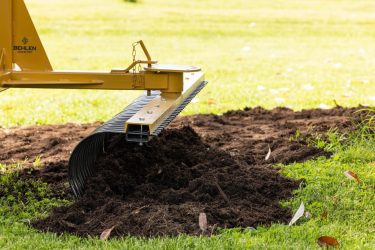
Landscape Rake Working in Soil
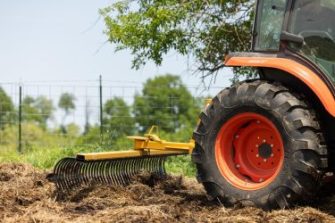
Landscape rake moving soil during a grading operation.
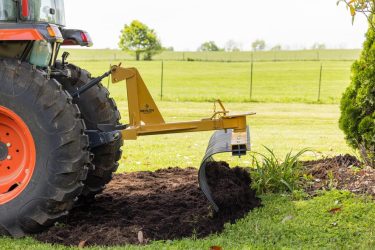
Reversible Landscape Rake Position
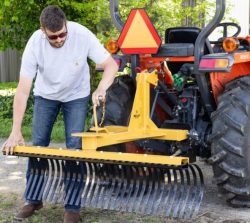
Reversible configuration shown in the original product photographs.
Soil Preparation and Surface Leveling
Landscape rakes can help spread loose topsoil and smooth selected areas during garden, field or property preparation.
The tines can also gather certain surface debris before planting or additional finishing work.
For heavily compacted soil, the rake may need to be used after another implement has loosened the material.
A landscape rake should not be treated as a substitute for a tiller or other deep soil-working equipment.
Spreading Topsoil and Mulch
The adjustable rake can be used to redistribute suitable loose landscaping materials across a prepared work area.
For topsoil, this may help improve surface consistency after material has been placed.
For mulch or other lightweight material, results depend on material type and tine engagement.
Work at controlled speeds to avoid pushing excessive material into piles.
Optional Wheel Kit
The original listing identifies an optional wheel kit for additional height-control capability.
Depending on the manufacturer's configuration, wheels may help maintain a more consistent rake position over suitable ground.
Confirm wheel-kit compatibility and current availability for the selected rake width before ordering.
Category I Three-Point Hitch Compatibility
The rake is listed for tractors equipped with a Category I three-point hitch.
Category I generally uses 7/8-inch lower hitch pins and a 3/4-inch top-link pin.
Compatibility also depends on tractor lift capacity, hitch geometry and the weight of the selected rake.
The original description discusses tractors in an approximate 20–45 horsepower range as general Category I examples, but that should not be interpreted as a verified horsepower requirement for every rake width.
Confirm the manufacturer's current requirements before ordering.
Operating Instructions
Follow the supplied operating manual and tractor manufacturer's instructions when attaching, adjusting or using the rake.
- Position the tractor and rake on firm, level ground before attachment.
- Connect the three-point hitch using the required pins and retainers.
- Adjust the top link so the rake is positioned appropriately for the intended task.
- Select the desired rake angle with the tractor safely secured.
- Inspect the work area for hidden obstacles and bystanders.
- Lower the rake according to the operating instructions.
- Move forward at a controlled speed appropriate for the material and terrain.
- Lift the rake before turning to avoid unnecessary stress on the implement.
- Stop and inspect the equipment if unusual resistance or damage occurs.
The original operating guidance specifies keeping tractor speed below 5 mph. Follow the manufacturer's current speed and operating limits.
Landscape Rake Demonstration Video
Watch the original demonstration video for a visual overview of the rake and its operating arrangement.
Tractor Landscape Rake Image Gallery
Rake Moving Loose Soil
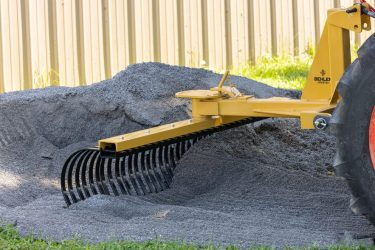
Landscape rake redistributing loose soil.
Smoothing Soil with a Tractor Rake
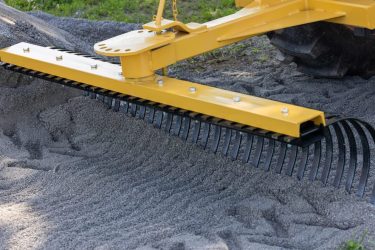
Surface leveling during property maintenance.
Landscape Rake in Reverse Configuration
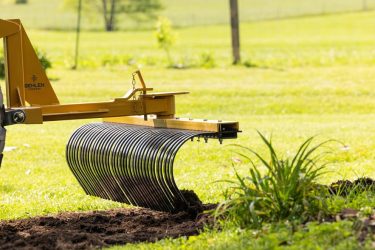
Reverse-direction operation shown in the original gallery.
Rake Pushing Loose Material
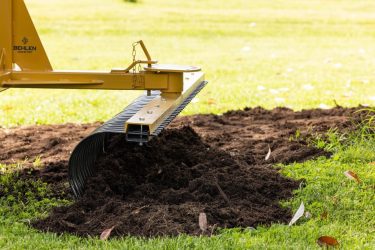
Rake moving loose material across a prepared surface.
Backing with the Tractor Rake
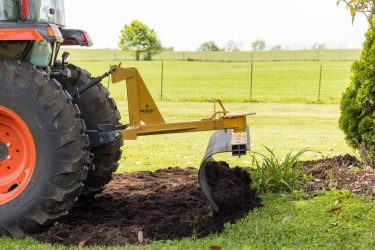
Tractor rake in a reverse-position demonstration.
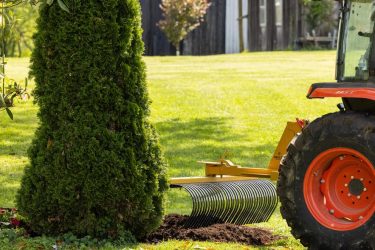
Landscape Rake Working Near Trees
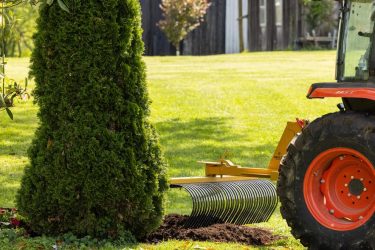
Landscape rake used in an open property-maintenance area.
Landscape Rake Versus a Land Plane
A landscape rake is useful for collecting debris, separating loose material and spreading selected surface materials.
A land plane uses cutting edges to redistribute loose gravel and smooth an established surface.
For debris removal and general surface preparation, the landscape rake may be the more versatile choice.
For repeated smoothing of gravel driveways, a land plane may be more suitable.
Landscape Rake Versus a Grader Blade
A grader blade uses a solid cutting edge to move soil, gravel or other material.
Depending on the model, a grader blade can be angled for tasks such as shaping and maintaining unpaved surfaces.
A landscape rake uses tines rather than a continuous blade, making it useful for collecting debris and working with loose material.
Explore Barn World's tractor grader blades when a solid grading edge is better suited to the task.
Maintenance and Inspection
Inspect the rake before each use and maintain it according to the manufacturer's instructions.
- Check the three-point hitch pins and retainers.
- Inspect tines for bending, cracks and excessive wear.
- Check the angle-adjustment mechanism.
- Inspect frame members and welded connections.
- Look for loose or missing hardware.
- Check the optional wheel kit if installed.
- Remove accumulated debris after use.
- Inspect the powder-coated finish for damage.
- Replace worn or damaged components with compatible parts.
Do not operate the rake with damaged structural components or improperly secured adjustments.
Frequently Asked Questions
What widths are available?
The landscape rake is listed in 5-foot, 6-foot and 7-foot widths.
What tractor hitch does it use?
The original specifications identify a Category I three-point hitch.
How much does the rake weigh?
The original listing gives an approximate weight of 240 pounds for the 6-foot model. Confirm weights for other sizes.
Are the tines heat treated?
Yes. The original product description identifies heat-treated steel tines.
Can the rake be angled?
Yes. It has five forward and five reverse angle settings.
Can it be used to maintain gravel driveways?
Yes. It can redistribute suitable loose gravel and gather surface debris during routine maintenance.
Can it clear rocks and branches?
It can collect certain loose rocks, branches and debris. Performance depends on material size and ground conditions.
Can it level soil?
Yes. The rake can spread and smooth suitable loose soil, but it is not intended for deep excavation.
Is a wheel kit available?
The original listing identifies an optional wheel kit. Confirm current availability and compatibility.
What operating speed is recommended?
The original operating instructions specify keeping tractor speed below 5 mph. Follow the current manual.
Should the rake be lifted before turning?
Yes. The original instructions advise lifting the rake off the ground before turning to help prevent equipment damage.
Does the rake require PTO power?
No PTO-driven mechanism is identified in the original listing. The rake works through tractor movement and tine contact with the surface.
Request a Quote for a Tractor Landscape Rake
This tractor landscape rake offers adjustable working angles, heat-treated steel tines and three available widths for agricultural and property-maintenance applications.
Before ordering, select the appropriate width and confirm tractor hitch compatibility, lifting capacity and any optional wheel-kit requirements.
Contact Barn World for current availability and freight pricing. Include the selected rake width and delivery ZIP code when requesting a quote.
For additional equipment, visit Barn World's tractor implements collection.