

SEE ALL OUR TRACTOR IMPLEMENTS HERE
SEE VIDEO AND PICTURES BELOW
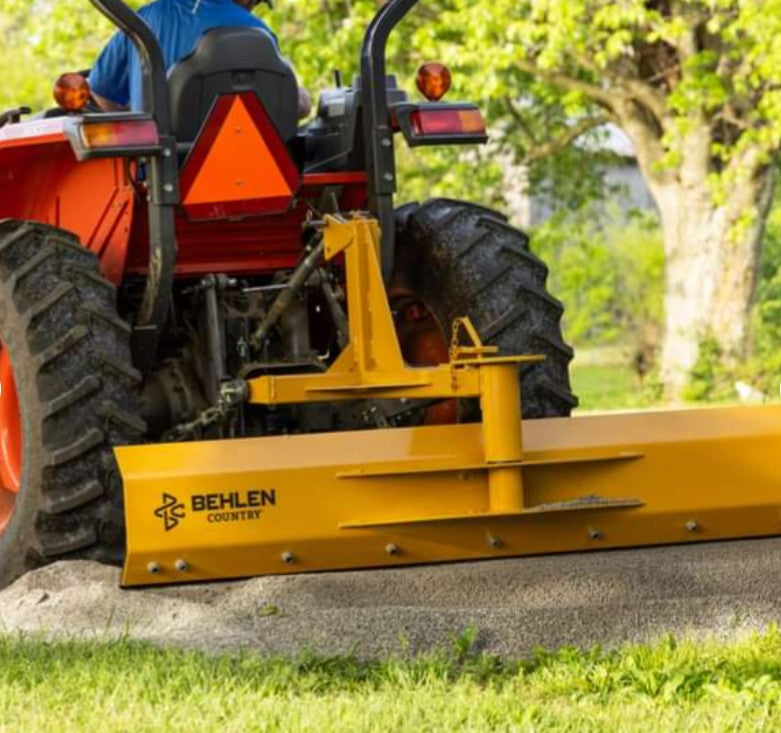
These rear-mounted tractor grader blades are designed for driveway maintenance, gravel spreading, surface leveling, ditch shaping and light snow removal. Available in 5-foot, 6-foot and 7-foot widths, they provide an adjustable grading attachment for tractors used in farm, ranch and property-maintenance applications.
Each blade features a heavy-gauge steel frame, a 16-inch-tall moldboard, a replaceable 6-inch heat-treated cutting edge and quick-pin angle adjustments. Five forward and five reverse angle positions allow operators to change how material moves across the working surface.
The blades are described as suitable for tractors up to approximately 45 horsepower and compatible with common quick-hitch systems. Confirm your tractor's hitch category, available power, lift capacity and implement clearance before ordering.
For related equipment, browse Barn World's tractor implements and attachments.
Tractor Grader Blade Specifications
| Rear Grader Blade Specifications | |
|---|---|
| Available Working Widths | 5 feet, 6 feet and 7 feet |
| Blade Height | 16 inches |
| Cutting Edge | 6-inch heat-treated, replaceable cutting edge |
| Forward Angle Positions | 5 |
| Reverse Angle Positions | 5 |
| Adjustment Method | Quick-pin angle adjustment |
| Construction | Heavy-gauge steel frame and blade |
| Finish | Powder coated |
| Hitch | Described as quick-hitch compatible; confirm exact fit |
| Tractor Power | Designed for tractors up to approximately 45 HP, subject to model compatibility |
| Typical Applications | Gravel driveways, grading, leveling, ditch shaping and light snow removal |
Compatibility note: Tractor horsepower alone does not determine whether a grader blade is suitable. Hitch geometry, tractor weight, traction, hydraulic lift capacity and the intended grading conditions also matter.
Available Grader Blade Widths and Model Numbers
| Working Width | Listed Part Number |
|---|---|
| 5 feet | 80110800YEL |
| 6 feet | 80110810YEL |
| 7 feet | 80110820YEL |
Choose a blade width based on your tractor and the area you need to maintain. A wider blade covers more ground per pass, but it can also increase resistance when moving heavy or compacted material.
Choosing the Right Tractor Grader Blade Width
The correct width depends on tractor capability, tire spacing, material conditions and the type of grading work.
5-Foot Grader Blade
The 5-foot option may be suitable for smaller tractors and locations where maneuverability is important. It can be useful for narrow driveways, smaller maintenance areas and work around established landscaping.
6-Foot Grader Blade
The 6-foot model offers an intermediate working width for general property maintenance, driveway repair and material distribution.
It may provide a practical balance between coverage and maneuverability for appropriately matched tractors.
7-Foot Grader Blade
The 7-foot blade provides the widest listed working surface in this product family.
It may be useful for wider driveways, open work areas and larger grading projects where the tractor has sufficient capability.
Confirm that the tractor can control the blade safely under the expected load, especially when the blade is angled.
Adjustable Blade Angles for Material Control
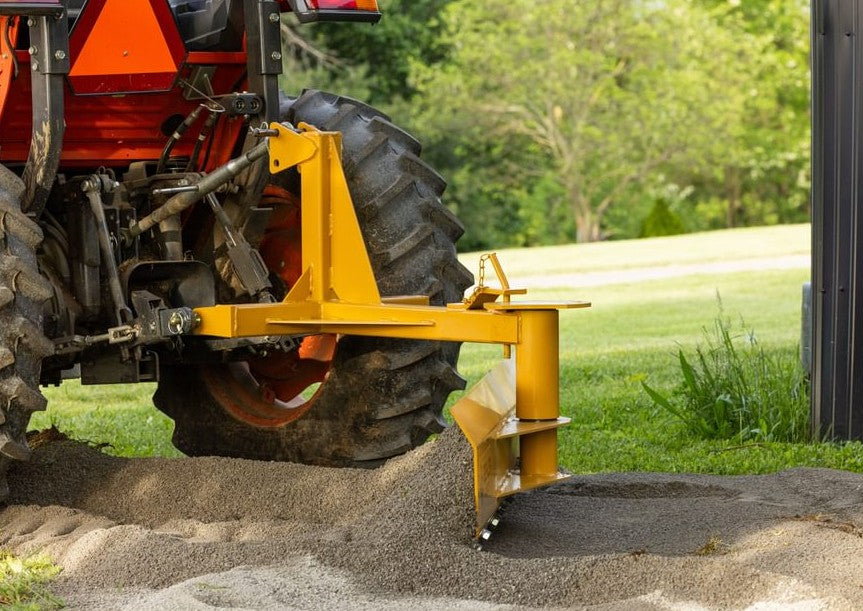
The grader blade uses a quick-pin adjustment system with five forward and five reverse angle settings.
Changing the blade angle affects how gravel, soil, snow or other loose material moves across the working surface.
For example, an angled blade can move loose material toward one side of a driveway, while a straighter setting may be useful for certain leveling operations.
The ability to reverse the blade provides additional positioning options for different tasks.
When to Angle the Blade
An angled setting can be useful when moving material laterally, reshaping driveway edges or directing loose material toward a desired location.
Begin with shallow passes and adjust the angle based on the material and surface conditions.
When to Use a Straighter Setting
A straighter setting may be appropriate for spreading loose material over a broader area or making selected finishing passes.
Actual results depend on the blade position, tractor control and surface conditions.
16-Inch Moldboard and Replaceable Cutting Edge
The blade includes a 16-inch-tall moldboard and a 6-inch heat-treated cutting edge.
The moldboard directs material as the tractor moves, while the cutting edge contacts the ground and experiences much of the abrasive wear.
The cutting edge is replaceable, allowing the wear component to be serviced rather than requiring replacement of the complete grader blade.
Inspect the edge periodically for excessive wear, damage and uneven contact.
Grader Blade Photographs
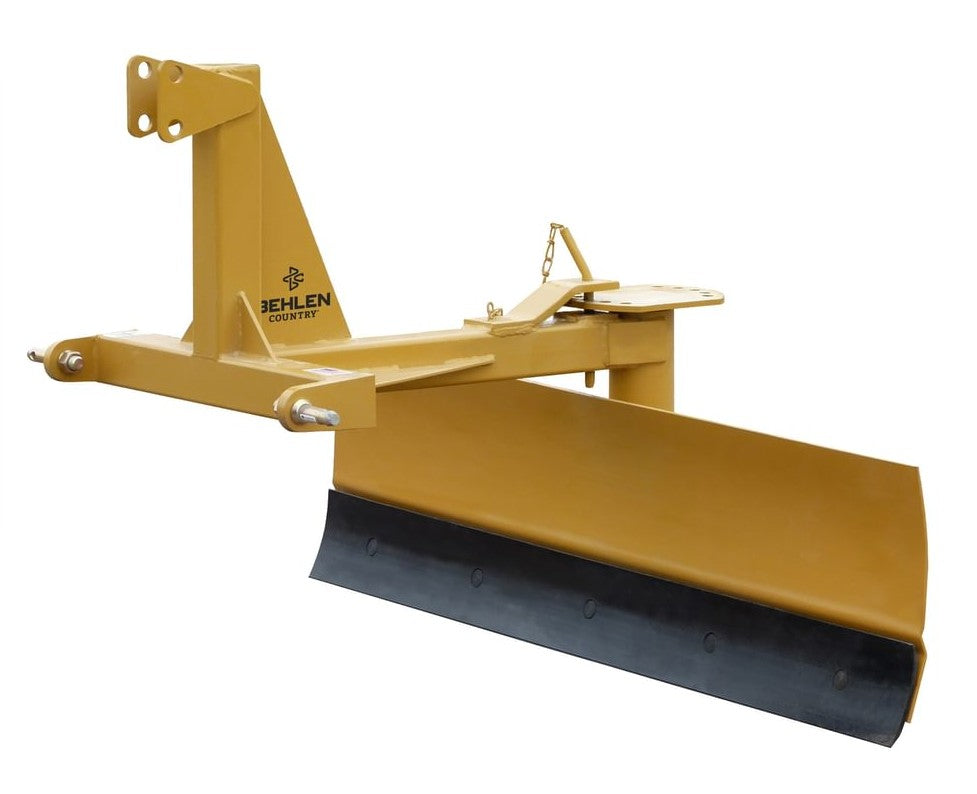
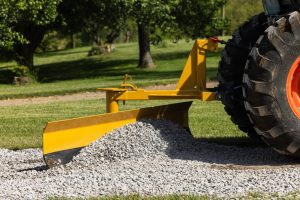
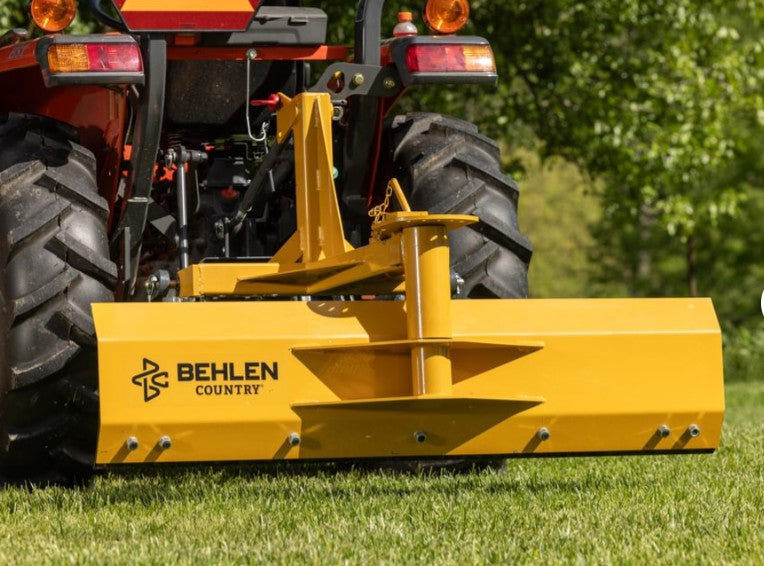
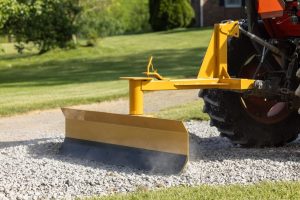
These original product photographs illustrate the tractor grader blade and examples of its use with different surfaces.
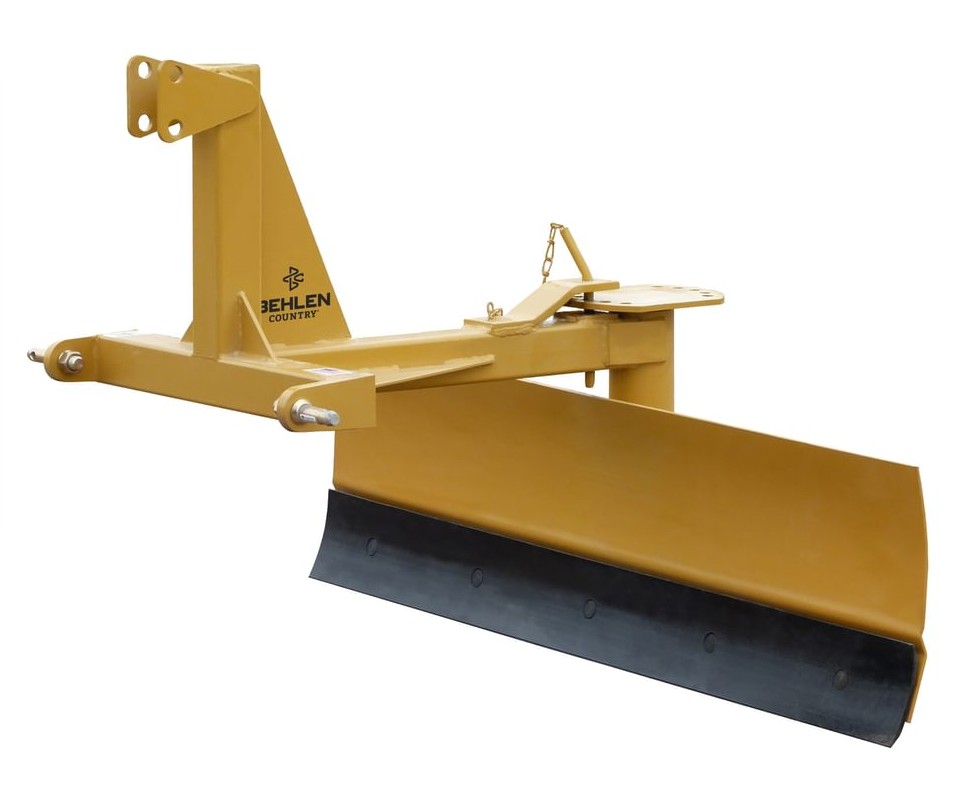
Rear tractor grader blade.
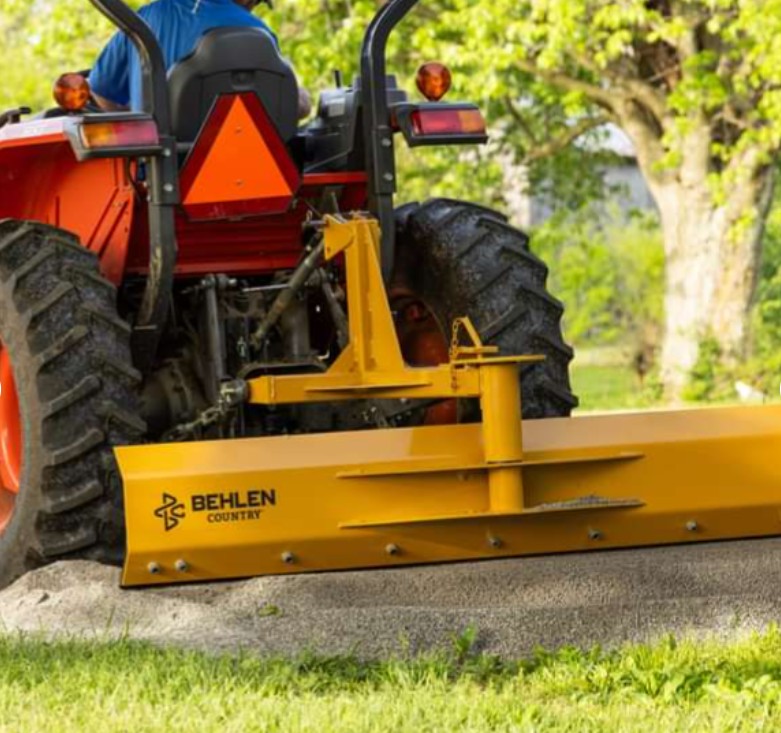
Grader blade attached to a tractor during property maintenance.
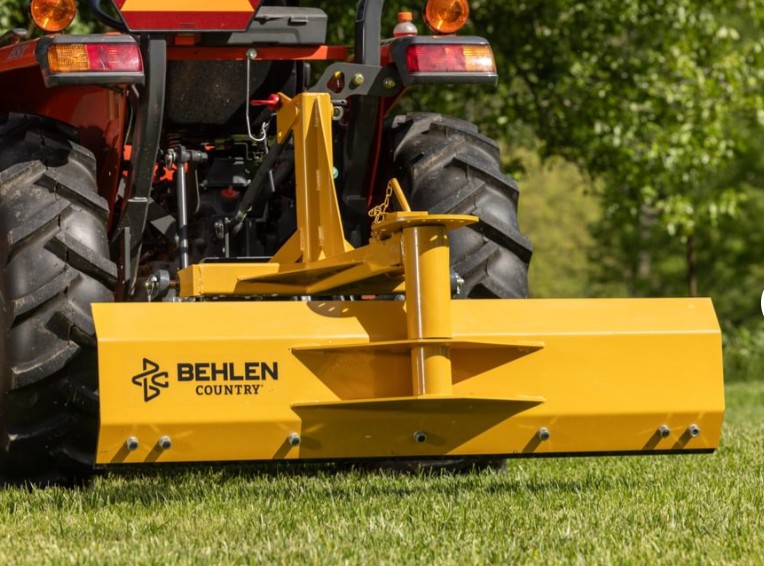
Grader blade in a property-maintenance setting.
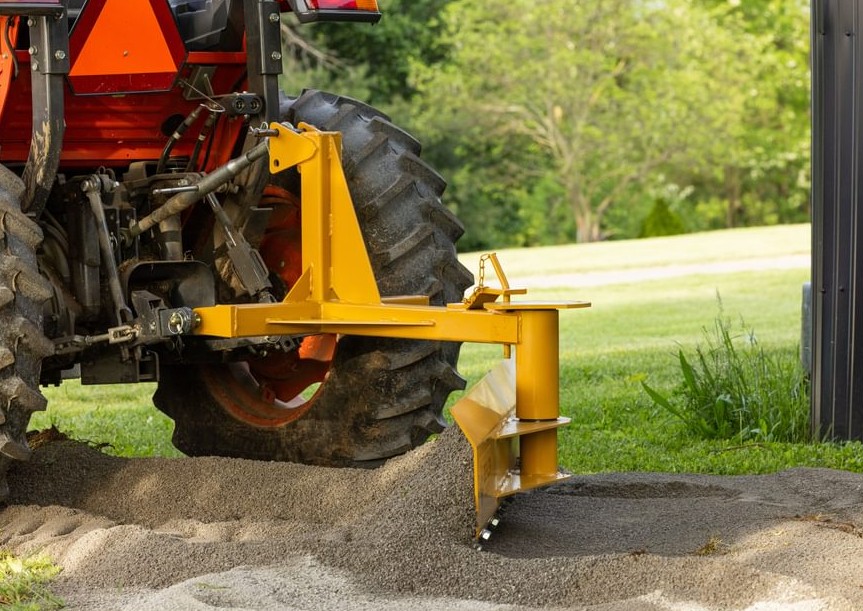
Grading and leveling loose material.
Using a Grader Blade for Gravel Driveway Maintenance
Gravel driveways can develop ruts, washboarding, displaced stone and uneven drainage patterns through regular use and weather exposure.
A rear tractor grader blade can help redistribute loose gravel and reshape selected areas of the driveway.
For routine maintenance:
- Inspect the driveway for drainage problems, large rocks and obstacles.
- Choose a blade angle appropriate for the desired material movement.
- Start with a shallow working depth.
- Make controlled passes rather than attempting to move too much material at once.
- Observe where gravel is accumulating and adjust the blade position.
- Finish with lighter passes as appropriate for the surface.
A grader blade cannot correct every drainage or base failure. Deep potholes, unstable subgrade and substantial erosion may require additional materials or reconstruction.
Maintaining a Crowned Driveway
A crowned driveway has a higher center area that helps direct surface water toward the edges.
Maintaining the intended crown can be part of a broader drainage-management plan.
A tractor grader blade can help move loose surface material, but achieving an accurate crown requires careful control of grading depth, blade angle and tractor position.
Check the desired drainage pattern before beginning and avoid directing runoff toward buildings or areas susceptible to erosion.
Spreading Soil, Sand and Loose Material
Rear grader blades can be useful for distributing loose topsoil, sand and similar materials over prepared areas.
For finish work, use lighter passes and avoid excessive blade penetration that could disturb the underlying surface.
Material moisture, compaction and particle size can affect how smoothly the blade works.
Hard-packed or heavily compacted material may require another implement or preparation method before final grading.
Light Snow Removal
The original product description identifies light snow removal as a possible application.
Angling the blade can help direct snow toward one side of a driveway or work area.
However, snow removal places different demands on the tractor and attachment than loose gravel grading.
Watch for hidden obstacles, frozen ground, buried curbs and uneven surfaces. Confirm the manufacturer's operating recommendations before using the blade for snow work.
Shaping Ditches and Drainage Areas
Adjustable blade angles can assist with moving loose material when maintaining shallow drainage areas or shaping selected surfaces.
Drainage work requires particular attention to water flow, erosion and existing utilities.
Do not excavate near buried services without following applicable utility-location requirements.
For engineered drainage systems or substantial excavation, use the appropriate equipment and professional guidance.
Quick-Hitch Compatibility and Tractor Fit
The original listing describes these grader blades as compatible with common quick-hitch systems.
Quick-hitch compatibility should be confirmed for the specific tractor and hitch arrangement rather than assumed from the product description alone.
Before ordering, check:
- Tractor three-point hitch category and dimensions.
- Quick-hitch geometry and connection clearances.
- Hydraulic lift capacity.
- Tractor operating weight and traction.
- Blade width relative to tractor tire spacing.
- Available turning and transport clearance.
The stated approximate 45-horsepower upper range is a product-selection reference, not a guarantee of suitability for every tractor within that range.
Grader Blade Operation and Safety
Follow the tractor and implement manufacturers' operating instructions.
Use particular care when working on slopes, near roads or around people, animals and structures.
Before adjusting the blade, park on stable ground, lower the implement, secure the tractor and follow the prescribed shutdown procedure.
Keep hands clear of adjustment points and do not attempt to reposition the blade while the tractor or attachment is moving.
Maintain a safe working speed appropriate for the terrain and material.
Maintenance and Cutting Edge Replacement
Regular maintenance helps preserve grading performance and identify worn or damaged components.
- Inspect the cutting edge for wear and damage.
- Check mounting bolts and hardware.
- Inspect the quick-pin adjustment mechanism.
- Look for bent components or damaged welds.
- Remove accumulated soil and debris.
- Inspect the powder-coated finish for exposed steel.
- Check hitch connection points for wear.
- Replace worn components according to manufacturer guidance.
The replaceable cutting edge can help extend the useful service life of the attachment. Confirm replacement-part compatibility before ordering.
Tractor Grader Blade Video
Watch the original product video for a visual reference to grader blade construction and operation.
Frequently Asked Questions
What grader blade widths are available?
The listed widths are 5 feet, 6 feet and 7 feet.
How tall is the blade?
The moldboard is listed at 16 inches tall.
Is the cutting edge replaceable?
Yes. The original specifications describe a replaceable, 6-inch heat-treated cutting edge.
How many angle settings are available?
The quick-pin system provides five forward and five reverse angle positions.
Can I use this blade for gravel driveways?
Yes. Gravel spreading and driveway maintenance are among its listed applications.
Can it be used for snow removal?
The original listing identifies light snow removal as an application. Follow manufacturer guidance and use caution around hidden obstacles.
What tractor horsepower is recommended?
The blades are described as designed for tractors up to approximately 45 horsepower. Verify the specific tractor and hitch compatibility before ordering.
Will it fit my quick hitch?
The product is described as quick-hitch compatible, but exact fit should be confirmed using your tractor and hitch dimensions.
What is the difference between the 5-foot and 7-foot models?
The principal listed difference is working width. Wider blades cover more surface per pass but may require greater tractor capability under demanding conditions.
Does the grader blade require routine maintenance?
Yes. Inspect the cutting edge, adjustment pins, hitch connections, hardware and steel frame regularly.
Order a Tractor Grader Blade
These adjustable rear grader blades provide practical options for maintaining gravel driveways, spreading loose material and completing routine grading work around farms, ranches and rural properties.
Select the 5-foot, 6-foot or 7-foot width based on your tractor's capabilities and the intended application.
Contact Barn World at (720) 238-2190 or Sales@BarnWorld.com for current availability, compatibility questions and delivered pricing.
Explore more equipment in Barn World's tractor implements collection.