
SHOP ALL OF OUR CREEP FEEDERS
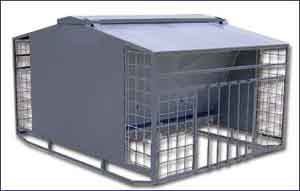
The Sheep and Goat Creep Feeder 1,000 lbs is a double-sided livestock feeder designed to provide supplemental feed to lambs, goat kids, and other appropriately sized young animals. Its adjustable creep-entry openings help control access to the feeding area, while the removable front bars provide additional flexibility for feeding larger goats when appropriate.
Constructed from 16-gauge steel with a gray enamel finish, this feeder features feeding access on both sides to help distribute animals across multiple feeding positions. Its large hopper can reduce the frequency of refilling, depending on daily feed consumption. Explore Barn World's creep feeders for sheep, goats, and calves for additional sizes and feeding arrangements.
Sheep and Goat Creep Feeder Specifications
| Double-Sided Creep Feeder Details | |
|---|---|
| Feed capacity | 1,000 lbs (nominal) |
| Overall length | 6 feet |
| Overall width | 7 feet 4 inches |
| Overall height | 4 feet 6 inches |
| Construction | 16-gauge steel |
| Finish | Gray enamel |
| Feeding arrangement | Double-sided |
| Entry configuration | Adjustable entries on both sides |
| Front bars | Removable |
Before ordering: Confirm that the feeder dimensions, entry configuration, and available feeding space are suitable for your livestock. The listed capacity refers to feed held in the hopper, not the feeder's empty shipping weight.
How Creep Feeding Works for Sheep and Goats
Creep feeding provides a designated area where young livestock can receive supplemental feed while access by larger animals is restricted.
For lambs and goat kids, this can be useful when the animals require a ration that differs from the feed being provided to mature ewes or does.
The entry system is an important part of the feeder's design. Openings must be large enough for the intended young animals to enter and leave comfortably while discouraging access by larger livestock.
Because animals grow and vary in size, the appropriate entry setting may change during the feeding period.
Double-Sided Feeding Access Helps Reduce Crowding
This feeder provides access to the feeding area from both sides rather than concentrating all animals along a single feeding edge.
That arrangement can help distribute feeding activity and give animals more opportunities to approach the trough.
It may be particularly useful when several lambs or goat kids approach the feeder at the same time.
Providing Space for Smaller Animals
Young livestock can compete for access to supplemental feed. Larger or more assertive animals may occupy preferred feeding positions and prevent smaller animals from eating comfortably.
Double-sided access can help reduce congestion, but it does not eliminate competition.
Observe the group during feeding and look for animals that are repeatedly pushed away or unable to reach the ration.
Positioning the Feeder for Access
To benefit from the double-sided arrangement, position the feeder so both feeding sides remain accessible.
Avoid placing one side directly against a fence or other obstruction unless the manufacturer specifically recommends that arrangement.
Allow sufficient room for animals to approach, turn, and leave without becoming trapped between the feeder and surrounding equipment.
Adjustable Creep Entries for Growing Lambs and Kids
The feeder includes adjustable entry openings on both sides.
These openings help control which animals can reach the supplemental feed.
Proper adjustment is important because lambs and goat kids change in size as they grow.
Setting the Openings
Adjust the entries according to the manufacturer's instructions and the actual size of the animals using the feeder.
Check that young animals can enter and exit without excessive squeezing, climbing, or contact with sharp edges.
Monitoring Animal Behavior
Observe livestock during the first several feeding sessions and after making adjustments.
Look for animals that hesitate to enter, become crowded at the openings, or have difficulty leaving the feeding area.
If larger animals are gaining access, review the entry settings and overall feeding arrangement.
Removable Front Bars for Larger Goats
The original product specifications identify removable front bars that can accommodate self-feeding by larger goats when the creep-restriction arrangement is no longer appropriate.
This feature adds flexibility to the feeder's potential use as animal size and feeding requirements change.
Removing the bars changes which animals can access the feed, so it should be done only when suitable for the intended group.
Follow the manufacturer's instructions and inspect the remaining structure for safe animal access after any configuration change.
Feeding Pan Designed for Smaller Livestock
The original product description identifies a feeding pan designed to discourage young animals from climbing inside.
Keeping animals out of the feed pan can help reduce contamination and unnecessary disturbance of the ration.
However, no feeder design can completely prevent feed waste or contamination.
Check the pan regularly for manure, moisture, spoiled feed, or excessive accumulation of fines.
Steel Construction for Livestock Feeding Areas
The feeder is constructed from 16-gauge steel with a gray enamel finish.
Steel construction provides a rigid structure for the hopper, feeding area, and adjustable entry components.
The enamel finish helps protect the steel surface, although exposure to livestock, moisture, and outdoor conditions can cause wear over time.
Inspect the frame, bars, and feeding area for damaged coatings, corrosion, bent components, or sharp edges.
Address damaged areas before they create a hazard for the animals using the feeder.
Managing Supplemental Feed for Lambs and Goat Kids
A creep feeder provides a way to make supplemental feed available, but the feeder itself does not determine the appropriate ration.
Feed selection should account for the animals' species, age, stage of growth, forage availability, and nutritional requirements.
Sheep and Goat Mineral Requirements
Sheep and goats have different mineral requirements and tolerances.
In particular, sheep are sensitive to excessive dietary copper. A mineralized ration suitable for goats should not automatically be considered appropriate for sheep.
Use feed formulated for the intended species and consult a qualified livestock nutrition professional when planning supplementation.
Introduce Feed Appropriately
When beginning a supplemental feeding program, follow appropriate nutritional guidance for introducing the ration.
Sudden dietary changes may create digestive problems, particularly with concentrated feeds.
Monitor Consumption
Observe whether the animals are eating consistently and whether the amount of feed offered matches actual consumption.
A large hopper should not be filled with more feed than can remain in suitable condition under the expected weather and storage conditions.
Keeping Feed Fresh and Accessible
Feed quality is important for both animal nutrition and the practical operation of the feeder.
Check for Moisture
Inspect the hopper and feeding pan for damp feed, condensation, or water intrusion.
Remove wet or spoiled feed rather than mixing it with a fresh ration.
Watch for Bridging
Some feeds may form clumps or bridges that interfere with movement from the hopper into the feeding area.
Feed texture, moisture, and storage conditions can affect flow.
Inspect the feeding pan to confirm that feed remains available.
Remove Feed Fines
Small particles can accumulate in the trough as animals eat.
Clean out excessive fines and debris as part of routine feeder maintenance.
Choosing the Right Location
Feeder placement affects animal access, cleanliness, and the convenience of daily feeding.
Firm, Level Ground
Choose a stable surface that supports the feeder and allows animals to approach safely.
Avoid locations where excessive mud or uneven ground may interfere with feeding.
Good Drainage
Position the feeder away from areas where water collects after rainfall or snowmelt.
Standing water and persistent mud can make the feeding area harder to maintain.
Access for Refilling
Leave adequate room for the equipment used to deliver feed to the hopper.
Keep livestock separated from machinery during loading operations.
Room Around Both Sides
Allow enough space for animals to use both feeding sides without unnecessary crowding.
Routine Cleaning and Maintenance
Regular inspection helps keep the feeder functioning and identifies problems before they interfere with livestock access.
- Inspect the feed. Check for moisture, mold, spoilage, and excessive fines.
- Clean the feeding pan. Remove contaminated or leftover feed as needed.
- Check the entry openings. Make sure the bars are properly positioned and secure.
- Inspect the frame. Look for corrosion, loose components, damage, and sharp edges.
- Check feeder stability. Confirm that the unit remains properly positioned on suitable ground.
- Observe the livestock. Watch for crowding, difficult entry, or animals that cannot access the ration.
Remove the feeder from service when structural damage or unsafe conditions are identified.
Choosing Between Sheep and Goat Creep Feeder Sizes
Barn World offers several creep feeder capacities for different livestock operations.
The best choice depends on the number of animals, feeding frequency, available space, and how quickly the group consumes supplemental feed.
Smaller Feeding Groups
For operations that do not require a large hopper, consider the Sheep and Goat Creep Feeder 500 lbs.
A smaller feeder may be more practical where fewer animals need supplemental feed or where refilling can be performed frequently.
Larger Feeding Groups
For operations that need additional feed storage, review the Sheep and Goat Creep Feeder 2,000 lbs.
Consider the available feeding positions and entry configuration, not just hopper size, when selecting a feeder for a larger group.
Additional options are available in Barn World's creep feeder collection.
Planning for Delivery and Placement
This feeder is a substantial piece of livestock equipment with an overall footprint of approximately 6 feet by 7 feet 4 inches.
Before ordering, confirm that your property has adequate access for delivery, unloading, and final placement.
When requesting a freight quote, provide:
- The quantity of feeders required
- Your delivery ZIP code
- Whether the destination is a business, ranch, or residential property
- Available unloading equipment
- Any access limitations for large delivery vehicles
Confirm the delivery method and unloading arrangements before purchase. Do not assume that liftgate service or on-site placement is included.
Frequently Asked Questions
What is the difference between feed capacity and shipping weight?
The listed 1,000-pound capacity describes the nominal amount of feed the hopper is designed to hold. It is not the empty weight of the feeder. The actual shipping weight should be confirmed when arranging delivery.
Can lambs and goat kids use the same feeder?
The feeder is designed for young sheep and goats. However, entry settings and feed formulations must be appropriate for the animals using it. Sheep and goats should not automatically receive the same mineralized ration.
Does the feeder provide access from both sides?
Yes. The double-sided design allows animals to approach the feeding area from either side.
Are the entry openings adjustable?
Yes. The original product specifications identify adjustable entries on both sides.
Can larger goats use the feeder?
The front entry bars are removable to accommodate larger goats when appropriate. Follow the manufacturer's instructions and verify the configuration is suitable for the intended animals.
Will this feeder prevent feed waste?
No feeder can eliminate waste. The feeding pan and controlled access arrangement may help manage feeding activity, but waste also depends on ration type, animal behavior, and maintenance.
Can the feeder be placed outdoors?
The feeder is intended for livestock feeding applications, including suitable outdoor locations. Choose stable, well-drained ground and inspect the stored feed regularly for moisture and spoilage.
How often should the feeder be cleaned?
Inspect the feeding area routinely and remove spoiled, wet, or contaminated feed whenever necessary. Cleaning frequency depends on conditions and use.
How many animals can feed at once?
The original product information does not specify an exact number of simultaneous feeding positions. Suitable group size depends on animal dimensions, access settings, and feeding behavior.
How do I choose between feeder sizes?
Consider herd size, expected daily feed consumption, refill frequency, and the space available for animal access and delivery.
Order the Sheep and Goat Creep Feeder 1,000 lbs
This double-sided sheep and goat creep feeder combines adjustable entry openings, removable front bars, and steel construction in a design intended for supplemental feeding of growing livestock.
Before ordering, review the overall dimensions and confirm that the entry configuration is appropriate for your lambs or goat kids.
For current availability and freight information, contact Barn World with the quantity required, delivery ZIP code, and any unloading considerations.