

ALL CATTLE OILERS
Steel-Tank Cattle Oiler with Adjustable Brushes
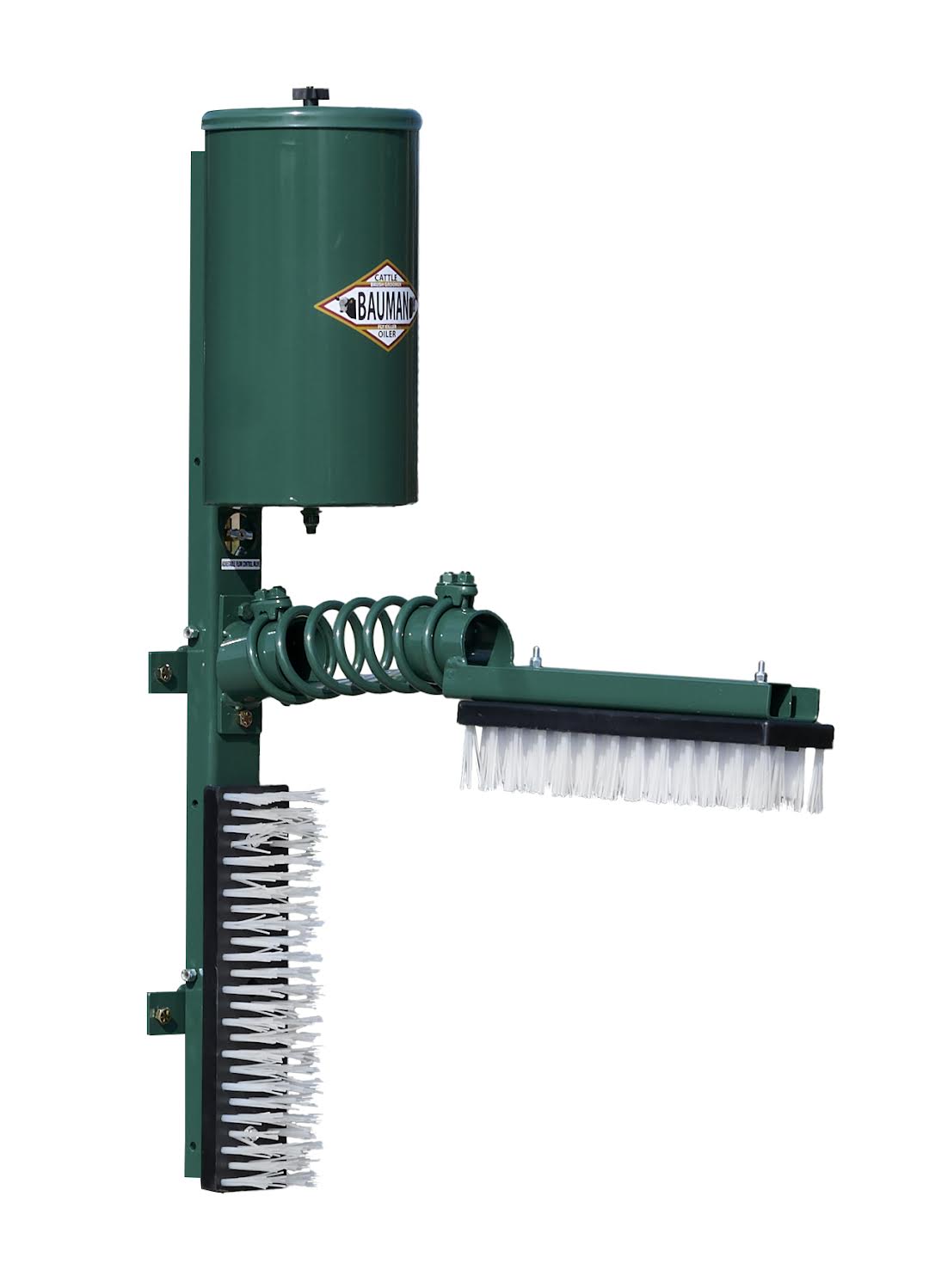
This gravity-fed cattle oiler combines grooming brushes with controlled delivery of a properly labeled livestock pest-control product. The 3-gallon steel reservoir, adjustable brush mounts and pressure-sensitive dispensing valve are designed for cattle to activate the oiler as they rub against it. For other configurations, explore cattle oilers and cow brushes.
Cattle Oiler Features
- Heavy-duty: Weighs 75 pounds and is 5' long
- Large Steel tank has a (3) gallon capacity!
- Pesticide-carrying line is diesel fuel-resistant
- Brushes are on adjustable mounts
-
Adjustable pesticide control valve
- Easily removes winter hair from the coat
- Ships at 12" x 12" x 60" - 75 pounds
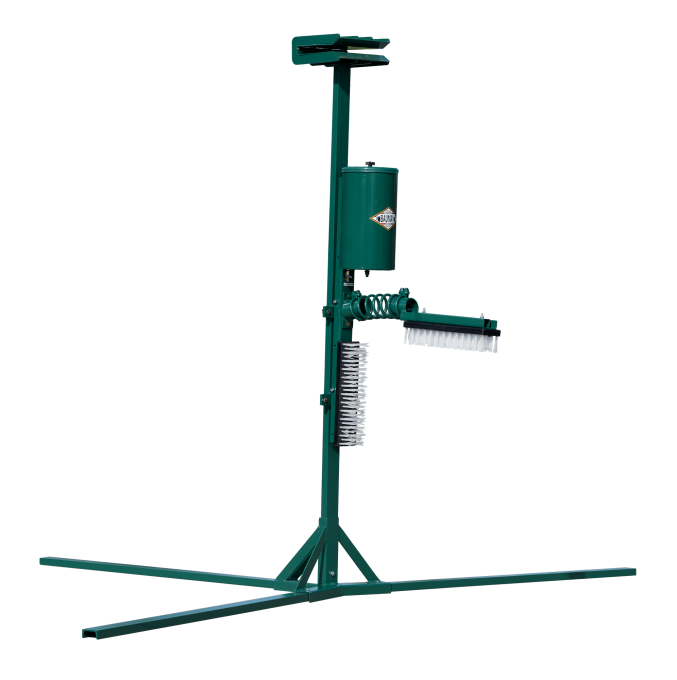
Cattle Oiler on Optional Stand
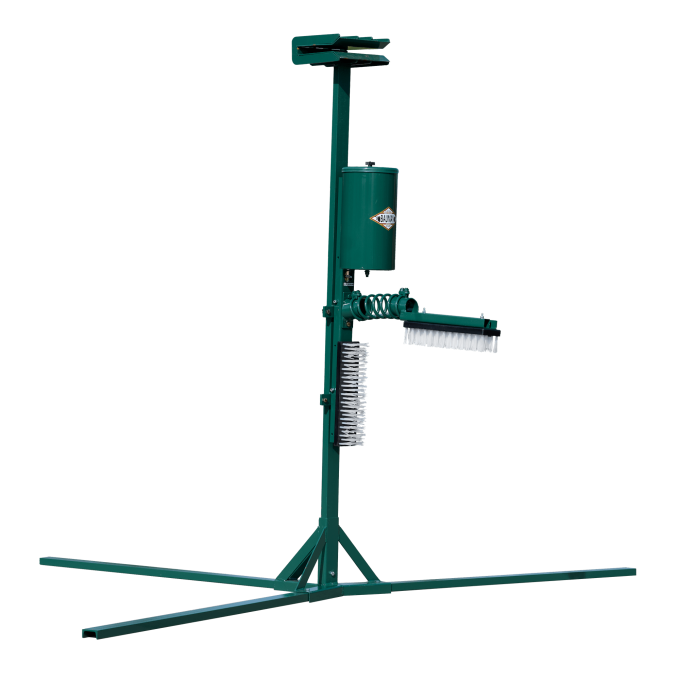
How A Cattle Oiler Works
Individual oiler parts and replacement brushes are available, so you won't need to replace the entire unit
Parts list for livestock oilers
Download the cattle oiler parts list (PDF)
Cattle Oiler with Plastic Tank Diagram
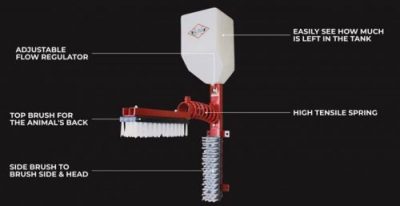
Setting Up A Cattle Oiler
To get maximum pest control for your cattle and livestock, the cattle oiler needs to be set in the proper position and height to encourage use. Use the diagram below for a general reference and guideline for proper installation and maximum effectiveness for controlling unwanted flies and pests that can carry disease. Please note you should consult your veterinarian for the most effective insecticide to use in your livestock oiler.
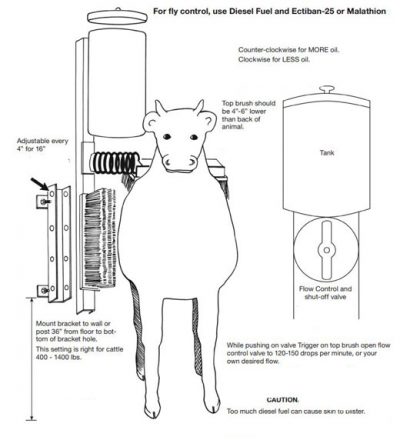
Why Use a Cattle Oiler in Your Fly-Control Program?
Flies and other biting pests can irritate cattle throughout the grazing season. A cattle oiler gives animals a way to rub against brushes while applying an approved pest-control treatment, helping producers incorporate insect management into routine cattle movement. It can be particularly useful on pasture, where regularly handling every animal for topical application may be difficult.
A cattle oiler is one part of an effective livestock pest-management plan, not a guarantee of complete fly control. Results depend on the target pest, the approved treatment used, weather conditions, placement, maintenance and how often cattle use the equipment. Follow the pesticide label, including species restrictions, application directions and any meat or milk withdrawal requirements.
Natural Rubbing Behavior Encourages Self-Application
Cattle commonly rub against posts, trees and other solid surfaces to scratch their coats. An oiler takes advantage of that familiar behavior by providing brushes in a designated location. As cattle press and rub against the upper brush assembly, the pressure-sensitive valve allows the treatment to reach the brushes. This lets animals participate in application during ordinary activity instead of requiring a separate manual treatment for every use.
Individual cattle may use the oiler differently. Place it where animals can approach comfortably and inspect their actual use before relying on the equipment as the only means of treatment. Keep access clear and avoid positioning the unit where it could obstruct movement or cause crowding.
How the Steel-Tank Cattle Oiler Operates
This model uses a 3-gallon steel reservoir, a gravity-fed delivery line, adjustable grooming brushes and a valve activated by pressure on the brush assembly. When an animal rubs against the top brush, the mechanism opens the valve to deliver liquid to the applicator. When pressure is released, the valve returns to its closed position, helping limit unnecessary dripping between uses.
The basic operation is straightforward, but the system still needs regular attention. Inspect the reservoir level, hose, valve, brush condition, mounting and dispensing action. Adjust the setup according to the equipment instructions, and only use products specifically labeled as suitable for cattle and the intended application method. Do not assume any insecticide or carrier liquid is compatible without checking its label and the equipment guidance.
Choosing a Location Cattle Will Actually Use
Convenient placement matters. Producers often consider well-traveled routes between pasture, water and feeding areas, provided there is enough room for animals to enter and leave safely. Set the brush at a suitable working height for the cattle using it and follow the installation instructions for secure mounting and clearance. Watch the herd after installation: if animals consistently walk around the oiler, reconsider the location rather than assuming they are receiving treatment.
Monitor for uneven wear, blocked liquid delivery or damaged brushes, especially during peak fly season. A working valve and clean, properly positioned brushes help the unit dispense as intended.
Long-Term Value of Replaceable Cattle Oiler Parts
A durable oiler can remain useful through multiple seasons when worn components are replaced as needed. The brush assembly, delivery parts and other service items should be checked periodically rather than waiting for the entire system to stop working. Replacing individual components can be more economical than purchasing a complete new unit when the main structure remains in sound condition.
See our cattle oiler replacement parts for service components, or compare the wider selection of cattle oilers and cow brushes if you need a different mounting style or configuration. For questions about fit, setup or replacement brushes, contact Barn World before ordering.