


This U54 heavy-duty cattle guard is designed for demanding vehicle crossings where standard roadway load ratings may not be sufficient. Powder River publishes a 25-ton-per-axle rating for this model, making it an option for projects involving heavy equipment, industrial vehicles and specialized off-road operations.
The guard features a flat-top steel rail design and is listed as a 10-foot unit with an approximately 8-foot crossing depth in the direction of travel. Optional accessories include cattle guard wings, hinged clean-out sections, galvanization and compatible precast concrete foundations.
Explore the U54 cattle guard collection for other lengths, or browse Barn World's complete cattle guard selection.
U54 Cattle Guard Specifications
| Heavy-Duty U54 Cattle Guard Specifications | |
|---|---|
| Product Type | Heavy-duty flat-rail steel cattle guard |
| Nominal Length | 10 feet |
| Crossing Depth | Approximately 8 feet in the direction of vehicle travel, according to the original listing |
| Manufacturer Load Rating | U54, 25 tons per axle |
| Rail Configuration | Flat-top steel rails |
| Typical Applications | Specialized heavy-equipment and off-road crossings |
| Optional Wings | Available for fence-line connections |
| Optional Clean-Out | Hinged clean-out sections |
| Optional Finish | Galvanization |
| Optional Foundations | Compatible precast concrete footings |
| Shipping | Heavy freight requiring delivery and unloading arrangements |
Engineering note: The U54 designation and published 25-ton-per-axle rating do not establish approval for every vehicle or installation. Confirm the exact guard's engineering documentation, expected axle loads, foundation requirements and any applicable roadway or project approvals.
Understanding the U54 Load Rating
The U54 rating is intended for applications involving higher axle loads than many conventional road-crossing designs.
For this model, the manufacturer publishes a rating of 25 tons per axle. That figure is substantially higher than the 16-ton-per-axle rating published for Barn World's H20 cattle guard models.
However, choosing a cattle guard involves more than comparing rating numbers. Vehicle axle configuration, load distribution, foundation support and site conditions must also be considered.
Axle Load Versus Total Vehicle Weight
A vehicle's total weight is not the same as the load carried by an individual axle.
Heavy equipment may place substantial weight on a small number of axles. Other vehicles distribute their weight across multiple axles with different spacing and load characteristics.
Before selecting a guard, determine the actual axle loads of the vehicles expected to use the crossing.
For unusual or specialized equipment, have the proposed crossing reviewed by a qualified engineer.
Is U54 Required for Public Roads?
Not necessarily. The correct rating for a public-road project depends on the governing authority, applicable design standards and project-specific requirements.
The original listing identifies H20 and HS20 as common roadway loading references, while U54 is intended for certain heavier-duty applications.
Do not assume that a higher numerical rating automatically satisfies every public-road design requirement.
Heavy Equipment and Industrial Applications
U54 cattle guards may be considered for locations where heavy vehicles must cross a livestock boundary without routinely opening a gate.
Potential applications include:
- Heavy-equipment access roads on ranch or agricultural property.
- Industrial service roads with specialized vehicles.
- Oilfield and energy-site access crossings.
- Logging and forestry equipment routes.
- Other off-road operations requiring an appropriately engineered crossing.
These are application examples, not blanket approvals. Suitability must be established for the actual equipment, traffic conditions and installation.
Flat Rail Design for Vehicle Crossings
The flat-top rail arrangement provides a different tire-contact surface from a traditional round-rail cattle guard.
Flat rails can offer a smoother crossing feel for many vehicles, although ride quality depends on vehicle type, speed, rail spacing and installation conditions.
Operators should approach the crossing at an appropriate speed and follow any posted site restrictions.
For other flat-rail configurations, visit Barn World's flat rail cattle guards.
How the Cattle Guard Discourages Livestock Crossing
Cattle guards use spaced steel rails and an open area beneath the crossing to discourage livestock from walking across the roadway opening.
The rail arrangement does not provide the continuous, solid footing that cattle typically prefer.
Effectiveness depends on the guard's design, installation, surrounding fencing, animal behavior and maintenance.
No cattle guard should be assumed to prevent every animal from crossing under every circumstance. Additional gates or other containment measures may be necessary for particular livestock or site conditions.
Original Cattle Guard Photographs
The following photographs from the original listing illustrate steel rail arrangements and installed cattle guard crossings. They should not be treated as engineering drawings of this exact U54 model.
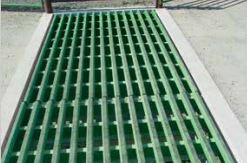
Close-up view of cattle guard rail construction.

Example of a vehicle using an installed cattle guard.
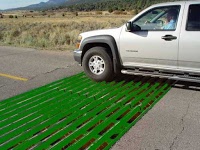
Flat-rail cattle guard crossing example.
Planning the Crossing Dimensions
The original listing describes this model as a 10-foot cattle guard with approximately 8 feet of crossing depth in the direction of vehicle travel.
These dimensions should be confirmed against the manufacturer's current drawing before construction begins.
Evaluate the available roadway width, vehicle turning movements, approach alignment and fence-line geometry.
For larger vehicles, consider trailer tracking and the possibility that tires may travel outside the intended wheel path during turns.
Do not select the crossing dimensions solely from the nominal vehicle width.
Precast Concrete Foundations for U54 Cattle Guards
A cattle guard must transfer vehicle loads through the steel grid into an appropriately designed foundation and supporting ground.
The original product listing identifies compatible precast concrete footings as an available option.
These foundations are described as having embedded J-bolts that align with mounting locations on the steel grid.
When supplied as a matched system, precast foundations can reduce the need for on-site concrete forming and help simplify the installation process.
However, they do not eliminate the need for proper excavation, foundation support, drainage or engineering review.

Example of precast concrete foundation components.
What to Confirm Before Ordering Foundations
- Compatibility with the exact U54 guard model.
- Foundation dimensions and required bearing conditions.
- Applicable engineering drawings.
- Mounting hardware and anchoring requirements.
- Drainage and excavation details.
- Unloading and placement equipment.
Barn World also lists a concrete cattle guard foundation casting set. This is a separate foundation-related product; confirm its suitability before considering it for a U54 installation.
Cattle Guard Wings for Fence Connections
A cattle guard must connect effectively with the surrounding fencing to prevent livestock from simply walking around the ends of the grid.
Cattle guard wings are used to close this potential bypass route.
The original listing describes a triangular wing and upright post combination that connects the crossing to the fence line.
Wing dimensions, mounting arrangements and fence compatibility should be confirmed for the selected guard.
Browse Barn World's cattle guard wings and foundations for available components.
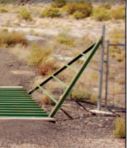
Example of a cattle guard wing assembly.
Optional Hinged Clean-Out Sections
Soil, gravel, leaves and other material can accumulate beneath cattle guard rails over time.
If debris fills the open space below the grid, the guard may become less effective as a livestock deterrent.
The original listing identifies hinged clean-out sections as an available option.
These sections are intended to improve maintenance access beneath the steel grid.
Confirm the current clean-out configuration, operating instructions and any special safety requirements before ordering.
Galvanization and Corrosion Protection
The original product description lists galvanization as an available option.
Galvanizing can provide additional corrosion protection for steel exposed to outdoor conditions.
Finish selection should consider the installation environment, maintenance expectations and the manufacturer's available options.
Ask Barn World to confirm current finish choices and any associated pricing or production considerations.
Installation Planning for Heavy-Duty Crossings
Proper installation is essential to the performance of a heavy-duty cattle guard.
- Confirm vehicle loading. Identify the heaviest expected vehicles and their axle configurations.
- Verify the guard rating. Obtain the current manufacturer's documentation for the exact model.
- Review site conditions. Evaluate soil support, drainage, roadway alignment and approach grades.
- Select the foundation design. Use an arrangement appropriate for the specified guard and loads.
- Plan excavation and drainage. Maintain the required open space beneath the grid.
- Prepare equipment access. Arrange for safe unloading, lifting and placement.
- Install and anchor the guard. Follow the manufacturer's approved installation details.
- Connect the fencing. Install compatible wings or other approved fence connections.
- Inspect the completed crossing. Verify alignment, support, anchoring and site safety before use.
Installation methods and foundation requirements must be determined from the actual project documentation rather than generic cattle guard instructions.
Drainage and Routine Maintenance
Drainage is particularly important where the crossing is exposed to sediment, runoff or frequent vehicle traffic.
Inspect the area beneath the rails for accumulated debris and signs of erosion around the supporting foundations.
Routine checks should include:
- Rail and frame condition.
- Visible corrosion or damage.
- Foundation movement or settlement.
- Anchor and mounting connections.
- Debris accumulation beneath the grid.
- Drainage and erosion around the crossing.
- Wing and fence-line connections.
If structural damage or movement is observed, have the crossing evaluated before continued heavy-vehicle use.
U54 Versus H20 Cattle Guards
Both U54 and H20 cattle guards are available for applications requiring documented structural load ratings, but they are not interchangeable for every project.
| U54 | H20 |
|---|---|
| Manufacturer-listed 25 tons per axle | Manufacturer-listed 16 tons per axle |
| Considered for specialized heavier-duty applications | Commonly considered for applications specifying H20 loading |
| Requires matching foundations and project review | Requires matching foundations and project review |
| Higher published axle-load rating | Lower published axle-load rating |
Choose the required rating based on actual loading and project specifications, not simply on which product has the highest published number.
Explore the U54-rated collection for available lengths.
Freight Delivery and Unloading
Heavy-duty cattle guards are large steel structures requiring specialized freight planning.
Before ordering, confirm the destination, unloading arrangements and any access restrictions that could affect delivery.
Provide the following when requesting a quote:
- Delivery ZIP code and destination type.
- Selected guard length and quantity.
- Required load rating.
- Foundation and wing requirements.
- Clean-out or galvanization options.
- Available lifting and unloading equipment.
- Any restrictions for large delivery vehicles.
Ask Barn World to confirm current production lead times, freight terms and unloading responsibilities before finalizing the order.
Frequently Asked Questions
What is the U54 load rating?
Powder River publishes a 25-ton-per-axle rating for this model. Verify the exact manufacturer's documentation for your intended application.
How long is this cattle guard?
It is listed as a 10-foot model, with approximately 8 feet of crossing depth in the direction of vehicle travel.
Is U54 stronger than H20?
The published U54 rating of 25 tons per axle is higher than the 16-ton-per-axle H20 rating. Actual suitability still depends on the vehicle, installation and project requirements.
Can this guard be used for oilfield or logging equipment?
It may be considered for specialized heavy-equipment crossings, but the actual vehicle loads and installation must be reviewed for compatibility.
Does the U54 rating guarantee public-road approval?
No. Public-road installations may require specific engineering documentation and approval from the responsible authority.
Are precast foundations available?
The original listing identifies compatible precast concrete foundations as an available option. Confirm their current availability and compatibility.
Can I add cattle guard wings?
Yes. Wings are listed as an option to help connect the crossing to the fence line.
Are hinged clean-out sections available?
The original product information identifies hinged clean-out sections as an available option. Confirm the exact configuration before ordering.
Can the guard be galvanized?
Galvanization is listed as an available option. Ask Barn World to confirm current finish choices.
What information is needed for a freight quote?
Provide the delivery ZIP code, selected configuration, quantity, desired accessories and unloading details.
Request a Delivered Quote for a U54 Cattle Guard
This 10-foot U54 cattle guard is intended for demanding crossings where the manufacturer's published 25-ton-per-axle rating may be appropriate.
Available foundation, wing, clean-out and finish options allow the crossing to be configured for the requirements of the project.
Contact Barn World with your expected vehicle loads, crossing dimensions, delivery ZIP code and desired options to request current product and freight pricing.
Call (720) 238-2190 or email Sales@BarnWorld.com.
For additional sizes and load ratings, visit Barn World's cattle guard collection.