
SEE ALL OF OUR RADIANT HEAT PRODUCTS
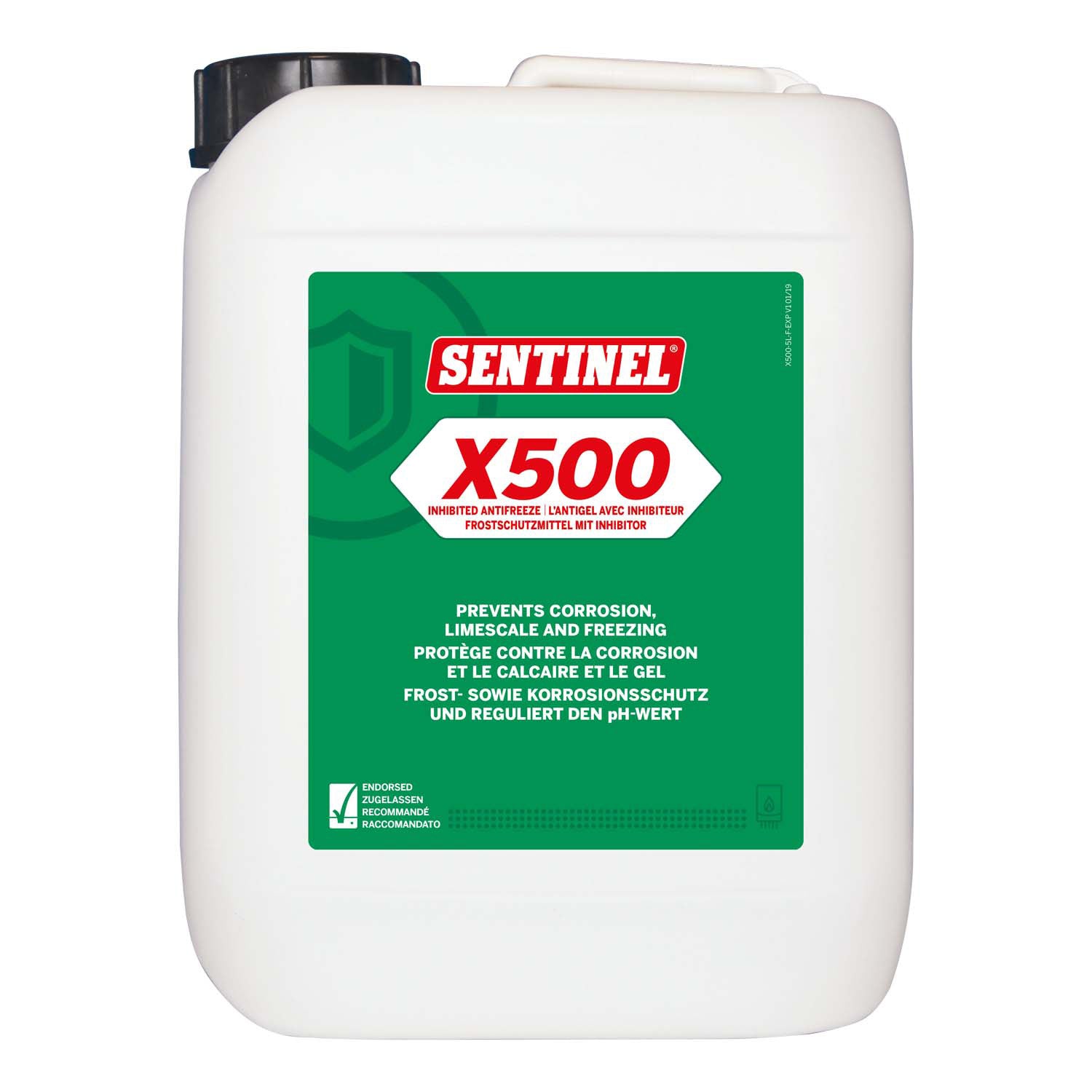
X500 Inhibited Antifreeze – Radiant Floor & Hydronic Boiler Protection
Sentinel X500 Inhibited Antifreeze is a high-performance, propylene glycol–based antifreeze and corrosion inhibitor designed for use in closed hydronic heating systems — including radiant floor installations and electric boilers. It delivers dependable freeze protection while safeguarding all common system metals, including aluminum, copper, and steel, from corrosion, scale, pitting, and hydrogen gas formation. Its non-toxic, colorless formulation is safe to handle and ideal for residential or commercial boilers with radiant floor heating circuits.
Why X500 Is the Smart Choice for Radiant Floor & Electric Boiler Systems
- Freeze protection: Even in freezing conditions, a properly dosed system remains protected, preventing burst pipes or damaged heat exchangers.
- Corrosion & scale control: Robust inhibitors protect metallic components throughout the system — including heat exchangers, piping, and manifolds — maintaining system efficiency and prolonging service life.
- Quiet, efficient operation: Minimizes boiler noise, reduces risk of hydrogen gas formation, and helps prevent pin-holing and leaks, avoiding costly repairs.
- Full metal compatibility: Safe for aluminum, copper, steel, and cast-iron components commonly found in radiant floor and electric boiler systems.
- Low toxicity & easy handling: Colorless and less hazardous than automotive glycol, making it more appropriate and safer for indoor heating systems.
Recommended for:
- Electric boilers are used for radiant floor heating circuits
- Hydronic boiler systems with closed-loop piping
- Mixed-metal systems, including aluminum manifolds or heat exchangers
- Systems requiring frost protection in cold climates or unheated spaces
| Specification | Value / Detail |
|---|---|
| Base chemical | Propylene Glycol with corrosion & scale inhibitors |
| Metals compatibility | Aluminum, copper, steel, cast iron |
| Freezing protection (by volume mix) | 20% — down to ≈ –6 °C (≈ 21 °F), 40% — down to ≈ –28 °C (≈ –18 °F) |
| Typical packaging | 5 gal jug, 55 gal drum, 275 gal tote |
| Solution appearance | Clear, colorless liquid |
Installation & Dosing Overview
To ensure long-term protection and system performance, follow these guidelines when using X500 in a radiant floor or electric boiler system:
- Flush and clean the system before initial fill — especially important for new or recently serviced boilers and radiant floor circuits.
- Add X500 before filling or via a dosing vessel if the system is already full. For a standard residential system (≈ 25 gal), about 5 gallons of X500 will deliver the minimum corrosion-inhibiting concentration.
- Adjust the concentration based on expected frost exposure: ~20% protects against mild freezing; ~40% offers robust freeze protection for unheated or exposed areas.
- Test inhibitor concentration annually (using a suitable test kit or refractometer) to ensure ongoing corrosion and freeze protection.
Pro Tips for Radiant Floor & Electric Boiler Users
Because glycol solutions carry less heat per volume than pure water and have higher viscosity, it’s important to verify that your boiler’s pump and radiant floor loop are correctly sized. For systems using higher glycol concentrations:
- Ensure your circulator pump has enough head to maintain proper flow.
- Balance radiant floor zones carefully — oversizing is preferable to underperformance.
- Install air elimination devices (e.g., micro-bubble air separators) to prevent airlocks and flow problems.
Sentinel X500 Inhibited Antifreeze delivers reliable, long-term freeze and corrosion protection — making it a dependable choice to safeguard your radiant floor heating system and electric boiler against the elements while preserving performance and efficiency.