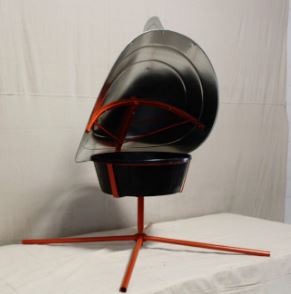
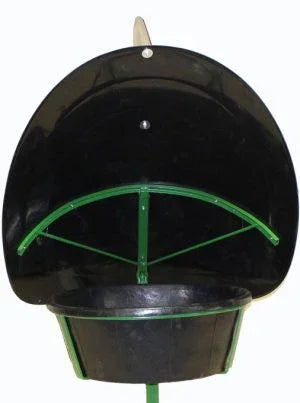
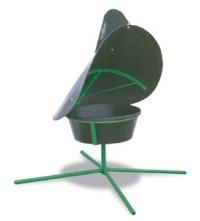


Wind Vane Mineral Feeder with Hood
Keep loose livestock minerals accessible in a covered feeding station. The Wind Vane Mineral Feeder uses a wind-responsive hood designed to help shield the mineral supply from wind-driven rain. Its 15-gallon capacity provides a dedicated place for mineral feeding in pasture or a livestock feeding area, with poly and galvanized steel hood options.
Choosing a covered feeder is part of managing a mineral program, alongside selecting an appropriate supplement and checking intake. For other feeder styles and replacement options, browse our mineral feeders.
Capacity and Construction
| Feature | Listed Specification |
|---|---|
| Capacity | 15 gallons (approximately 1½ bushels) |
| Center support pipe | 1-inch diameter |
| Hood options | Poly or galvanized steel |
| Listed weight | 65 pounds |
Capacity is a volume measurement; the weight of mineral that fits in the feeder depends on the supplement’s bulk density. Confirm the selected hood option and current configuration when ordering.
Why Cover a Mineral Feeding Station?
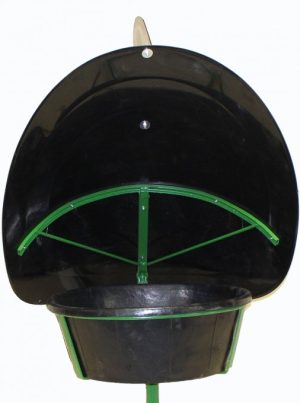
Loose minerals need to remain accessible for animals to use the feeder consistently. Rain entering an uncovered tub can wet the supplement and contribute to hardening or clumping. A hood provides a physical barrier above the feeding area, helping limit direct exposure while leaving access for livestock. This is especially useful where the feeder is located away from a barn or permanent shelter.
A wind-responsive hood is intended to adjust as wind direction changes. That feature helps position the cover against changing weather, but a covered feeder is not a sealed container. Strong storms, splash, condensation, and a poorly chosen location can still affect the contents. Inspect the mineral after wet weather and remove spoiled or contaminated material rather than assuming the hood has kept everything dry.
Make Access and Placement Work Together
Choose firm, well-drained ground where livestock can approach the feeding area without crowding into a tight corner. Avoid low spots that collect runoff or become muddy around the base. Allow clearance for the hood to move freely, and keep it away from fences or other obstructions that could interfere with its movement. Check that the feeder remains upright and stable during normal use; no feeder should be treated as tip-proof under every condition.
Placement also affects how readily animals find and use a mineral feeder. An accessible location along a normal livestock travel route can make routine visits easier. Watch the ground around the feeder, animal access, and mineral disappearance as conditions change. If the area becomes heavily trampled or muddy, reconsider the location while maintaining a consistent opportunity for livestock to find their supplement.
Manage the Supplement, Not Just the Container
This feeder holds and presents mineral; it does not measure an individual animal’s intake or make a supplement appropriate for every species. Use a mineral product labeled for the livestock being fed and follow its feeding directions. Keep the label available so you can compare the intended intake with what the group is actually using. A larger fill capacity can reduce refill frequency, but it does not replace regular checks.
Record how much mineral is added, the number of animals with access, and how long the supply lasts. Those observations help distinguish normal use from spillage, weather damage, or inconsistent consumption. Keep the feeding area clean and check the tub, hood, support pipe, and moving connections for damage or buildup. Address sticking movement or loose parts before they interfere with access or weather protection.
Choosing Between Hood Options
Poly and galvanized steel provide two material choices for the hood. Select the version that fits your operation’s handling preferences and maintenance needs, and confirm the supplied configuration before ordering. Regardless of material, inspect the cover periodically and keep it able to move as intended. Correct placement, a suitable mineral program, and routine attention matter alongside the choice of hood.
Frequently Asked Questions
How much does the Wind Vane Mineral Feeder hold?
The listed capacity is 15 gallons, approximately 1½ bushels. This describes volume rather than a fixed number of pounds of mineral; actual fill weight varies with the supplement.
Does the hood keep minerals completely dry?
The hood is designed to help protect the feeding area from rain and changing wind direction. It cannot guarantee dry contents in every weather condition. Check the supply after storms and keep the feeder away from runoff and splash.
Is there a center support pipe?
The product’s listed specifications include a 1-inch-diameter center pipe. Confirm assembly details for the selected configuration when ordering.
Which hood materials are available?
The listed options are poly and galvanized steel. Confirm the hood material supplied with your selected option before placing an order.
Can this feeder control how much mineral each animal eats?
No individual intake-control mechanism is specified for this feeder. It provides access to mineral; consumption must be monitored as part of the feeding program and compared with the supplement label’s directions.
Where should I place a wind vane feeder?
Use firm, well-drained ground with room for livestock to approach and clearance for the hood to move. Monitor mud, stability, animal access, and the condition of the mineral after placement.