



Bull Flex Bale Covers for Outdoor Hay Storage
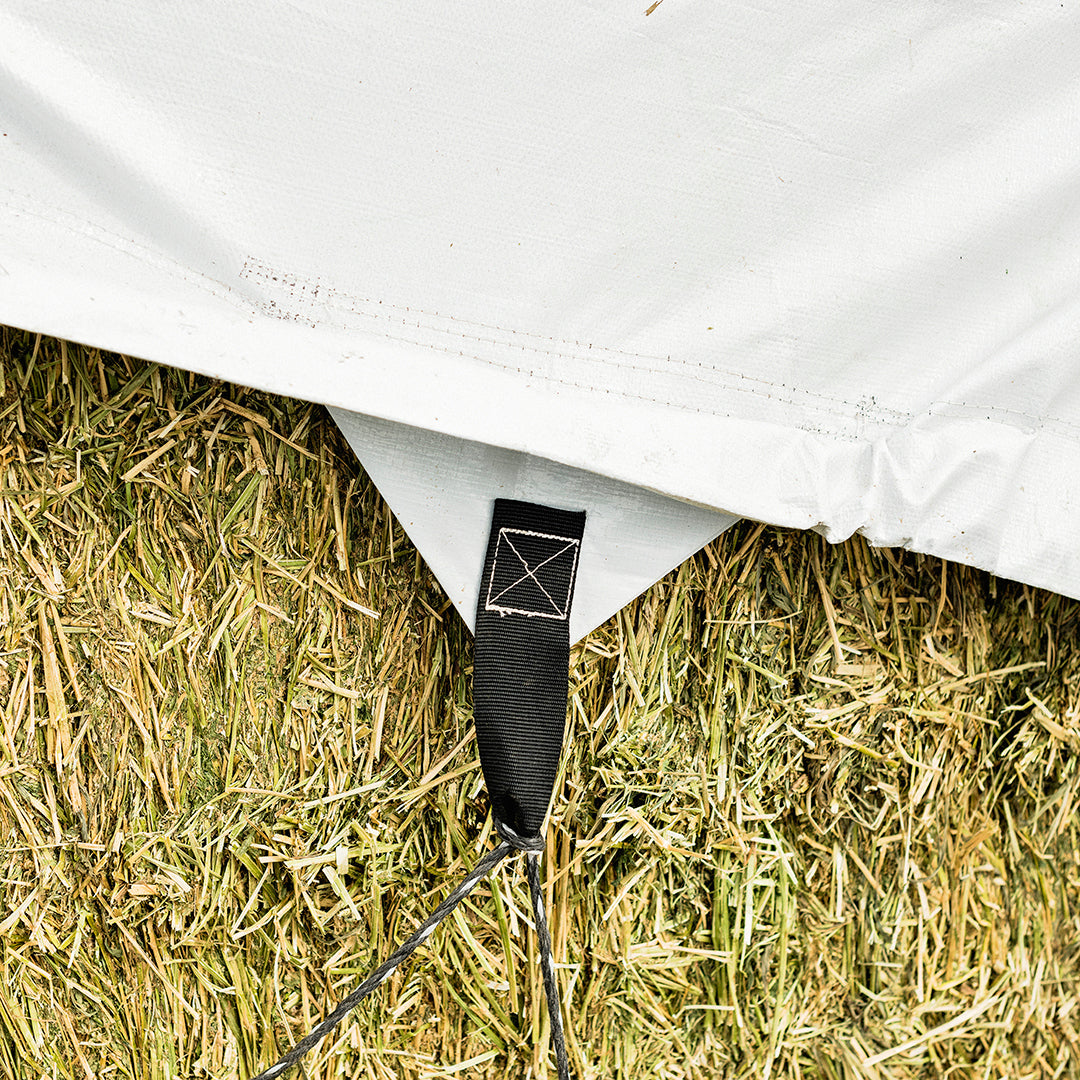
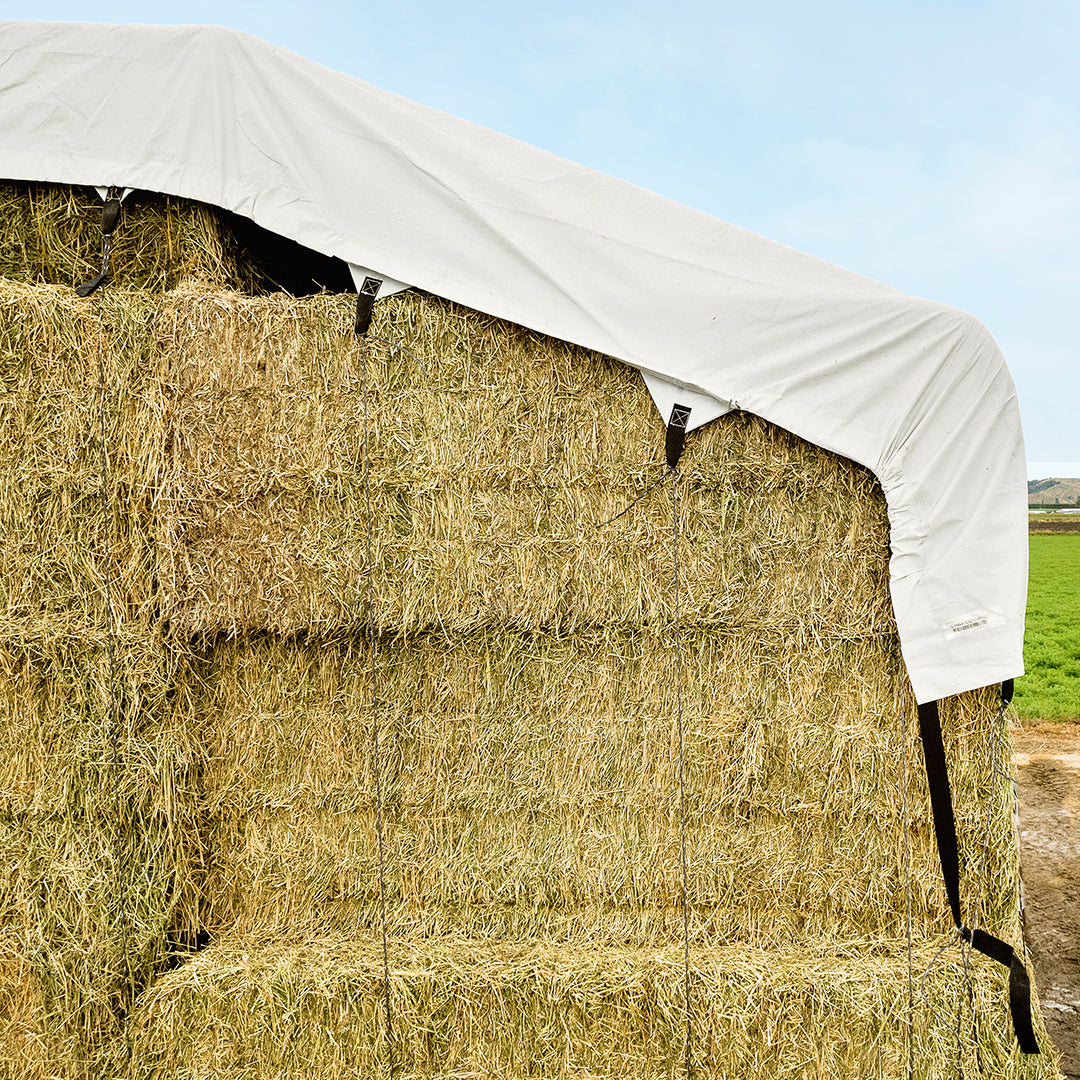
Bull Flex hay tarps use UV-resistant, 15-mil white-and-silver coated woven polyethylene to cover round or square bale stacks. Reinforced attachment loops and side pockets give you options for securing the cover around the stack while helping protect stored hay from sun and precipitation.
The tarp is one part of a hay-storage system. A well-shaped stack, suitable drainage, ventilation and regular tension checks help the cover shed water and limit wind movement. Tie-down kits are sold separately, so you can select the arrangement suited to your bale shape.
Material and Tie-Down Features
| Feature | Details |
|---|---|
| Product | Bull Flex hay tarp |
| Material | UV-resistant coated woven polyethylene |
| Thickness | 15 mil |
| Colors | White / silver; install white side up |
| Attachment loops | 2-inch reinforced webbing at 3-foot intervals |
| Side pockets | Accept user-supplied PVC pipe for tie-down support |
| End design | Webbing in sewn end pockets for a chuck-wagon-style closure |
| Bale types | Round or square bale stacks |
| Tie-down kit | Sold separately |

Choose the Tarp for the Entire Stack
Measure the stack length and the distance over its top and down both sides. Ground width alone does not describe the fabric needed to cover a peaked or rounded stack. Bale size, stacking pattern and desired side coverage affect the tarp width.
The sizes listed below use a 52-foot length. Check the size guides against your actual bales and stack arrangement before ordering. If your stack changes as hay is removed, plan how the remaining cover will be folded back and secured.
Listed Sizes and Approximate Weights
| Tarp Size (Feet) | Approximate Listed Weight |
|---|---|
| 14 × 52 | 50 pounds |
| 18 × 52 | 65 pounds |
| 23 × 52 | 78 pounds |
| 25 × 52 | 81 pounds |
| 28 × 52 | 90 pounds |
| 30 × 52 | 99 pounds |
| 33 × 52 | 110 pounds |
| 35 × 52 | 115 pounds |
| 42 × 52 | 124 pounds |
| 45 × 52 | 135 pounds |
Weights are approximate reference values from the existing size listing. Confirm the current weight for your selected size if it affects handling or delivery planning.
Round-Bale Stack Sizing

Square-Bale Stack Sizing

Secure the Cover and Maintain Tension
The reinforced webbing loops provide frequent attachment points along the sides. The side pockets let you add suitable PVC pipe to distribute tie-down support along the edge. Sewn end pockets and webbing help draw the ends around the stack.
Choose a Super Cinch tie-down kit for round or square bales as appropriate. The kits use different arrangements, so confirm the bale shape as well as the tarp size. Pipe and tie-down accessories should not be assumed included with the tarp.

Check tension after installation, as the stack settles and after weather events. Loose fabric can move against the bales and attachment points. Retension and inspect the cover as needed rather than treating installation as a one-time task.
Installation Videos
Bull Flex Hay Tarp Installation
Heavy-Duty Hay Tarp Installation
Use the instructions for the selected tarp and tie-down kit when planning equipment and assistance. Large covers are cumbersome, particularly in wind; arrange suitable handling help and do not assume every tarp size can be installed by one person.
Reduce Weather Exposure Without Trapping Moisture
A cover helps shed precipitation from the top of the stack and shields the hay from direct sunlight. It cannot dry hay that was baled too wet or stop moisture entering from the ground. Store hay at suitable moisture and choose a well-drained site before covering.
Leave ventilation appropriate to the stack and covering arrangement. Avoid creating low spots in the tarp where water can pool. Where more side protection is needed, consider compatible hay stack side curtains as part of the storage layout.
Inspection, Repairs and Seasonal Storage
Inspect for abrasion, punctures, worn attachment points and loose ropes. Repair small damage promptly with a suitable tarp repair product. When taking hay from the stack, secure the unused portion of the cover so it does not flap in the wind or lie where equipment can damage it.
Before storage, clean and dry the cover, inspect it and fold it neatly for the next installation. UV exposure, wind, abrasion, installation and maintenance all affect service life; a multi-season cover still needs care between uses.
Historical Fabric Specification Reference
The original data-sheet image below is retained as a historical reference and may show the earlier 16-mil specification. The current Bull Flex specification used for this product page is 15 mil; use the current table above when comparing products.

Why Use a Hay Tarp for Outdoor Bale Storage?
Growing, cutting, baling and hauling hay take time and money before the first bale reaches storage. A hay tarp helps protect that investment when barn space is limited or a stack needs temporary outdoor storage. Covering the stack is intended to keep more of the harvested forage usable until feeding or sale, rather than accepting the outer weathered layer as an unavoidable loss. A removable cover also lets you adapt the storage area as the stack grows or shrinks through the season.
What Happens When Hay Is Left Uncovered?
Rain and melting snow can soak into exposed bales. If that moisture remains instead of evaporating, the affected hay can deteriorate and develop mold. Repeated wetting and slow drying increase the problem, especially at ground contact points and where water collects between bales. The outside can become weathered while the center still looks sound, so the appearance of an intact bale does not show how much usable forage remains.
That damaged outer layer can represent more hay than it appears to. University of Maryland Extension notes that the outer six inches of a round bale contain roughly one-third of its total dry matter. Losing part of that layer means less actual feed from a bale you have already paid to produce, transport and handle. Storage protection matters for preserving feed quantity as well as the condition of the hay offered to livestock.
Protection from Rain, Snow, Sun and Wind Exposure
A properly fitted and tensioned tarp intercepts precipitation and directs runoff away from the top of the stack. It also shades the covered hay from direct sunlight. The stack profile should support water shedding rather than leave hollows where water can collect. Secure edges and regular tension checks help limit fabric movement in wind, which can otherwise wear the cover and expose the bales beneath it.
A top cover does not replace a suitable storage site. Water can still enter from the ground or reach exposed sides, and an installation that traps moisture can undermine the benefit of covering. The best outdoor arrangement combines a cover with drainage, appropriate separation from soil and ventilation suited to the stack. Those measures address different routes by which stored hay becomes wet.
How Much Faster Can Uncovered Hay Deteriorate?
There is no reliable rule that uncovered hay goes bad a fixed number of days sooner. Rainfall, humidity, temperature, bale density, starting moisture and storage duration all influence the rate. University of Maryland Extension reports that round-bale dry matter losses can range from 5% to 40% in as little as six months, depending on climate and weather protection. That range describes possible storage outcomes, not an expected loss for every uncovered stack.
Research summarized by University of Minnesota Extension provides a useful comparison: bales stored on gravel averaged 10.9% dry matter loss when uncovered, versus 4.8% when covered in its Morris study. The covered treatment lost less than half as much dry matter under those study conditions. This was a storage study, not a test of Bull Flex tarps, and it should not be read as a guaranteed product result.
Keep More Feed Available and Reduce Replacement Costs
The financial benefit of covering hay comes from retaining forage you would otherwise lose. As a simple illustration, avoiding five percentage points of storage loss across 20 tons of stored hay dry matter preserves one ton of dry matter. The value of that improvement depends on your hay cost and actual storage performance. Compare the potential savings with the cost of the cover, tie-downs, installation and maintenance when deciding how to protect a stack.
A well-managed covering system can also reduce the amount of weathered material that must be sorted, discarded or replaced later. It gives you more control over outdoor storage without constructing another building. Regular inspections remain part of that system: a suitable tarp, installed correctly and maintained as the stack changes, is more useful than a cover left loose or damaged through the season.
Frequently Asked Questions About Bull Flex Hay Tarps
Is this tarp suitable for round and square bales?
Yes. Bull Flex is designed for both. Choose the width from your bale size and stack shape, and select the tie-down kit designed for that bale type.
Which side faces upward?
Install the white side facing outward and upward, following the manufacturer's installation instructions. Center the cover before securing the sides and ends.
Is the tie-down system included?
No. Bull Flex tie-down kits are sold separately. The tarp's loops and pockets provide attachment features, but the kit and any pipe needed for your chosen installation are separate items.
How do I choose the correct size?
Measure over the stack profile and check its length, rather than selecting from the ground footprint alone. Compare your bale dimensions and stacking pattern with the guides above. Contact Barn World if the stack does not match a listed arrangement.
Will a tarp prevent all mold or hay spoilage?
No. A tarp helps reduce weather exposure, but storage moisture, ground conditions, airflow, stack shape and maintenance still matter. Inspect the hay and cover regularly.
How long should the cover last?
Inland describes a design service life of three to five years with proper installation and care. This is not a guaranteed lifespan; actual use conditions and damage can shorten it. Warranty coverage is separate and subject to the manufacturer's terms.
Why does the tarp need retightening?
The stack can settle and tie-down tension can change. Retightening helps reduce slack and fabric movement. Recheck the system after removing hay, moving the cover or experiencing strong weather.
Can I reuse the tarp next season?
Yes, if it remains serviceable. Inspect the fabric and attachments, make appropriate repairs, and clean and dry it before folding for storage.
Contact Barn World with your bale dimensions, stack pattern, desired tarp size and delivery location for help selecting the cover and accessories.