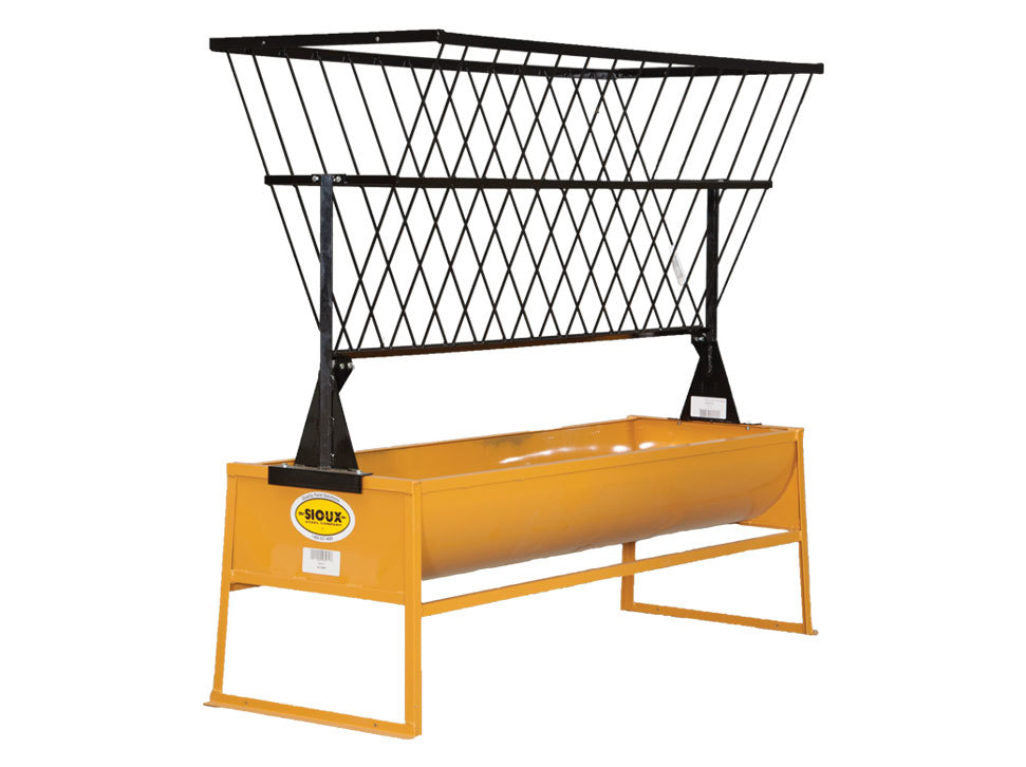
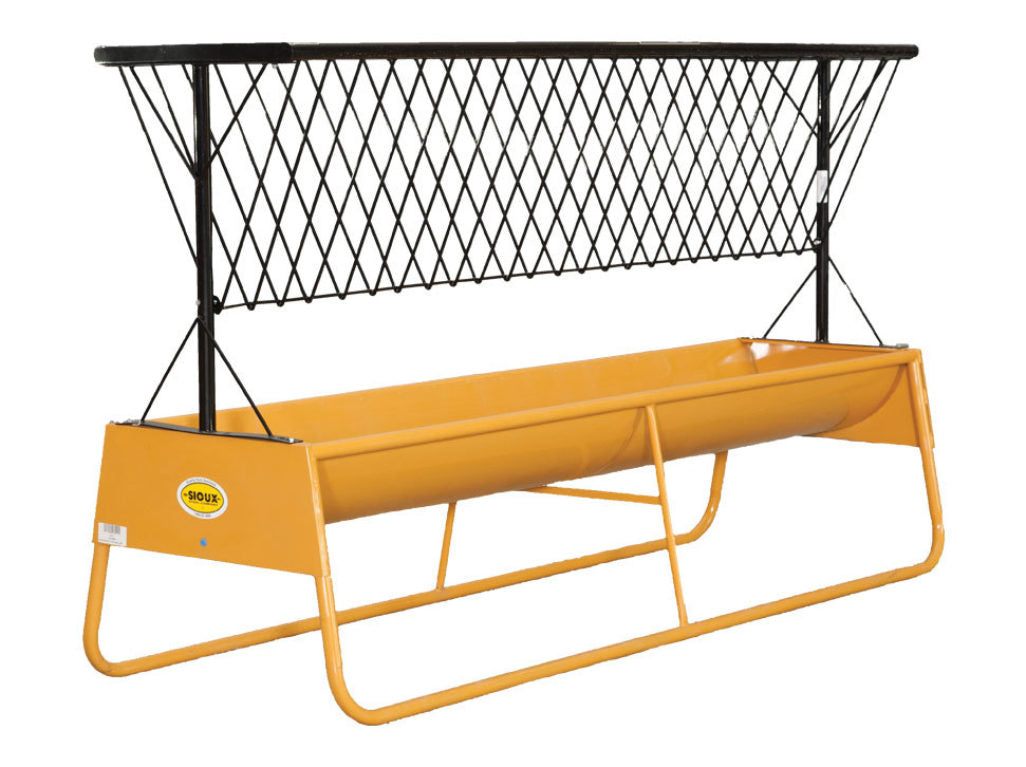
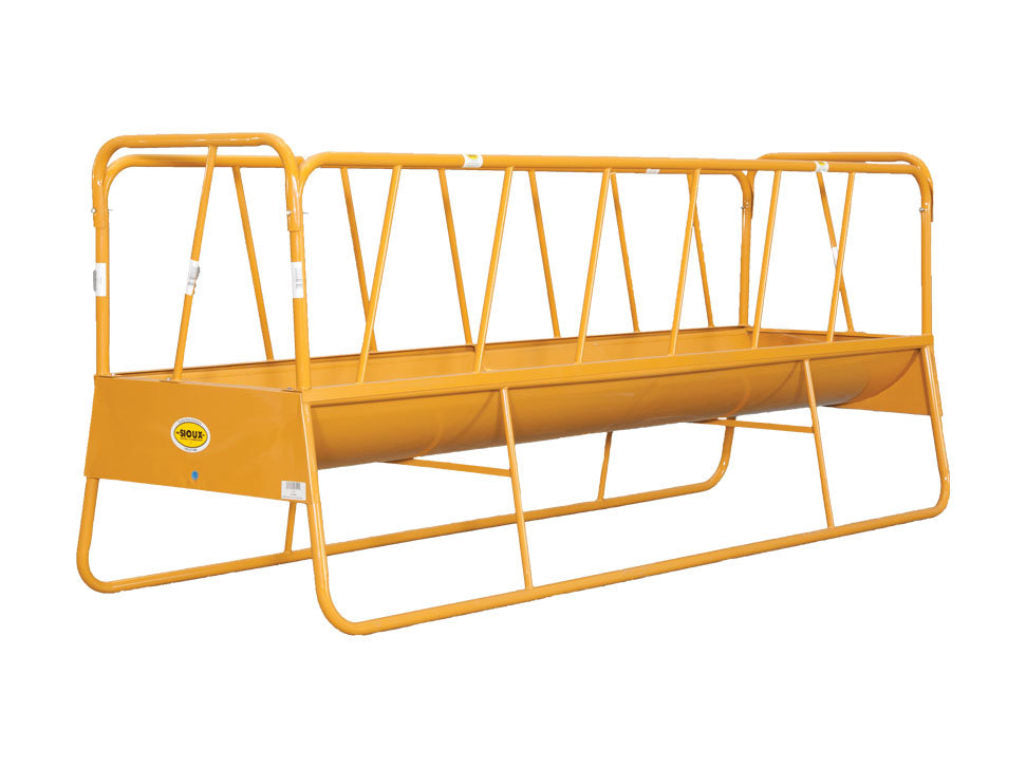


Compare our metal trough feeders.
Steel Feed Troughs for Daily Livestock Feeding
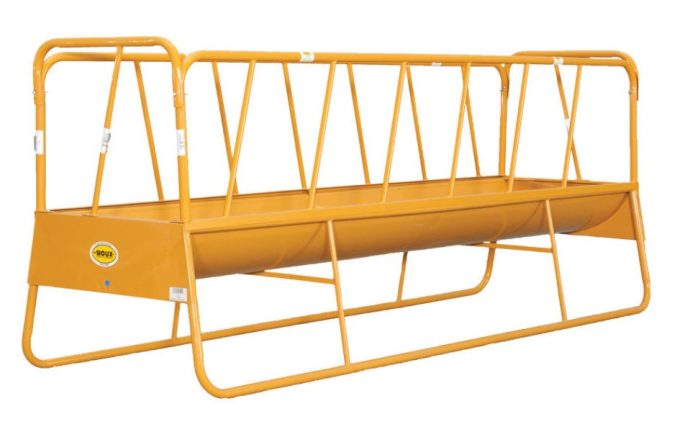
Choose a 5-foot, 10-foot, or 12-foot Sioux Steel feed bunk for your farm's feeding area. These welded steel troughs keep feed in an elevated feeding space and can be arranged end-to-end to suit the layout. Optional hay racks add a way to offer hay above the bunk.
The models differ in width, height, capacity, and weight as well as length. Compare the dimensions below with your animals' reach, available feeding space, and the equipment used to distribute feed. Feed capacity describes the amount held by the bunk; it does not establish how many animals can feed comfortably at once.
Compare Feed Bunk Sizes
| Specification | 5-foot bunk | 10-foot bunk | 12-foot bunk |
|---|---|---|---|
| Feed capacity | 335 lb | 1,000 lb | 2,000 lb |
| Overall width | 20" | 24" | 36" |
| Overall height | 20.5" | 26" | 26" |
| Bunk weight | 60 lb | 118 lb | 165 lb |
| Optional hay rack weight | 42 lb | 87 lb | 89 lb |
| Hay rack feeding openings | 6 | 12 | 14 |
Listed feed capacities are approximate and depend on feed density and how the trough is filled. Bunk weights exclude the optional hay rack.
Which Feed Bunk Fits Your Setup?
- 5-foot bunk: A compact 20-inch-wide trough for feeding areas where a longer bunk will not fit. Check its 20.5-inch overall height against the animals using it.
- 10-foot bunk: A 24-inch-wide trough with a listed 1,000-pound feed capacity. Its optional hay rack has 12 feeding openings.
- 12-foot bunk: A wider 36-inch trough with a listed 2,000-pound feed capacity. Its optional hay rack provides 14 feeding openings.
Plan enough accessible bunk space for the group rather than choosing by storage capacity alone. Animal size, horn clearance, feeding frequency, and access from one or both sides can affect the layout. Check hay rack opening dimensions and suitability before use with smaller livestock.
Construction and Cleaning Features
The bunks use 16-gauge, 50,000-psi steel tubing. The 5-foot and 10-foot models have an 18-gauge, 50,000-psi liner and a rounded deep-dish trough with skid legs. Welded construction provides a one-piece bunk, and the bunks can be set end-to-end or stacked for storage.
Outward-rolled lips reduce places where feed can collect along the rim. End-cap cleanout holes and supplied plastic plugs help with cleaning and sealing. These features support routine maintenance; they do not eliminate the need to remove spoiled feed or inspect the trough.
Feed Bunk Photo Gallery

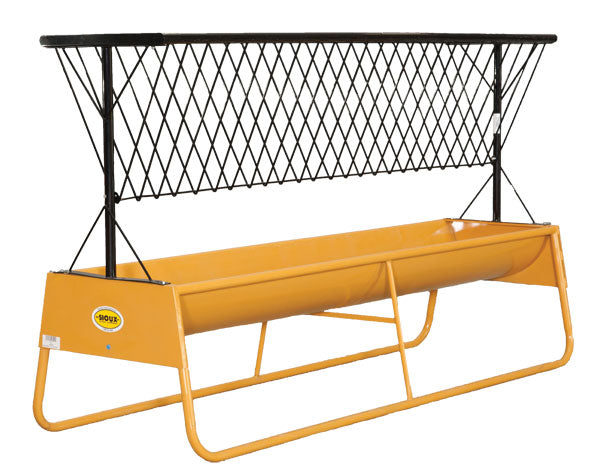
Placement and Routine Care
Place the bunk on a firm, level surface with suitable drainage. Allow room for animals to approach and leave without crowding, and keep the feeding line clear of unnecessary obstacles. Where anchoring is needed, confirm an appropriate method for the bunk and site.
Remove old feed and debris regularly, inspect welds and legs, and check the finish for damage or corrosion. Follow the manufacturer's care guidance and make repairs before returning damaged equipment to use. The steel construction still requires inspection and upkeep.
Choosing an Optional Hay Rack
Select a rack made for the same bunk length. Rack weight and feeding-opening count vary by model, as shown in the table. Contact Barn World for help comparing bunk dimensions, rack options, and delivery requirements for your feeding setup.