
Please call, email Sales@BarnWorld.com, or call us anytime for a quote with shipping right to your door!
SEE ALL OF OUR CREEP FEEDERS
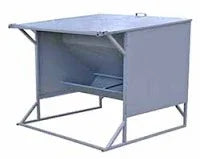
This 400-pound deer creep feeder provides enclosed feed storage and an adjustable feeding trough for supplemental deer feeding applications. Built with 16-gauge steel, a welded frame and ground-level skids, the feeder is designed for outdoor placement where a compact, movable feeding station is needed.
The enclosed hopper helps shield stored feed from direct exposure to the weather, while the adjustable feed-flow opening allows operators to regulate how much material enters the trough. Its approximately 4-foot footprint makes it an option for locations where a larger feeder may be impractical.
For other sizes and livestock feeding equipment, explore Barn World's creep feeders, including the 1,200-pound deer creep feeder.
Deer Creep Feeder Specifications
| 400 lb Deer Creep Feeder Specifications | |
|---|---|
| Listed Feed Capacity | 400 pounds |
| Overall Length | 4 feet |
| Overall Width | 4 feet at the legs |
| Overall Height | 4 feet |
| Approximate Empty Weight | 300 pounds |
| Steel Construction | 16-gauge steel |
| Finish | Gray enamel |
| Trough Width | 17 inches |
| Trough Depth | 6 inches |
| Trough Height Above Ground | 18 inches |
| Feed Flow | Adjustable outlet |
| Frame Construction | Welded assembly |
| Base | Skids for repositioning when empty |
Capacity note: The 400-pound figure is the listed feed capacity, not the feeder's empty weight. The original listing gives approximately 300 pounds as the equipment weight. Actual usable feed capacity may vary with the type and density of the feed.
Steel Construction and Enclosed Feed Storage
The feeder uses 16-gauge steel construction with a gray enamel finish. Its welded design eliminates many of the bolted connections that would otherwise need inspection and tightening in an assembled feeder.
The enclosed hopper is intended to reduce direct exposure of stored feed to rain, debris and other outdoor conditions. It does not make the contents immune to moisture, condensation or spoilage.
Check the hopper regularly for signs of water intrusion, rust, damaged seams and feed buildup. Maintaining the finish and removing accumulated debris can help extend the feeder's service life.
Why an Enclosed Hopper Matters
Feed stored in an open container is exposed to more environmental contamination. A covered hopper can provide a more controlled storage area between refills.
However, feed should still be inspected for freshness and suitability before use. Damp, moldy or spoiled feed should be removed rather than mixed with fresh material.
Adjustable Feed Flow and Trough Access
The adjustable feed outlet controls how material moves from the hopper into the feeding trough.
Different feed products can behave differently. Pellets, grains and textured rations may have different flow characteristics, particularly when exposed to moisture.
Begin with an appropriate outlet setting and observe the feeder during use. The objective is to maintain reasonable feed availability without leaving excessive amounts exposed in the trough.
How to Adjust the Feed Opening
- Inspect the feed. Confirm that the ration is dry, suitable for the intended animals and compatible with the feeder.
- Start conservatively. Set the outlet to allow controlled feed movement into the trough.
- Observe the flow. Check for bridging, clogging or excessive accumulation.
- Monitor consumption. Look for leftover feed, spillage or contamination.
- Adjust as needed. Make small changes based on feed behavior and actual use.
Follow any manufacturer-specific adjustment instructions supplied with the feeder.
Deer Creep Feeder Photographs
The following original product photographs show the feeder body and supporting leg design.
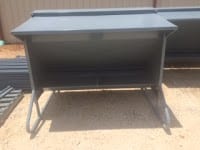
Front view of the enclosed steel deer feeder.
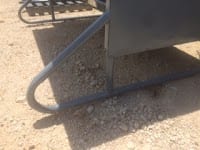
Support legs and skid arrangement for positioning the feeder.
Choosing a Location for the Feeder
Location affects access, maintenance and the condition of stored feed. Select a stable, reasonably level site with suitable drainage and adequate space for filling and inspection.
Consider the following when planning placement:
- Firm ground capable of supporting the feeder and its contents.
- Drainage that limits standing water and mud.
- Clear access for refilling and maintenance.
- Space around the trough for animal movement.
- Separation from vehicle traffic and other hazards.
- Local rules governing wildlife feeding and attractants.
A feeder placed on unstable ground may settle or become uneven as conditions change. Inspect its position after heavy rainfall, snowmelt or ground disturbance.
Skid-Mounted Design for Relocation
The welded feeder rests on skids, allowing it to be repositioned when empty using suitable handling methods.
This can be useful when changing feeding locations, cleaning the area beneath the feeder or preparing a site for seasonal use.
Empty the feeder before moving it. The original listing specifically describes relocation with the feeder empty.
Use equipment appropriate for the approximately 300-pound empty weight, and verify that the skid structure and attachment points are suitable for the intended movement.
Do not assume the feeder is approved for towing at road speeds or across rough terrain. Avoid dragging it in a manner that could damage the skids, frame or surrounding property.
Managing Supplemental Feed
A deer creep feeder is a feed-storage and dispensing tool. It does not determine whether supplemental feeding is nutritionally appropriate or legally permitted.
Feed selection should reflect the intended animals, seasonal conditions and the recommendations of qualified wildlife or livestock professionals.
Sudden dietary changes and unsuitable feed can create animal-health risks. A feeder should not be used as a substitute for a properly planned feeding program.
Feed Quality and Storage
Check stored feed regularly for moisture, clumping, mold, unusual odors and insect activity.
Rotate feed appropriately and avoid repeatedly adding fresh material on top of old, deteriorating feed.
Keep the trough clean and remove feed that has become contaminated by mud, manure or other material.
Preventing Excessive Feed Waste
Feed waste can occur when too much material enters the trough, animals scatter feed or moisture causes spoilage.
The adjustable outlet provides a way to manage feed presentation, but effective waste control also requires regular observation and maintenance.
Check whether the trough contains more feed than animals are consuming. Adjust the outlet and feeding practices when appropriate.
Wildlife Feeding Rules and Disease Considerations
Rules for feeding wild deer vary by state, county, land designation and season. Some jurisdictions restrict or prohibit feeding because of wildlife disease concerns, hunting regulations or conflicts with surrounding land uses.
Feeding stations can also concentrate animals in one location, increasing contact among individuals and potentially contributing to disease transmission.
Before installing a feeder for free-ranging deer, consult the relevant wildlife agency and confirm current regulations for the exact property and intended use.
Where supplemental feeding is permitted, follow applicable guidance on feed selection, sanitation and animal concentration.
Using the Feeder in Managed Deer Operations
On properties where deer are legally managed or contained, a feeder may be one component of a broader feeding and husbandry program.
Operators should consider animal size, trough access, group behavior and the number of available feeding locations.
Observe whether animals can reach the trough without persistent crowding or displacement. Where competition is excessive, additional feeding space or changes to the management arrangement may be needed.
The 18-inch listed trough height is an important measurement to evaluate against the animals expected to use the feeder.
Cleaning and Routine Maintenance
Regular cleaning and inspection help maintain the feeder's operation and identify damage before it becomes more serious.
- Remove spoiled or contaminated feed from the hopper and trough.
- Inspect the adjustable outlet for clogging or damage.
- Check welded joints and skid supports.
- Look for rust, chipped enamel and damaged steel surfaces.
- Confirm the feeder remains stable and properly positioned.
- Clean areas where moisture and debris collect.
- Inspect the feeder after relocation or severe weather.
Use cleaning methods appropriate for the feeder materials and intended animal use. Allow cleaned surfaces to dry before refilling where required by the cleaning procedure.
Choosing Between the 400 lb and 1,200 lb Deer Feeders
Barn World also lists a larger 1,200-pound deer creep feeder for operations needing greater listed feed-storage capacity.
The right size depends on expected feed consumption, refill access, available space and the practical requirements of the property.
| 400 lb Feeder | 1,200 lb Feeder |
|---|---|
| Lower listed feed capacity | Higher listed feed capacity |
| 4-foot dimensions listed for this model | Check the larger model's current dimensions |
| May suit locations requiring a smaller feeding station | May suit operations requiring more feed storage between refills |
| Approximately 300 lb empty weight | Confirm the larger model's current empty weight |
View the 1,200 lb deer creep feeder for its available specifications and ordering information.
Freight Delivery and Unloading
At approximately 300 pounds empty, this welded steel feeder requires planning for delivery and unloading.
When requesting a quote, provide the delivery ZIP code, destination type and any access restrictions that could affect freight service.
Confirm whether suitable unloading equipment will be needed at the destination before shipment is arranged.
Because the feeder is a welded assembly, verify the available receiving space and handling arrangements before ordering.
Frequently Asked Questions
How much feed does this deer creep feeder hold?
The listed capacity is 400 pounds. Actual feed volume and weight depend on the type and density of the ration.
Does the feeder weigh 400 pounds when empty?
No. The original specifications list an approximate empty weight of 300 pounds.
What are the feeder dimensions?
The original listing gives approximately 4 feet long, 4 feet wide at the legs and 4 feet tall.
How high is the feeding trough?
The trough is listed as 18 inches above the ground, with a 17-inch width and 6-inch depth.
Is the feed outlet adjustable?
Yes. The feeder includes an adjustable feed-flow opening.
Is the feeder made from steel?
Yes. The original specifications identify 16-gauge steel construction with a gray enamel finish.
Can the feeder be moved?
The feeder rests on skids and can be repositioned when empty using appropriate equipment and handling methods.
Does the enclosed hopper keep all feed dry?
The hopper helps protect stored feed from direct weather exposure, but feed must still be inspected for moisture, spoilage and contamination.
Can this feeder be used for wild deer?
Only where the intended feeding activity is permitted and appropriate under applicable wildlife regulations and management guidance.
Does a creep feeder automatically restrict access to adult deer?
Not necessarily. The original specifications do not establish a particular adult-exclusion opening or fawn-only access arrangement. Confirm the feeder's actual access design before purchasing for that purpose.
Request a Quote for the 400 lb Deer Creep Feeder
This welded steel deer feeder combines a 400-pound listed feed capacity, enclosed hopper, adjustable feed outlet and skid-mounted frame in a compact outdoor feeding unit.
Before ordering, confirm that the feeder's dimensions, trough height and access design match your intended application, and review any applicable wildlife-feeding rules.
For current pricing and freight delivery, contact Barn World at (720) 238-2190 or Sales@BarnWorld.com with your delivery ZIP code.
For additional sizes and configurations, browse Barn World's creep feeders and feeding equipment.