

SEE ALL OF OUR CREEP FEEDERS
This 1,500-pound calf creep feeder is a heavy-duty pasture feeding station designed to provide supplemental feed to young calves while restricting access by larger cattle. Built with an angle-iron frame and 16-gauge steel, it combines substantial feed storage with adjustable calf entry and feed-flow controls for cow-calf operations.
The feeder measures approximately 7 feet 6 inches wide by 7 feet 6 inches long and stands 6 feet high. Its large capacity reduces the frequency of refilling compared with smaller feeders, while the skid-mounted construction allows the unit to be repositioned with suitable equipment.
Designed for groups of more than 20 calves according to the original listing, this feeder is intended for operations where young cattle need a dedicated feeding area. Browse Barn World's calf creep feeders and cages for other capacities and configurations.
Calf Creep Feeder Specifications
| 1,500 lb Calf Creep Feeder Specifications | |
|---|---|
| Feed Capacity | 1,500 pounds |
| Overall Width | 7 feet 6 inches |
| Overall Length | 7 feet 6 inches |
| Overall Height | 6 feet |
| Approximate Empty Weight | 600 pounds |
| Frame | Angle-iron steel construction |
| Steel | 16 gauge, according to original listing |
| Calf Access | Adjustable entry bar |
| Feed Delivery | Adjustable feed flow |
| Filling Access | Rear-opening hinged lid with handle and latch |
| Mobility | Skid-mounted construction |
| Suggested Group Size | More than 20 calves, per original listing; confirm actual feeding access and herd needs |
| Shipping | Ships as one piece from near Fort Worth, Texas; pickup may be available |
How Calf Creep Feeding Works
Creep feeding provides young calves with access to supplemental feed in an area designed to restrict entry by larger cattle.
The feeder's entry arrangement is intended to let calves reach the feed while limiting access by mature cows.
This can be useful in cow-calf operations where calves remain with their mothers but receive additional nutrition through a managed feeding program.
Creep feeding does not replace appropriate forage, milk intake, clean water or a balanced livestock nutrition plan.
Feed selection and expected results should be based on the animals' age, growth stage, available forage and advice from a qualified livestock nutrition professional.
1,500 Pounds of Supplemental Feed Storage
The feeder's nominal 1,500-pound capacity provides a substantial reserve of supplemental feed.
A larger hopper may reduce the number of filling trips compared with smaller feeders, especially where the feeder is positioned away from the main feed-storage area.
Actual refill frequency depends on calf numbers, ration intake and feed density.
The stated capacity should not be interpreted as a guarantee that every feed type will occupy the same volume or flow identically.
Adjustable Calf Entry Bar
The adjustable entry bar is designed to help control which animals can access the feeding area.
As calves grow, the entry setting may need adjustment to maintain appropriate access.
Inspect the entry area regularly and watch how calves approach and leave the feeder.
The correct setting should allow intended animals to enter without unnecessary restriction while helping limit access by larger cattle.
Reducing Competition Around Feed
Providing a dedicated feeding station can help separate calf supplemental feeding from mature cattle feeding.
However, competition can still occur among calves if the feeding space is crowded or access is obstructed.
Observe the herd during feeding periods. Smaller or less assertive calves should be able to reach feed without being consistently displaced.
If crowding becomes excessive, consider changes to placement, group management or available feeding space.
Adjustable Feed Flow
The feeder includes an adjustable feed-flow feature intended to regulate the movement of feed into the trough.
Feed-flow adjustment can help operators manage how supplemental feed is presented.
The appropriate setting depends on feed type, particle size and feeding behavior.
Check for bridging, clogging or excessive accumulation, especially when changing rations or after wet weather.
Heavy-Duty Steel Construction
The original product specifications describe an angle-iron frame and 16-gauge steel construction.
The feeder is designed for outdoor livestock use, where it may be exposed to animal contact, weather and repeated filling.
Its approximately 600-pound empty weight reflects the substantial size of the assembly.
Routine inspection remains important, particularly around the entry frame, skids, lid and feed-discharge areas.
Rear-Opening Hinged Filling Lid
The feeder is filled through a hinged lid that opens from the rear.
This arrangement provides a filling location away from the primary feeding approach, which may make servicing more convenient.
The original listing describes a sturdy opening handle and a clasp that can be secured with a lock if desired.
Keep the lid secured when not filling the feeder and inspect the hinges and latch for wear.
Original Calf Creep Feeder Lid Photograph
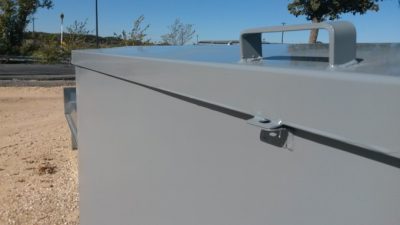
Hinged lid and latch arrangement on the calf creep feeder.
Steel Hinge Construction
The following original image illustrates a typical steel hinge section used on the feeder.
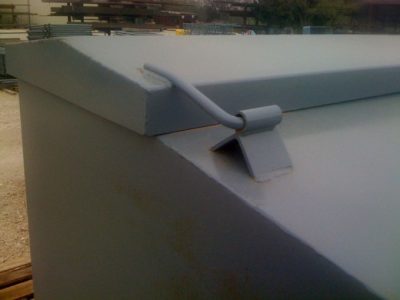
Close-up of the creep feeder hinge.
Feeder Overhang and Lid Arrangement
The original description identifies a large overhang intended to provide some protection to the feeding area from the elements.
The lid is hinged toward the front and opens from the rear for filling.
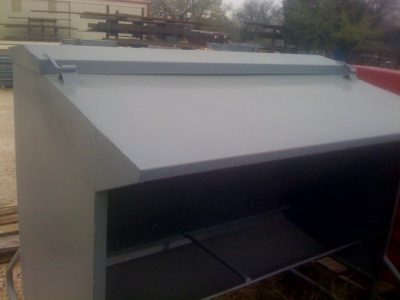
Original feeder photograph showing the hinged lid configuration.
Skid-Mounted Design for Pasture Placement
The feeder includes skids that allow it to be repositioned using suitable equipment.
This may be useful when rotating pasture areas or changing the location of supplemental feeding stations.
Because the feeder weighs approximately 600 pounds empty, relocation requires appropriate handling equipment and procedures.
Do not assume the unit can be moved safely while loaded with feed.
Choosing the Best Feeder Location
Feeder placement affects animal access, feed condition and routine maintenance.
Choose a reasonably level location with suitable ground support and adequate room for calves to approach and leave.
Consider:
- Safe calf entry and exit.
- Drainage around the feeder.
- Access for filling equipment.
- Space for inspection and cleaning.
- Potential mud accumulation.
- Traffic patterns of mature cattle.
- Availability of clean drinking water.
Inspect the surrounding ground regularly, especially during wet conditions or periods of heavy use.
Managing Feed Quality and Waste
Feed exposed to moisture or contamination may spoil or become unsuitable for livestock.
Inspect the trough and hopper as part of the normal feeding routine.
Remove wet, moldy or otherwise spoiled feed and address the source of moisture before refilling.
Adjust feed flow as appropriate to avoid excessive buildup in the trough.
Follow the feed manufacturer's storage and feeding recommendations.
Planning a Calf Creep Feeding Program
The feeder is one component of a broader nutritional management program.
Before introducing supplemental feed, evaluate the calves' age, available forage, milk intake and expected growth requirements.
A livestock nutrition professional can help determine whether creep feeding is appropriate and select a ration that meets the herd's needs.
Monitor feed intake and animal condition as the program progresses.
How Many Calves Can Use This Feeder?
The original listing describes the feeder as suitable for more than 20 calves.
This should be treated as a general product reference rather than a guaranteed number of animals.
Actual group suitability depends on calf size, feeding behavior, trough access, ration intake and the length of time animals spend at the feeder.
Observe the group and make adjustments if some calves cannot access feed adequately.
Comparing the 1,500 lb and 400 lb Calf Creep Feeders
The 1,500-pound model is intended for larger feeding requirements, while the smaller 400-pound feeder may be appropriate where feed demand or available space is more limited.
| Feature | 1,500 lb Feeder | 400 lb Feeder |
|---|---|---|
| Nominal Feed Capacity | 1,500 lb | 400 lb |
| Typical Selection Consideration | Larger feed storage requirements | Smaller feed storage requirements |
| Refilling | Potentially fewer refills for the same feed consumption | More frequent refilling may be needed |
For a smaller-capacity option, see the 400 lb calf creep feeder.
Routine Maintenance
Regular inspection helps maintain reliable feed delivery and identifies damage before it affects operation.
- Check the hinged lid, handle and latch.
- Inspect steel hinges and attachment points.
- Check the adjustable calf entry bar.
- Inspect the feed-flow adjustment mechanism.
- Remove accumulated feed and debris.
- Look for moisture or spoiled feed.
- Inspect the frame and skids for damage.
- Check for sharp edges or loose components.
- Keep the surrounding ground reasonably dry and stable.
Address damaged components before returning the feeder to normal livestock use.
Freight Shipping and Pickup
This calf creep feeder ships as a large, one-piece steel assembly from near Fort Worth, Texas.
The original listing notes that shipping a single feeder can be expensive because of its size and transportation requirements.
Before ordering, confirm freight cost, delivery access, unloading equipment and whether a commercial receiving location is available.
Pickup near Fort Worth may be an alternative, subject to current availability and arrangements.
Contact Barn World with your delivery ZIP code and preferred receiving method for a freight quote.
Frequently Asked Questions
How much feed does this calf creep feeder hold?
Its nominal feed capacity is 1,500 pounds.
What are the feeder dimensions?
The listed dimensions are approximately 7 feet 6 inches wide, 7 feet 6 inches long and 6 feet high.
How much does the feeder weigh?
Approximately 600 pounds empty, according to the original listing.
How many calves can it feed?
The original listing describes use with more than 20 calves. Actual suitability depends on animal size, feeding behavior and access.
Does it have adjustable calf entry?
Yes. The feeder includes an adjustable entry bar.
Can the feed flow be adjusted?
Yes. The original specifications identify adjustable feed flow.
How is the feeder filled?
Feed is added through a rear-opening hinged lid with a handle and latch.
Can it be moved around a pasture?
The feeder includes skids for repositioning with suitable equipment. Do not assume it can be moved safely while loaded.
What is the frame made from?
The original listing describes an angle-iron frame and 16-gauge steel construction.
Does the feeder prevent cows from eating calf feed?
The adjustable entry arrangement is intended to restrict larger animals, but effectiveness depends on correct adjustment and livestock size.
Is a smaller version available?
Yes. Barn World also lists a 400-pound calf creep feeder.
Can I pick up the feeder instead of having it shipped?
The original listing identifies possible pickup near Fort Worth, Texas. Confirm current pickup availability before making arrangements.
Request a Quote for the 1,500 lb Calf Creep Feeder
This heavy-duty calf creep feeder combines substantial feed storage, adjustable calf access, controlled feed flow and skid-mounted construction for supplemental feeding programs.
Before ordering, consider your herd size, feeding requirements, available space and freight arrangements.
Contact Barn World at (720) 238-2190 or Sales@BarnWorld.com for current availability, pickup arrangements and a delivered freight quote.
Explore additional capacities in Barn World's creep feeders and cages collection.