

SHOP ALL OF OUR CATTLE GUARDS
Round-Rail Cattle Crossing for Farm and Ranch Entrances
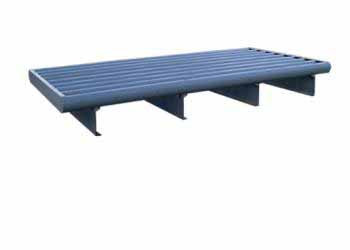
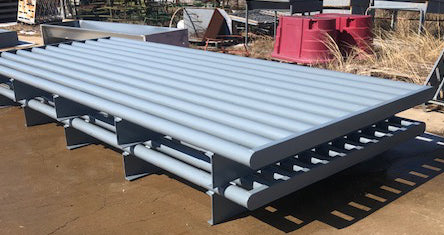
This 12-foot round-rail cattle guard is available in 6-foot or 8-foot depths, with separate private-use and engineered HS-20 configurations. The non-rated private-use design has an estimated capacity of 12 tons per axle; that estimate is not an engineered highway rating. For the HS-20 option, confirm the selected configuration's engineering documentation, vehicle loading, and support requirements. Public-road installation also requires acceptance by the responsible authority.
SEE ALL OF OUR ROUND RAIL CATTLE GUARDS
The boxed option may suit installations without a conventional excavated vault or poured concrete footing. It still requires stable bearing support, drainage, suitable approaches, and any anchorage specified for the location and traffic. Review the selected guard's installation requirements before placement.
Optional cattle guard wings provide connection points between the guard and the fence line. Proper fence alignment helps limit routes around the ends; the wings do not guarantee containment on their own.
Cattle Guard Specifications:
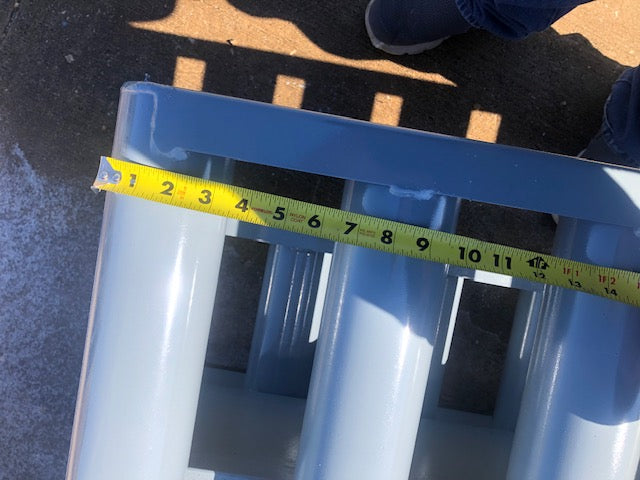
- Private-Use - Top Rail Pipe: 3.5" OD
- HS20-Rated -Top Rail Pipe: 3.5" OD
- The approximate gap between rail walls is 3.11"
- Load Carrying Beams: 8" X 11.5 lbs. Channel
- Gray enamel finish (safety yellow is also available)
- The ends of the top rails are capped with 12-gauge steel
- Fully welded
Types of cattle guards
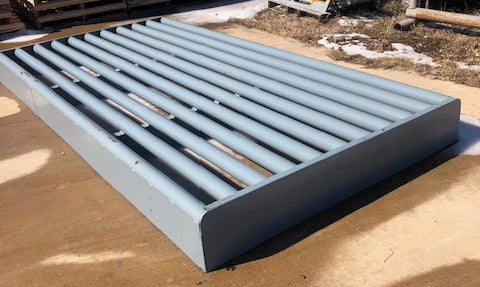
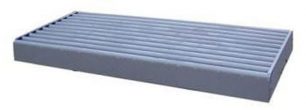
Boxed Cattle Guards
The perimeter box helps limit soil movement beneath the rails. The load-carrying beams still need appropriate support; the skirt is not a substitute for a suitable base. Have a qualified installer determine the bearing surface, drainage, approach grading, and anchorage needed for your site.
Remote Area Use
Boxed guards can be considered for remote pumping sites, towers, tanks, and other low-traffic entrances where access for concrete work is difficult. Ground conditions and expected loading still determine whether that installation approach is appropriate. Confirm support and drainage requirements before choosing a foundation arrangement.
Construction Site Uses
The box feature is not only used as a cattle crossing but also as a wash rack and rumble strip for vehicles. Lying directly on the ground, they can be used to remove debris from trucks before they leave the job site and enter the public roadway. They're also useful at entrances and exits to prevent the ground from getting rutted or muddy, and can help keep the site entrance clean.
For temporary construction-site use, have the contractor confirm the selected guard's loading, bearing support, and approach requirements. Where a poured foundation is not required, the guard can be lifted for relocation using suitable handling equipment.
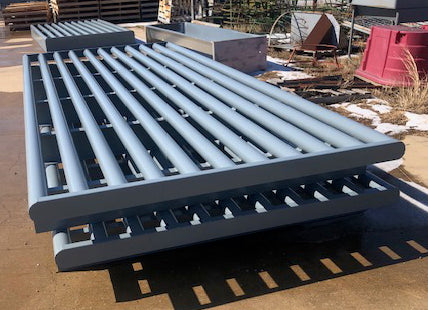
Removable Box for Cattle Guards
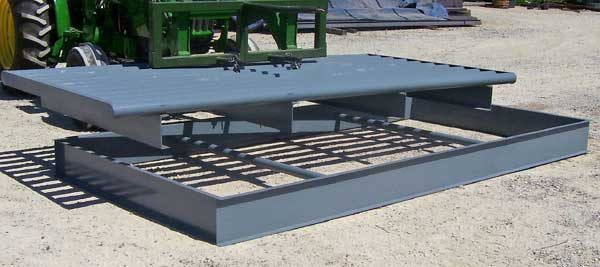
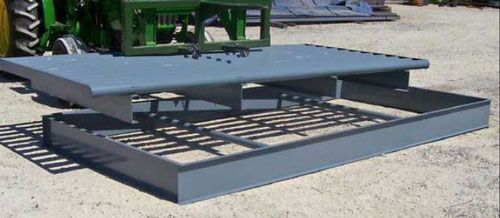
The removable box cattle guard feature allows you to remove the central grid without disturbing the surrounding installation. See the picture below to see it in action. Please note that the horizontal bars shown in the box itself are included for the stability of the box and don't contribute to the load-carrying capacity of the crossing. With this option, the cattle guards do not rest on the skirt or the supporting members; all of the weight is transferred to the load-carrying beams below and then to the ground. This is a popular option for making the cleaning out process under the guard easier!
Cattle Guard with Wings
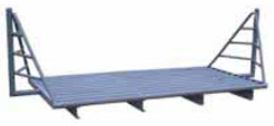
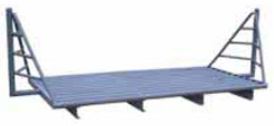
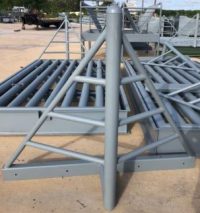
The cattle guard wings, shown installed below, are an integral part of the entire livestock containment barrier. If you were to attach your fence line to a single post located at the center of the crossing, cows could simply walk around it and avoid the grate altogether. It's essential that your fencing is connected in such a way that they can't just step past. The triangular-shaped steel wings connect to the bottom of the cattle guard ends and transfer the physical barrier directly to your fence line. Take a look at the picture below for details of the installation.

Cattle Guard Footing Diagram
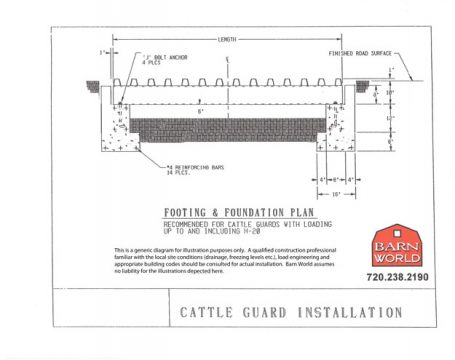
The most important consideration for any type of building or construction is the installation of a proper foundation. It doesn't matter how strong or well-built your crossing is if the foundation holding it up is not sound. The diagram below illustrates a typical footing arrangement. It is not a site-specific plan for every guard configuration or vehicle loading.
Please note that each location is different and a qualified contractor who is familiar with the local site conditions (draining, frost levels, building codes, etc.) should be consulted for a proper installation.