Drive Over Gates: A Cattle Guard Alternative
Product Update: The Drive-Over Gate described in this article is no longer available from Barn World. We have kept this article as a reference for customers researching drive-over gates and alternatives to traditional cattle guards. For currently available options, explore our cattle guards for farm, ranch, and livestock applications.
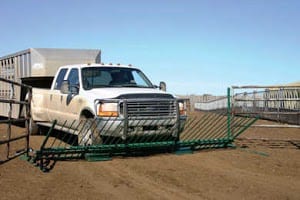
What Was a Drive-Over Gate?
The Drive-Over Gate was designed as an alternative way to move vehicles through a livestock fence without stopping to manually open and close a conventional gate. Instead of crossing over a traditional cattle guard, the vehicle pushed flexible gate members toward the ground as it crossed. The gate then returned to its upright position after the vehicle cleared the crossing.
This type of system was attractive to customers looking for convenient vehicle access to fenced pastures, feedlots, and other livestock areas without installing a conventional swinging gate.
Although Barn World no longer carries this Drive-Over Gate, the basic problem it addressed remains common: how can vehicles regularly cross a livestock fence without requiring the driver to stop and open a gate?
For many permanent farm and ranch entrances, a traditional cattle guard is the current solution to consider.
How the Drive-Over Gate Worked
The original Drive-Over Gate used heavy-duty springs to hold the gate members upright. A vehicle approaching from either direction pushed the gate down as it crossed. After the vehicle or implement passed, spring tension returned the gate to its upright position.
The design allowed different types of farm vehicles to cross the fence line without the driver leaving the vehicle. It was promoted for use with ATVs, tractors, trailers, and other farm equipment.
The spring tension could be adjusted to change the resistance and return action of the gate.
Where Drive-Over Gates and Pivot Gates Were Used
A variation of the Drive-Over Gate was known as a Pivot Gate. These types of gates were used where frequent access through a livestock fence made opening and closing a conventional gate inconvenient. Applications included:
- Pasture entrances
- Feedlots
- Farm and ranch roads
- ATV access
- Tractor and equipment crossings
- Irrigation pivot crossings
One unusual application was allowing irrigation pivot wheels to cross a fence line without requiring someone to open a gate each time the pivot reached the crossing.
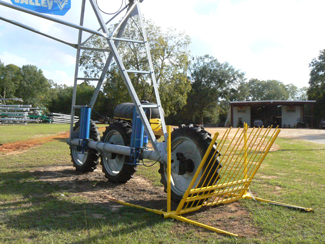
Watch the Original Drive-Over Gate in Operation
The following historical video demonstrates how the discontinued Drive-Over Gate operated and how vehicles crossed over the gate while it was installed in a fence line.
Drive-Over Gate vs. a Traditional Cattle Guard
A drive-over gate and a traditional cattle guard were designed to solve a similar access problem, but they did it in very different ways.
The Drive-Over Gate remained part of the fence line. Vehicles physically pushed the gate down while crossing, and the spring-loaded structure returned upright afterward.
A traditional cattle guard instead creates a permanent vehicle crossing in the roadway. The cattle guard spans the opening in the fence and allows wheeled vehicles to drive directly across without operating a gate.
For a more detailed look at this type of entrance, see our guide to using cattle guards instead of gates.
Why Consider a Cattle Guard Instead?
Because the Drive-Over Gate is no longer available from Barn World, customers looking for drive-through livestock access should consider whether a conventional cattle guard better fits the application.
Cattle guards are commonly used at permanent fence openings where vehicles need frequent access without requiring the driver to stop, get out, open a gate, drive through, and close it again.
Barn World offers cattle guards for a variety of farm, ranch, and vehicle-access applications. Available designs include different lengths, rail configurations, and load-rating options, allowing the crossing to be selected for the type of traffic expected.
Browse our current cattle guards to see the available options.
Traditional Cattle Guard Installation
A traditional cattle guard requires more site preparation than the discontinued Drive-Over Gate. The crossing must be properly supported, aligned with the roadway and fence, and installed according to the requirements of the cattle guard and intended traffic.
Depending on the installation, cattle guards may be supported by concrete foundations or other properly prepared structural supports. Barn World also offers information about cattle guard foundations, installation, sizing, and load ratings to help customers plan a crossing appropriate for their application.
If you're researching a new installation, our cattle guard installation guide is a useful next step.
Choosing the Right Cattle Guard
The correct cattle guard depends on more than the width of the opening. Consider the vehicles that will cross it, expected traffic, roadway width, installation method, required load rating, and whether the crossing is on private property or subject to additional engineering or regulatory requirements.
A farm entrance used primarily by pickups and agricultural equipment can have different requirements from a crossing expected to handle heavy commercial vehicles or public-road traffic.
Before purchasing, determine the required crossing width and the heaviest vehicles expected to use the cattle guard. This helps narrow the appropriate size, construction, and load rating.
Frequently Asked Questions About Drive-Over Gates
Does Barn World still sell the Drive-Over Gate?
No. The Drive-Over Gate shown in this article is a discontinued product and is no longer available from Barn World. This article remains online as a historical reference and to help customers researching this type of livestock crossing.
What can I use instead of a Drive-Over Gate?
For a permanent vehicle entrance through a livestock fence, a traditional cattle guard may be an appropriate alternative. It allows wheeled vehicles to cross the fence line without requiring the driver to manually open and close a conventional gate.
Does a cattle guard work the same way as a Drive-Over Gate?
No. A Drive-Over Gate was physically pushed down by the crossing vehicle and then returned upright. A cattle guard is a permanent roadway crossing that vehicles drive across.
Can cattle guards be used with farm equipment?
Cattle guards are available in different sizes and load ratings. The cattle guard and supporting structure should be selected for the vehicles and loads expected to cross it.
Should a regular gate still be installed near a cattle guard?
A nearby gate can provide an alternate route for animals, equipment, or other traffic that should not cross the cattle guard. The appropriate fence and gate layout depends on the property and how the entrance will be used.
Current Drive-Through Livestock Access Options
The Drive-Over Gate served an interesting purpose and remains useful as a historical example of one approach to vehicle access through livestock fencing. Because that product is no longer available, this article is being retained to answer questions from people who still encounter the product, its name, photographs, or the original demonstration video online.
For a current solution, explore the cattle guards at Barn World. If you need help selecting a cattle guard for a particular vehicle load, entrance width, or farm and ranch application, Barn World can help determine which available option best fits the installation.